Itinerant social project delivers essential services and legal support to people in vulnerable situations in Rio de Janeiro and the Baixada Fluminense region
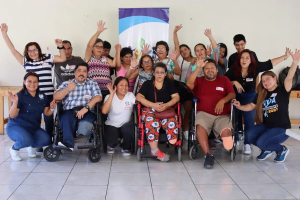
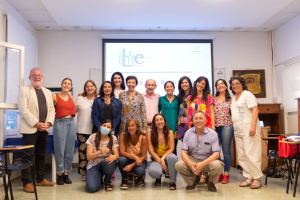
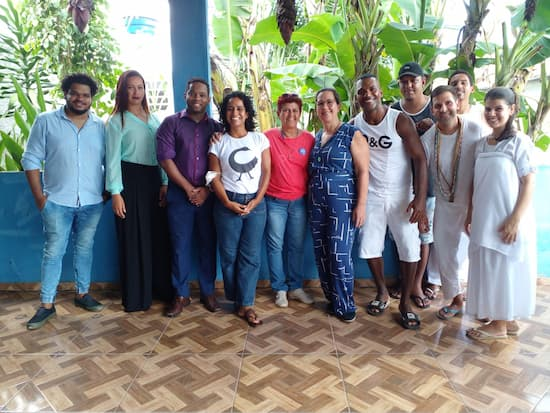
Conceived by social worker Sandra Matos, the project Emergindo a Caminho do Futuro (Emerging on the Path to the Future) is a traveling initiative that serves as a social action, promoting citizenship and inclusion for people in vulnerable situations.
The initiative began in mid-2021 and offers services such as:
- Orientação jurídica relacionada à Lei Orgânica da Assistência Social – LOAS (Legal guidance related to the Organic Law of Social Assistance): it’s the legislation that organizes social assistance in Brazil and ensures access to rights such as the Benefício de Prestação Continuada – BPC (Continuous Cash Benefit). The initiative provides legal support to help people understand their rights and learn how to access them;
- Fee waivers for issuing documents such as ID cards, birth certificates, and others: Beneficiaries receive a waiver statement, which allows them to go to the Detran or registry office and obtain the necessary documents free of charge;
- “Name Clearing” through Serasa: A volunteer accesses Serasa’s online platform, enters the person’s name and CPF (individual taxpayer number), and checks for any registered debts. Then, a negotiation is carried out, often significantly reducing the debt amount and giving the person the opportunity to clear their name;
- Referrals for retirement benefits: Many people are entitled to this benefit but are unaware of it or face long delays waiting for a response from the INSS (Brazil’s National Social Security Institute). Some have been waiting for over two years without any feedback. There are also cases where the benefit is linked to relatives who are incarcerated, with processes that have been dragging on for nearly four years without resolution;
- Haircuts and braiding;
- Barbershop services;
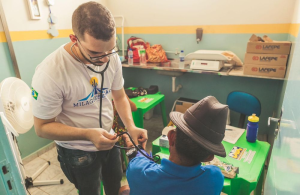
- Eye exams;
- Eyebrow design;
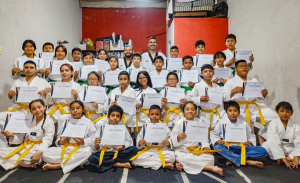
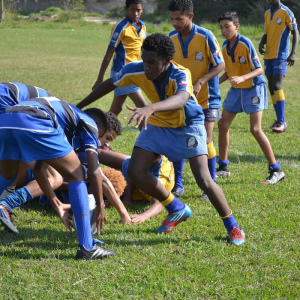
- Children’s recreational activities.
There are also cases of people over 70 years old who have not yet been able to retire. In these cases, a volunteer lawyer from the project works to expedite the process and, in most instances, achieves positive results.
Another area of the organization’s work is the collection of seeds and seedlings of medicinal and edible plants, aiming to reforest Quilombo Aquilah project, located in the Curupaiti community in the Praça Seca region, West Zone of Rio de Janeiro.
Challenge of engaging volunteers
The neighborhoods and communities served by the project include Cidade de Deus, Realengo, Largo do Tanque, Chacrinha, Mato Alto, Cascadura, and Penha Circular in Rio de Janeiro, as well as the municipalities of Duque de Caxias and Nova Iguaçu, in the Baixada Fluminense region. Each location is served according to the specific needs identified in consultation with residents and community leaders.
The activities take place both in public spaces, such as parks and streets, and within religious spaces, with no discrimination based on faith.
Sandra Matos reports that the biggest challenge faced is recruiting volunteers. “It’s a great difficulty for us because people have their daily commitments and expenses. It’s hard to find those willing to help just for a smile. We know volunteers don’t receive a salary, but it would be important to at least offer some financial assistance for snacks and transportation.”
“However, since we don’t yet have funding for this, it’s difficult to find people willing to collaborate. They want to come, but simply can’t due to lack of resources,” she explains.
The project’s work is promoted, whenever possible, through flyers, brochures, or small newsletters. These materials are distributed during events themselves, with the intention that participants take them to others, thereby expanding the project’s reach.
Ieda Albuquerque, the project’s executive secretary and also a volunteer, helps by answering questions, providing support during the activities, and assisting with accounting and content creation for outreach materials.
She explains that the main goal of the initiative is to ease the social challenges faced by communities and underserved neighborhoods, boost residents’ self-esteem, and support their access to the job market.
When asked about the project’s main needs, Sandra Matos explains that, since it is an itinerant initiative, having proper logistics for transporting materials is essential. “We need financial resources for that,” she states. However, she emphasizes that human resources — in other words, the work of volunteers — are just as crucial to ensure the success of the activities.
Interested in the project?
Here’s how you can helpThe project is currently looking for volunteers in the following roles: computer teachers and technicians, children’s activity leaders, barbers, hair braiders, hairdressers, and eyebrow designers.
There is also a need for materials such as office paper and printed outreach materials (flyers, brochures, and small newsletters). These resources are essential to expanding the project’s reach especially because many of the people served do not have internet access. Printed materials help facilitate communication and bring the initiative even closer to the community’s reality.
Follow the initiative on Instagram.