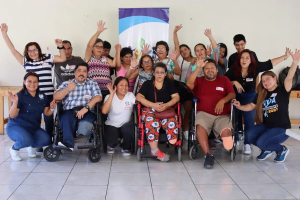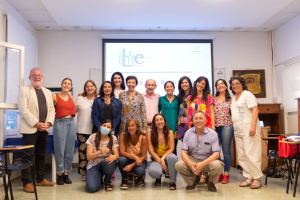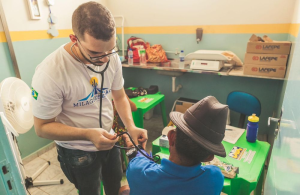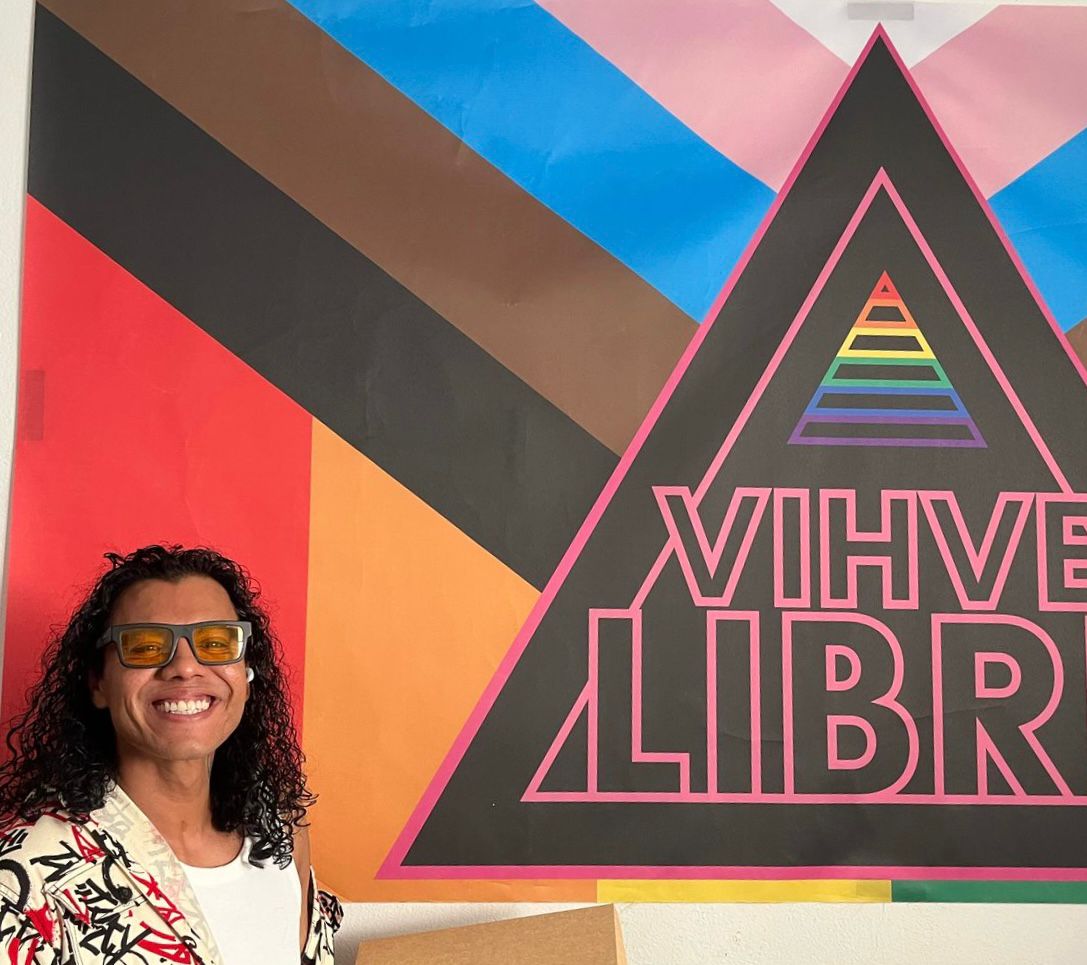
In a context of misinformation and structural failures in the healthcare system, the organization has established itself as a key player in providing care, support, and advocacy around HIV treatment in the country
Testimonial by Mauricio Montes Martínez
It was in the middle of uncertainty, between the stigma, confusion, and lack of clear information, that I found VIHve Libre, a non-profit organization that doesn’t just understand what it means to live with HIV in Mexico, but actively fights for those who do, with empathy, urgency, and conviction.
Growing up as a gay man in a small, conservative state in Mexico, I often heard that being gay meant living with HIV and dying of AIDS. This message was repeated at family gatherings, in church, and at school. It wasn’t until I left for boarding school in the United States that I finally had the space to explore and begin to understand my identity as part of the LGBTQ+ community.
I was fortunate to come out safely to friends and teachers, but the shame and stigma around HIV that I had absorbed back home in Mexico continued to weigh on me. Unlearning those deeply ingrained beliefs has been an ongoing process – one I’m still navigating today. After many conversations with my therapist, she recommended that I start taking PrEP.
PrEP (Pre-Exposure Prophylaxis) is a medication used for HIV prevention. When taken daily, the pill (Emtricitabine/Tenofovir) significantly reduces the risk of acquiring HIV if exposed to the virus.
Thanks to private insurance during high school, college, and my job in the U.S., getting on PrEP was simple – I just had to get tested and pick up my prescription every three months.
I moved back to Mexico in the fall of 2023 with a two-month supply of PrEP. But once I ran out, the challenges began. I visited the Mexican Social Security Institute (IMSS) in my hometown of Querétaro to ask how I could continue treatment, and after speaking with four different staff members, none of them could give me a clear answer. In fact, it seemed like they had no idea what PrEP even was.
According to UNAIDS, just over 14,000 people were taking PrEP in Mexico in 2023, or 7% of the approximately 200,000 receiving the treatment in Latin America—the country accounts for 19% of the regional population. More than half of those using PrEP in the region are in Brazil, which has had a free distribution and prevention program for over ten years.
I had the chance to speak with Alain Pinzón, a leading HIV activist and the director of VIHve Libre. He told me the organization began in June 2019 as a peer support group. At the time, Alain was struggling with his own diagnosis. “People kept telling me, ‘you should start a support group,’” he recalled. “At first, I didn’t feel ready. But after about six months, I finally said yes.” That group started meeting at the now-closed Centro de la Diversidad Sexual in Mexico City.
In the beginning, it was a space to talk. A place where people living with HIV could share how they felt, how they were navigating life, what it meant to carry this diagnosis. But Alain quickly realized that conversation wasn’t enough. The gaps in care, the systemic neglect, and the repeated medication shortages demanded direct action. What started as a support group became a movement, protests in the streets, confrontations with IMSS and the Ministry of Health, and a refusal to stay silent.
The 2024 Global AIDS Report, by UNAIDS, stated that the annual number of new HIV infections in Latin America increased by 9% between 2010 and 2023, with eight countries experiencing increases since 2015. In 2022, a significant proportion (66%) of new HIV infections were among people from key populations and their sex partners. In 2022, numbers of new HIV infections were 20% higher than in 2010 among gay men and other men who have sex with men, 42% higher among sex workers, and 19% higher among transgender women
Additionally, according to WHO data, in 2023, an estimated 39.9 million people were living with HIV worldwide, and approximately 630,000 people died from HIV-related causes in 2023.
In Mexico, according to the 2024 Annual Report, VIVhe Libre performed a total of 5459 tests – out of these tests, 196 people tested positive for HIV.
“We do everything related to HIV,” he told me. “Testing, prevention, care, STI consultations, PrEP, PEP, post-violence support, fighting with authorities to secure access to meds, sending emails at 2 a.m. – you name it. If it’s for the wellbeing of people living with HIV, we’ll do it.” Sometimes that even means giving away his own medication when someone else is left without.
Every case is deeply personal for Alain. He doesn’t talk about “cases” or “clients.” He talks about people. “Every story matters,” he said. “Every person who reaches out is doing so for a specific reason, with a specific fear or need. That places me in a position of deep responsibility, but also deep listening.”
Despite the dedication, the challenges are enormous. “The biggest one is getting authorities to understand that we’re not the enemy. We’re people living with HIV. This affects us directly. We don’t get to walk away like they do. We can’t resign from this.” Alain believes that, historically, HIV care has only made progress when people living with HIV have been part of the conversation, something that still doesn’t happen enough.
Still, there are victories. Alain lights up when he talks about delivering medication, administering tests, or simply being there for someone in need. “One of the most powerful things is being able to look someone in the eye and say: I can help you. Sometimes I even give them my own meds. I know I shouldn’t, but I do. Because no one should be left without.”
I asked him what he would do with more resources. Without skipping a beat, he said, “We need a little hospital. A real community clinic. Something open 24/7. We already have the volunteers. We could save lives.” His dream is a space where people can get tested, receive treatment, get their viral load or CD4 counts checked, and start medication on the spot. “That would be incredible,” he told me. “That would change everything.”
Right now, VIHve Libre is funded solely by donations from the people who use its services. No government support. No big sponsors. And still, it works – because of the relentless commitment of Alain and the volunteers who’ve built something out of nothing.
When I asked him how he envisions the future of VIHve Libre, he paused and smiled: “Working. Always working. Even if I’m not here. I won’t be around forever. But this work has to go on. The people have to keep going. It’s never been about me – it’s about making sure no one ever has to go through this alone.”
This Pride Month, you can support VIHve Libre by visiting this link.