According to the Brazilian Institute of Geography and Statistics (IBGE), Brazil has over 6.5 million people with visual impairments, around 500,000 of whom are completely blind
Losing your vision is not the same as losing your ability to see. When your eyes go out, other senses gain power. The Institute for the Blind – Visual Rehabilitation Center, in São José do Rio Preto (a city in the state of São Paulo), works on the habilitation and rehabilitation of visually impaired individuals, promoting their autonomy and social reintegration.
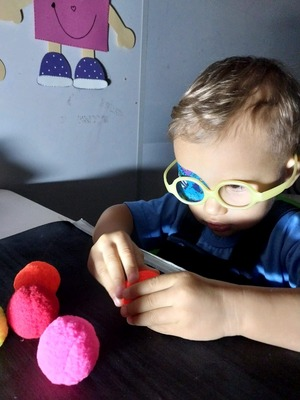
Romiro Pedro da Silva, manager of the institution, explains that, in order to train touch, the students are first offered handicraft classes before learning Braille.
The organization has an assistive technology room, aimed at promoting autonomy, independence, quality of life, and social inclusion for people with disabilities or reduced mobility. In this space, students learn how to use smartphones, access WhatsApp, send emails, and develop other digital skills.
“We even have equipment that reads books automatically when placed in front of it,” he says. As some people struggle to use computers, typing classes are also provided.
Children and teenagers of school age are also served through extracurricular classes. “We convert all school materials into Braille or enlarge them according to the needs of those with low vision,” says Romiro, adding that both public and private school students are welcomed.
In the habilitation and rehabilitation process, inclusion is fundamental. Therefore, whenever possible, the entire school class is invited to visit the institute. “We organize experience days so that everyone can understand the challenges and daily life of their visually impaired peers.”
After the first year of service, a reevaluation is conducted, and, depending on progress, individuals may be discharged from some professional support. “They are only discharged when they reach the necessary level of autonomy,” he explains.
Even after discharge, participants continue visiting the organization monthly for social activities. “They spend the whole day here, talking, watching movies, and singing karaoke. On some days, we also organize dances. This place becomes their second home.”
One point of pride for the institution is the absence of a waiting list. “We serve everyone who comes, free of charge,” Romiro celebrates, emphasizing that there is no age limit for participation.
The team is composed of 36 professionals, including doctors, physiotherapists, occupational therapists, psychologists, educators, social workers, and teachers of computer science, music, and physical education, serving 280 students from São José do Rio Preto and 102 nearby cities.
The institute maintains partnerships with the Brazilian public healthcare system (SUS), education departments, and the department of social assistance.
Job market and autonomy
Data from the Brazilian Institute of Geography and Statistics (IBGE) show that over 6.5 million people in Brazil have some form of visual impairment — about 500,000 are completely blind, and 6 million have low vision.
Job-seeking for this population is marked by many challenges. Therefore, the institute maintains partnerships to facilitate entry into the job market. “One of our students, who is excellent with computers, recently started working at an automation company.”
To ensure both the company and the new employee are properly adapted, a professional visits the workplace, provides accessibility guidance, and helps the employee navigate the space.
This process of gaining autonomy is crucial to building self-esteem. “Before, many adults spent their whole day at home. We teach them how to take the bus. The progress is so significant that even couples have formed here,” Romiro shares.
In the pursuit of greater independence, cooking classes are also offered, where participants learn to prepare basic meals.
Institutional growth
The institute was founded on September 1, 1948, in São José do Rio Preto, in the state of São Paulo, originally named Riopretense Institute for Blind Workers, and was supported by businesspeople, merchants, and civil society organizations.
Initially, the goal was to prevent visually impaired individuals from being abandoned in the streets. The institute operated as a shelter until 1994. “Families used to leave their relatives here and never return. We had one person who lived at the institute for 28 years,” Romiro recalls.
At that time, residents learned to make products like brooms, which were sold on the streets. “This showed society that they were capable people.”
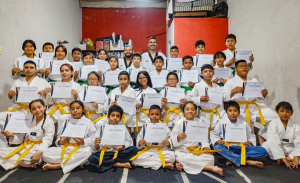
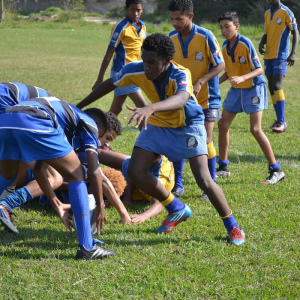
Currently, the organization offers sports activities such as judo, taught by a Paralympic athlete. The institute also has an in-house gym, and one of the physical education teachers is a member of the Brazilian Paralympic Committee (CPB).
Another key activity is music education. “Our music teacher was once a student here and now teaches both children and adults”, Romiro states. Three professionals are dedicated to teaching singing and instruments such as guitar and drums. At the end of the year, performances are held for the families.
The Institute also produces ocular prostheses in partnership with the SUS and offers ophthalmological consultations to the general public three times a week at affordable prices. To promote accessibility and inclusion, the organization also produces Braille menus for bars and restaurants, with all revenue directed back to the Institute.
How to help
The Institute for the Blind is located at Rua Dr. Cléo de Oliveira Roma, nº 200, Jardim Morumbi, São José do Rio Preto – SP, and accepts donations from individuals and companies. You can also help by shopping at the solidarity store. Volunteers are welcome to help with activities such as storytelling and organizing donations. Learn more by following them on Facebook and Instagram or by visiting their website.