By Vanessa Arriaga
Mexico City, August 2025.- As the sun begins to illuminate the sky and the facades of buildings, some people begin their day, whether to study, work, or do some other activity. In a modest brick-colored house in the municipality of Tláhuac, Mexico City, dozens of girls wake up amid murmurs and yawns.
Although they look like any other dreamy child, they share a history with a no less important child sector: in Latin America, up to 21% of children live without one or both parents, a situation resulting from causes such as migration, death, poverty, violence, and conflict, with a particularly high incidence in the Caribbean and Venezuela, according to 2023 UNICEF data.
Adult labor migration is one of the most common factors, though not the only one. While the majority of these minors remain in the care of extended family members or the community, a considerable number end up institutionalized or facing life on the streets. Regarding Mexico, 5 million children are at risk of losing the care of their families due to poverty, violence, or legal proceedings, according to figures from SOS Children’s Villages.
Reducing this situation is one of the missions of the “Casa Hogar de las Niñas de Tláhuac (“Tláhuac Girls’ Home”, in English)”, which turns 35 in 2025. It was in 1990 when Leonor Arias and Alessandro Durán walked the streets of the area and found the same situation: girls out of school, exposed to precarious conditions and greater vulnerability compared to boys. So, convinced that gender inequality begins in childhood, they decided to do something to offer shelter, structure, and opportunities for comprehensive development.
An ordinary day, an extraordinary reality
Outside the Children’s Home, a banner invites people to visit on Tuesday mornings for their bazaar. The proceeds go to the children, ages 6 to 12. This space includes playgrounds, classrooms, bathrooms with showers, a dining room, and, of course, bedrooms for resting.
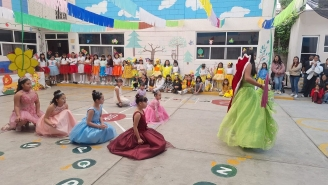
A normal day for them involves getting up, attending classes, and participating in recreational activities. The difference with other girls their age is that, at the end of the day, they don’t all return home to their families, but rather head to their shared dormitory, where they likely share stories with their friends, who have taken on the role of sisters.
Most of them have experienced total or partial abandonment by their families. Some maintain a fragile legal bond with a guardian; others simply rely on the children’s home as a last resort. The Children’s Home is one of many that seek to minimize the effects of child abandonment, especially in Mexico, where the figures are alarming. In 2023, it was reported that the phenomenon grew 70% in six years, with Mexico City, the State of Mexico, and Hidalgo being the states with the highest number of cases.
And what happens at 13 years old?
When the girls finish elementary school, their relationship with the Home for Children doesn’t end; they become part of their new family. To this end, they have a follow-up program for graduates that monitors their progress through middle school, high school, university, and even their entry into the workforce.
Some of them return as volunteers, especially in nursing or support, even in recreational activities. Above all, they are young women who grew up with the same vision as Leonor and Alessandro, and just as they were able to develop, they want to support other girls going through the same thing.
There are many stories, and when Javier Sánchez, head of the Institutional Development Department, is asked about a “success story” (although all the little ones are), he highlights a name that seems to have a connotation in just three letters: Luz. Since she was a child, she declared her dream of becoming a lawyer, but she never changed her mind, and after overcoming obstacles to higher education, the young woman is now about to complete her law degree.
Not everything is light and hope
Like many organizations around the world, and especially in Mexico, their biggest challenge is funding. The pandemic also took its toll on this niche by weakening the donation network, so the institution relies on the tireless work of its board of trustees and their creativity in managing funds. They have diversified their volunteer program and appreciate all types of support, from in-kind donations to training workshops.
For this reason, Javier Sánchez emphasizes: “The Home is open to visitors. We want people to learn about our work, experience it, and share it. Sharing knowledge and visibility can transform destinies”. Girls are especially vulnerable, since they are more prone to school exclusion, child labor, physical and sexual violence, and lack of opportunities to break the cycle of poverty.
The Home is a space with open doors for abandoned little girls, but also for anyone who wants to contribute their grain of sand, which, together with that of many others, can stem the tide and allow girls to laugh, learn, dream, and grow into strong and resilient women.
How to help?
The Tláhuac Girls’ Home welcomes in-kind donations or donations to cover the children’s expenses. They have information for those interested on their social media channels, or from the Social Action Movement.