For over 30 years, El Caracol has been a home and a place for a fresh start toward a safer and kinder life for people living on the streets
By Ximena Mejía
Just over three decades ago, a group of workers began searching for children who had left their homes. When they found them, they realized they were living on the streets of Garibaldi, a neighborhood in Mexico City where unprotected communities reside. By getting to know the challenges and conditions they faced firsthand, El Caracol was born, an organization that, since 1994, has accompanied and promoted initiatives to help this population have a dignified life off the streets.
Visibilize the youth people who survive on the streets was the starting point for El Caracol, which noticed an absence of state assistance specifically for this population. Over time, this perspective also expanded to include men, women, and older adults, and the reason was clear: to promote the human rights of a population that was not being aided. To achieve this, it was essential to build a model that directed its efforts toward the human development of this population, providing accompaniment and comprehensive care, as well as opportunities for social and labor reintegration.
“Contrary to what one might think, the population on the street arrives there not only because of complex family histories, but also due to an array of denied human rights, such as housing, health, protection, and work,” notes Luis Hernández, Director of El Caracol for over 15 years, who points out that this situation is also due to the lack of institutions and public policies that would allow people to improve their living conditions.
In Mexico City, 1,124 people live on the streets. Of these, 86% are men and 14% are women, according to government statistics reported in March 2024. However, it is estimated that this figure will grow by 2025, especially among vulnerable populations.
A Life Off the Streets
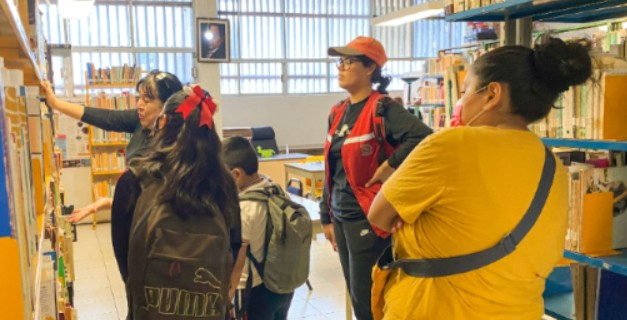
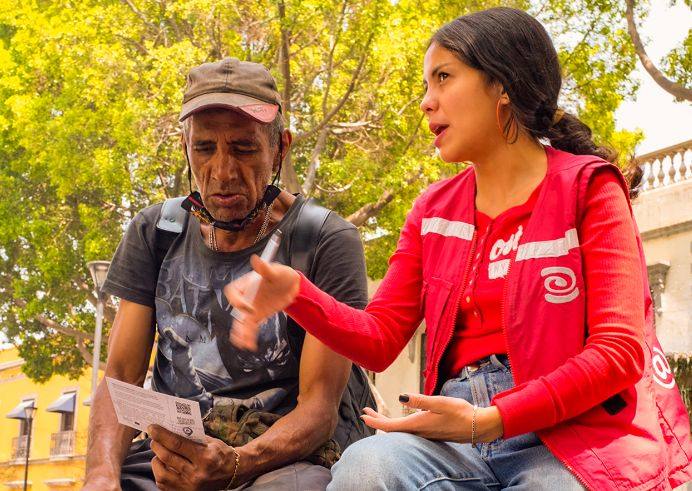
El Caracol’s work begins with the willingness of those who decide to work with the organization. In a first step, the group of workers and volunteers faces a key challenge: earning the trust of people living on the streets, one of the bonds that has been lost.
To accomplish this, El Caracol staff wear red vests, which facilitates their identification and initiates a series of recreational activities that help establish that bond. In such a vulnerable context, this first approach is fundamental, as it lays the groundwork for people to access a life off the streets.
“‘The street doesn’t caress’—this is a very common saying among people who live on the streets, as they face abuse, discrimination, cold, the harshest part of living without a roof,” comments Hernández. In response to this, El Caracol conducts a diagnosis of the physical, motor, and/or psychological damage that people may present, to act according to their most urgent needs.
Among these, access to psychological treatment for substance use is a bridge promoted by the organization, as well as accompaniment in learning a trade, training, and certification of skills, to achieve the final point of the journey: dignified housing, a safe space they can finally inhabit.
The triumph of this goal begins with small achievements: buying a stove, a piece of furniture to organize their belongings. The organization accompanies people in each of these steps, guiding them until they achieve an independent life.
School of the Butterflies
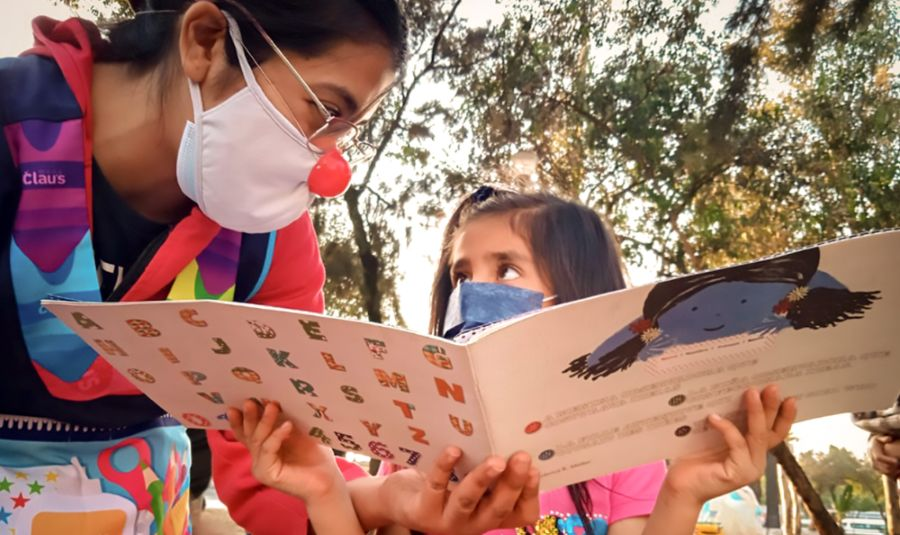
The right to education is a fundamental right endorsed by Article 3 of the Mexican Constitution. However, this is one of the most delayed and difficult processes to access for children living on the streets. As this is a universal right that every girl and boy should have, Escuela de las Mariposas (School of the Butterflies) is a mobile school where, through activities designed for these ages, El Caracol educators assess their psycho-pedagogical needs to provide the most appropriate educational tools, and, ideally in a brief period, ensure that the girls and boys—an especially vulnerable population—can obtain a place in a regular school.
The chance of dreaming
Among the lives of people who were able to change through efforts like those of El Caracol is Lilí’s story, a woman who lived on the streets from age 5 to 13, a childhood she survived and at age 11 found in El Caracol the safe space where she learned, among other processes, to know her rights and defend herself from those who violated them.
“On the street, you experience a lot of abuse, the police pick you up, and many times they wouldn’t take you anywhere, they ask you directly, ‘Do you have money to pay? We’ll let you go,’ and if not, sometimes they would abuse you,” she comments while caring for one of her children inside El Caracol’s facilities, because now, at 40 years old, she maintains a relationship with the organization with whom she continues to learn.
Aporophobia, the rejection of people living in poverty, is a type of discrimination that this population faces, according to the organization’s experience. “Here I found what I needed to get ahead, I learned that no one has the right to humiliate or mistreat you and I learned about my rights, my right to school, to my documents, and for example, to be treated at a hospital,” Lilí narrates.
The abuses that Lilí recounts are not a personal story; they are part of a context where discrimination is a latent social problem that needs to be made visible to be corrected and build more humane societies.
The reality of the street changes every day, which is why El Caracol’s model is constantly evolving. Every three months, the organization evaluates theoretically and empirically what has worked to help more people leave life on the streets and achieve an autonomous and dignified life.
How to help?
Learn more about this initiative on their website and donate here.
El Caracol also receives in-kind donations and welcomes volunteers who can help make a difference. Learn more here.