An orchestra founded in 2008 is a cultural reference in Brazil. It works with children, teenagers, and seniors, and also trains professional musicians
When learning to play a musical instrument, areas of the brain responsible for motor actions and the automation of movements are activated. Aware of these benefits and driven by the desire to create a social project for children, conductor Rogério Schuindt joined forces with his brother Sérgio and founded the Orquestra Locomotiva João Ramalho (João Ramalho Locomotiva Orchestra) in Santo André (São Paulo).
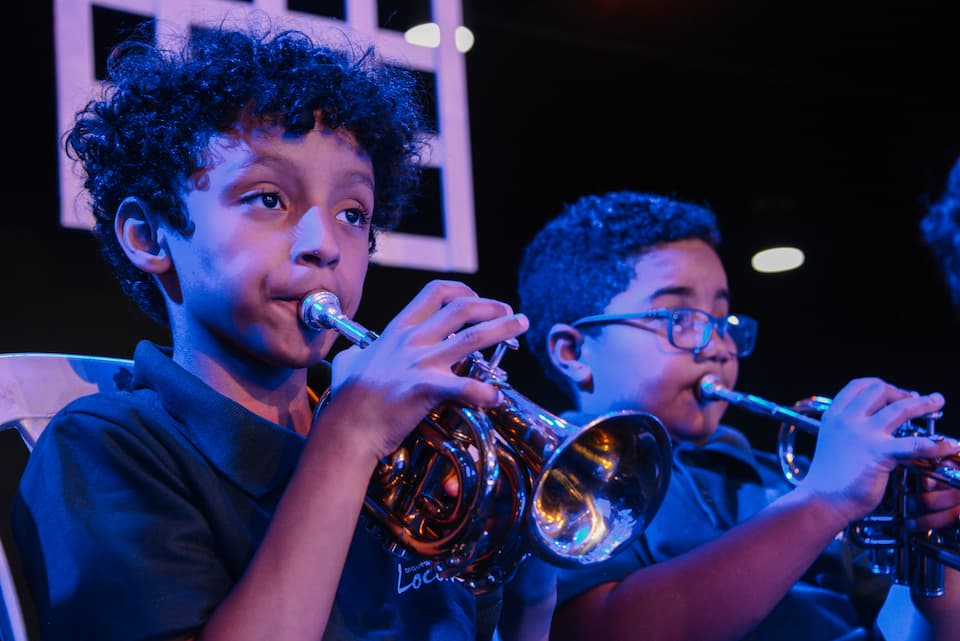
The initiative began with nine students on September 2, 2008, in the Parque João Ramalho neighborhood. Today, however, it serves 650 children and teenagers, divided among three hubs, ranging in age from 7 to 17. They attend classes outside of regular school hours, from Monday to Friday, for two hours a day. “On some days, the schedule is a bit longer because they go out to perform,” explains Matheus Schuindt, the project’s sponsorship manager.
With a unique methodology, students are introduced to instruments from the very first day through group classes. “There’s a lead teacher guiding the lesson, along with assistants helping with posture and how to hold the instrument. This is highly motivating because, when it comes to children and teenagers, too much theory can quickly discourage them,” explains Matheus.
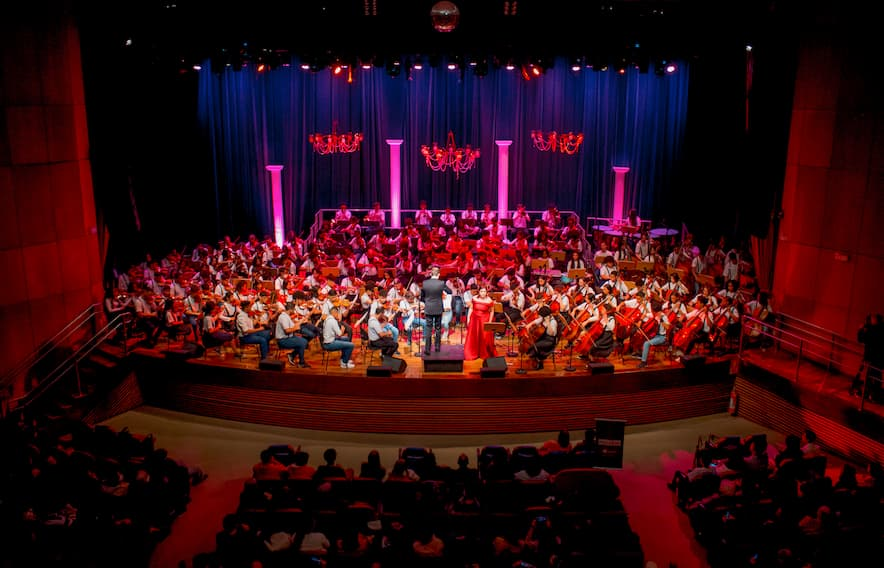
Another distinctive aspect is that, every two weeks, the students go out to perform in places such as schools, theaters, companies, and festivals. “The foundation of our methodology is built on three pillars: intensity, hands-on learning, and biweekly performances,” says Matheus.
The benefits of participating in the orchestra go far beyond musical education. “We keep children engaged during after-school hours, a time when they are often more vulnerable to negative influences in society.”
Parental and guardian involvement plays a key role in keeping teenagers engaged, as some end up dropping out due to the demanding schedule. To build trust, parents have open access to the facilities. “Many take part in the experience by observing and following the classes. From there, many end up becoming project volunteers.” There is also a team of social workers available to support the families.
Matheus adds that the orchestra is not limited to classical music. “We’re a very eclectic orchestra, with a highly diverse repertoire.”
Training Professional Musicians and Conductors
Preparing professionals for the music industry is another key pillar of the orchestra. Those who begin to stand out are encouraged to help their peers. “As they progress and a position opens up, they may begin working with us.”
These students also become part of a select group of more advanced musicians, receiving lessons in conducting, composition, and keyboard. “This kind of musical education truly motivates them. Today, some are no longer with us because they’ve gone abroad to perform in professional orchestras.”
Another branch of the project, launched in 2018, is the lutherie workshop, a small factory specialized in crafting and repairing musical instruments using PVC.
“The workshop has three main goals: transforming PVC into musical instruments, performing repairs, and training luthiers. Students who stand out and show interest can work there, learning a new profession.”
An Orchestra for Seniors
This year, the program expanded with the creation of the Orquestra Master (Master Orchestra), which began with 32 senior participants in its inaugural class. “On one hand, we have children and teenagers, the future of our country, and on the other, we have seniors, who are often forgotten by society. Through music, they become part of a circle of friends, reengage in conversation, and learn to play a new instrument. The benefits are numerous.”
The idea came from a suggestion made by one of the project’s sponsors: with the existing structure and expertise, why not create a program for seniors? The project then sought funding and secured support through the Fundo do Idoso de Santo André (Santo André Senior Citizens Fund).
For this audience, the methodology is slightly different: classes take place three times a week, lasting 1.5 hours each. Transportation is provided, and there is special attention to physical preparation before classes, with a physical therapist on-site to lead stretching exercises. Other healthcare professionals also assess participants on a regular basis.
Awakening Talents, Transforming Lives
Matheus was once a student in the orchestra and shares how a teacher who believed in his potential changed his life. “I used to think I wasn’t capable, but one day I managed to do something I had thought was impossible. She praised my talent, and that moment left a lasting mark on me. I didn’t become a musician, but it stayed in my heart.”
“Here, we see many people with talent who, because of their circumstances, don’t believe in themselves. The project also works to awaken these talents and help them dream,” he concludes.
Want to support this cause?
The Orquestra Locomotiva João Ramalho welcomes corporate sponsorships and individual donations. It is also possible to contribute through Nota Fiscal Paulista, a program of the São Paulo state government that refunds part of the taxes paid on purchases and allows the consumer to donate this amount to social institutions. To do so, simply log in to the website, select the option “automatic donation with CPF,” choose the institution, and set the donation period.
For more information, visit the orchestra’s site, Instagram, Youtube and Facebook.