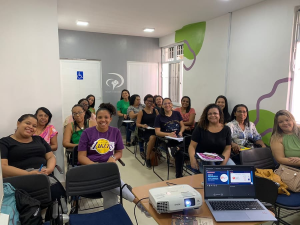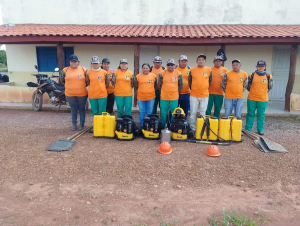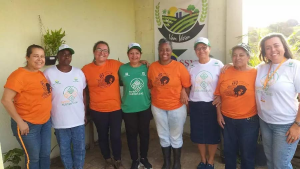
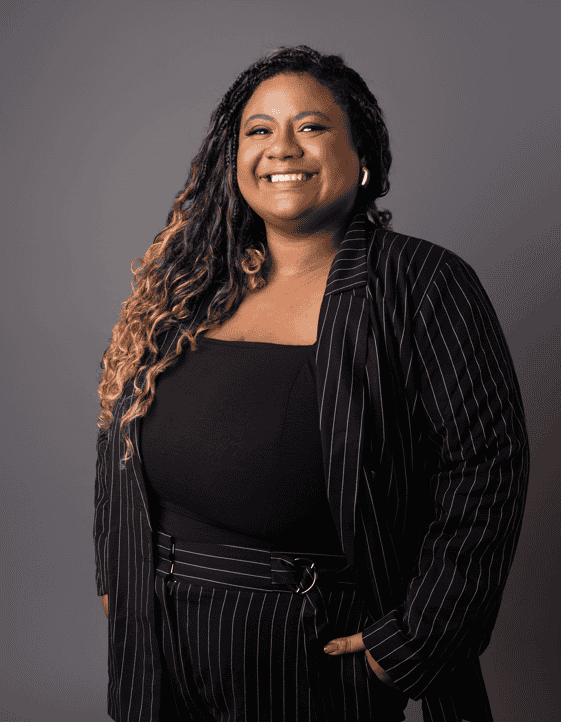
A journalist and researcher from Rio de Janeiro, Marcelle Chagas is part of the Mozilla Foundation and works to strengthen informational sovereignty, fight disinformation, and promote racial and territorial justice within Brazil’s digital landscape
When she was selected as a fellow (an international program that supports innovative leadership) by the Mozilla Foundation, Marcelle Chagas saw that moment as more than a personal achievement. It was a global recognition of the impact that black women can have in the field of innovation and digital justice.
In one of the most competitive selection processes in the world, she stood out due to her long-standing commitment to developing tech solutions grounded in the real needs of the Brazilian population.
“I’m currently working on the international report ‘Territórios Digitais’ (Digital Territories) through GriôTech, in partnership with the Mozilla Foundation and Instituto Peregum. We’re mapping information and disinformation flows in traditional territories across Brazil, bringing together technology, ancestry, and informational justice”, says the journalist from Rio.
Chagas has built her career at the intersection of communication, technology, and social impact. Her work has gained visibility precisely because it integrates local knowledge with a critical perspective on global information challenges. Now, as a member of Mozilla’s international research network, she represents Brazil, alongside another fellow from Belém do Pará, in discussions about the future of the internet.
“I’d like to see the advancement of public policies that recognize information as a human right, integrating racial, gender, and territorial justice into the creation of laws and digital strategies. This includes strengthening media literacy in public schools, investing in connectivity infrastructure in marginalized and traditional communities, and creating public mechanisms to protect against digital violence, especially for black women, communicators, and activists. It’s also essential to ensure algorithmic transparency, platform accountability, and support for community tech initiatives grounded in local knowledge”, she states.
For Chagas, combating disinformation requires a territorialized lens. According to her, each region has its own dynamics of information circulation, shaped by local culture, customs, and conditions.
That’s why one-size-fits-all solutions don’t work. “We need local methodologies for analysis and response”, she says. Tackling disinformation effectively requires strengthening grassroots communication and community networks.
This perspective aligns with the concept of informational sovereignty, a theme still not widely known in the public debate. According to Marcelle, it refers to a country’s ability to produce, distribute, and safeguard information through local leadership and researchers. “We’re losing talent to other countries. Innovation is happening abroad with minds that could be building Brazil’s future,” she warns.
Despite international recognition, she criticizes the lack of appreciation at home. The so-called “brain drain” — the exodus of skilled professionals to other countries — is, according to her, a symptom of a system that neither values nor invests in innovation driven by Black people, women, and communities on the margins. “It’s an unequal measuring stick,” she says. To change this, she argues, we must invest consciously, with a focus on inclusion and the transformative power of local ideas.
Alongside Mozilla, Chagas aims to expand participation for historically marginalized populations in the digital space. But she also reminds us that while she receives international support, the initiative that most urgently needs help right now is the Rede de Jornalistas Pretos (JP) pela Diversidade na Comunicação (Black Journalists Network for Diversity in Communication), a collective she also takes part in, which fights disinformation and uplifts Black voices. “If you believe in fairer, more plural communication, support Rede JP”, she urges.
“Technology is not neutral. My advice is: don’t accept pre-made solutions. Question them, create, hack, and rebuild technology based on your lived experience, the pain and the power of your territory. Find networks and people with similar purposes. Learn the basics of how systems work, but go further: put your heart, your territory, and your ancestry at the center of innovation. Transformation comes from the boldness to imagine different futures — and you could be the one to design them”, she concludes.
How to contribute
Mozilla Foundation is a nonprofit organization that drives global initiatives for privacy, transparency, and digital justice. Supporting the cause is simple and can be done via the official website, mozilla.org/pt-BR/donate, with various payment options. Also, follow the foundation on Instagram.