NGO demonstrates how grassroots initiatives can transform the lives of children, youth, and families through learning and solidarity.
In 2015, on the streets of Itacaré, Bahia, a project was born that would gradually become essential to the local community: ETIV – Ponto de Cultura (Cultural Hub). What began with the idea of combining tourism and volunteering has evolved into an organization that now transforms lives through education, environmental awareness, and cultural appreciation.
The initial idea was inspired by voluntourism, a model that blends travel with social work. As ETIV’s president, Janaina dos Santos Garcia, recalls: “For many years, ETIV focused heavily on this type of volunteering. Our classes were mainly English, environmental education, and arts”. But over time, the community began asking for more.
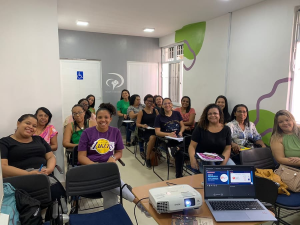
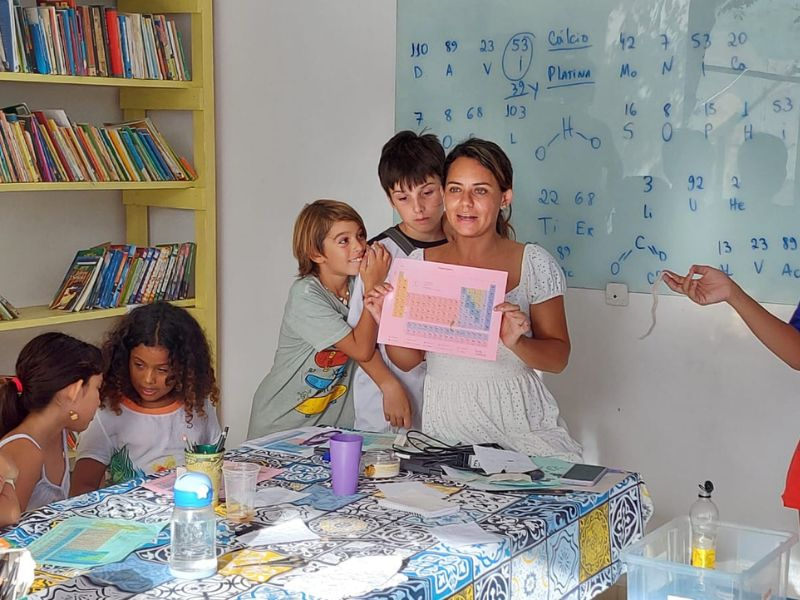
Gradually, ETIV moved away from relying solely on the skills of temporary volunteers and began building a solid network of local teachers and collaborators. This change proved decisive. “From 2023 onward, we’ve been offering many more classes. Before, we had five or six a week, and now we have around twenty. It’s a fully packed schedule”, Janaina celebrates.
The strengthening of the team also gave a new direction to the NGO’s mission. While its early focus was on the English language and cultural exchange, today its scope is broader: education, culture, sports, and the environment now go hand in hand. As Janaina explains: “The NGO was born with the mission of fostering environmental awareness and youth development while integrating with the community”.
This integration is clearly visible in the projects that have become ETIV’s signature initiatives. One standout is Meninas no Comando (Girls in Command), which began as a reading club and has since evolved into a space for female empowerment and leadership. “I believe the Meninas no Comando has a truly significant impact and can really transform the lives of these girls”, says Janaina. Many teenagers who participated have started to dream bigger, with some even becoming teachers at the NGO.
The impact has also reached boys and young men in the city. The Clube do Xadrêz (Chess Club), for instance, started small and now brings together dozens of players. “We began with a tiny club of just ten kids, and recently we held a tournament with 68 players”, Janaina recalls. The activity has become so popular that it is now taught as a subject in partner schools, showing how sports can be a powerful tool for education and inclusion.

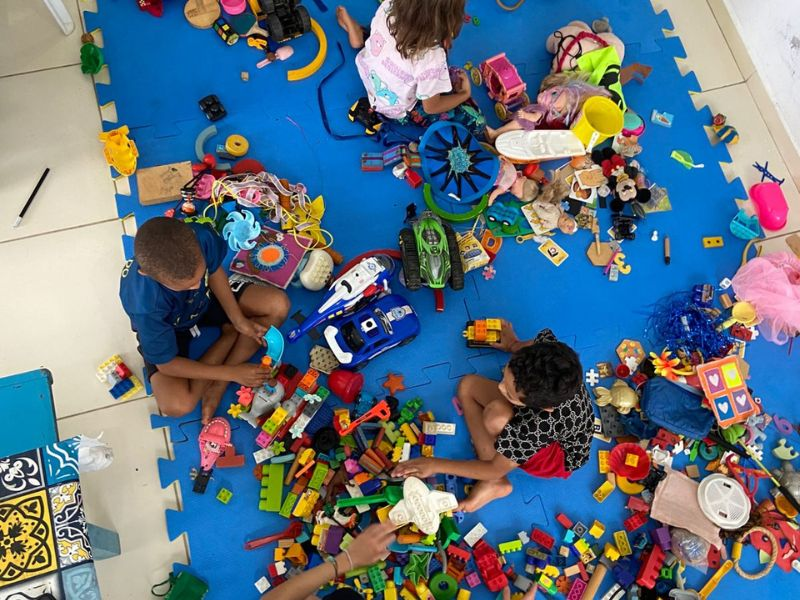
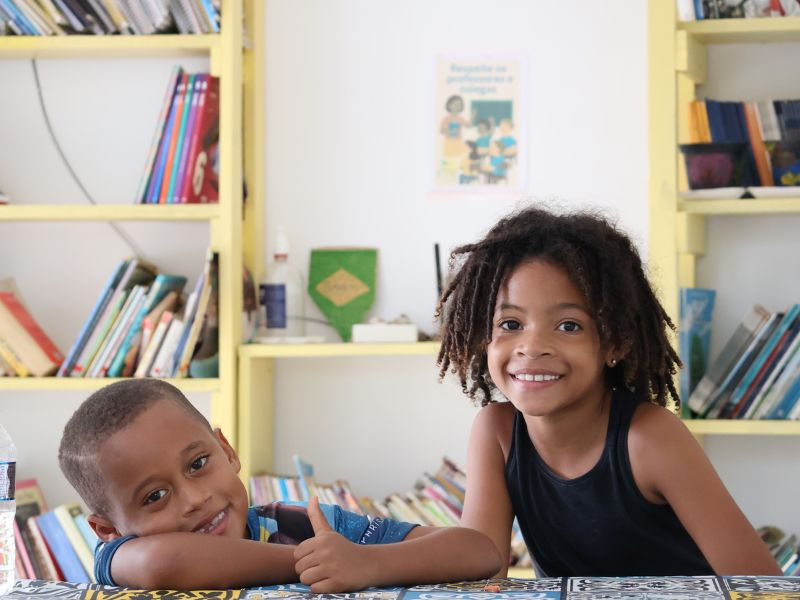
The cultural dimension of ETIV gained even more strength when it was officially recognized as a Ponto de Cultura (Cultural Hub). Children’s daily routines now include theater, music, dance, and Afro-Indigenous musicalization classes. The space has also become a community library and even received a federal award for reading initiatives.
This wide range of activities helps build lasting bonds and reinforces a sense of belonging, showing how a grassroots organization can transform not only individuals but the entire community.
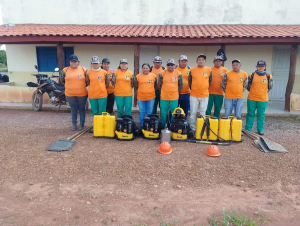
But it wasn’t just culture that shaped the NGO’s identity, the environment has always been at the heart of its work. Mangrove seedling planting, beach clean-ups, and academic research are part of the organization’s daily routine. “Since I’m a biologist, I mentor these theses. This is already the third mangrove-related research project I’ve supervised within the organization”, Janaina explains. This deep connection with nature also educates younger generations to care for the land they call home.
Another milestone in ETIV’s journey was the community swimming program, which ran from 2018 to 2025. In addition to free swimming lessons, it offered lifesaving and first aid training. “This project was crucial for us to start gaining respect and visibility. Almost everyone who knows ETIV knows us because of the swimming program”, Janaina recalls. Although it was discontinued due to a lack of space, its legacy lives on in the community’s memory.
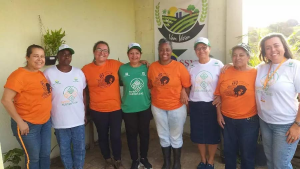
These stories reveal an NGO deeply rooted in Itacaré. “Everyone on the board lives here in Itacaré. It’s an NGO born and raised in Itacaré,” Janaina emphasizes. Contrary to what some might think, ETIV is not a foreign organization, it is built by and for the local community, led by a strong team of women in leadership roles.
The international aspect is still present but now in a more balanced way. Foreign students and volunteers join cultural exchange programs, teach English, learn Portuguese, and develop research projects. “It’s not exactly volunteering, we call it a cultural exchange program. They come here, take part in cultural activities, attend Portuguese classes, go on tours… it’s not just volunteering”, Janaina explains. This exchange enriches both the community and the visitors, fostering mutual learning and respect.
To sustain its work, ETIV relies on public grants, donations, and contributions from exchange participants. “We don’t have funding from the government or foreign sponsors. Whenever we receive resources, it’s from approved projects through grants and from individual donations”, says Janaina. This model demands constant effort but also ensures autonomy and a strong local identity.
Looking ahead, there’s a special milestone on the horizon: in 2026, ETIV will celebrate 10 years as an officially registered organization. For Janaina, this is a moment of pride: “We registered our CNPJ on May 5, 2016. Next year, we’ll celebrate our official 10-year anniversary”. More than an administrative date, it represents a decade of persistence and real impact.
Over these ten years, ETIV has quietly but profoundly transformed lives: children learning to read, youth discovering their talents, women finding collective strength. Each story is like a seed, spreading throughout the community and beyond.
ETIV’s journey shows that education, culture, and the environment are not separate pillars, but interconnected threads of the same social fabric. By investing in these areas, the NGO builds a fairer and more sustainable future, starting in Itacaré and inspiring far beyond its borders.
More than just an organization, ETIV is a space of care, resilience, and hope. As Janaina beautifully sums it up: “We treat the children with a lot of love and respect. There’s no punishment, no yelling, no violence. Here, they learn values like saying sorry and thank you. For me, that is also a profound transformation”.
How to Help
Donations to the NGO can be made through the link on the website or via PIX: (73) 982534476.