Survey shows that favelas generate around R$ 300 billion per year, with consumption higher than that of 22 Brazilian states
In Brazil, there are 12,348 favelas, home to 17.2 million people living in 6.6 million households, equivalent to 8% of all Brazilian households. The data comes from Instituto Data Favela, the first in the country to study the behavior and consumption patterns of residents in these territories.
In addition to conducting research, the institute identifies business opportunities for both local and external companies, aiming to boost the communities’ economy. Created in 2013, it is the result of a partnership between Celso Athayde, founder of the Central Única de Favelas (CUFA) -one of Brazil’s largest social organizations, active in favelas nationwide with projects in education, culture, sports, and income generation – and Renato Meirelles, president of Instituto Locomotiva.
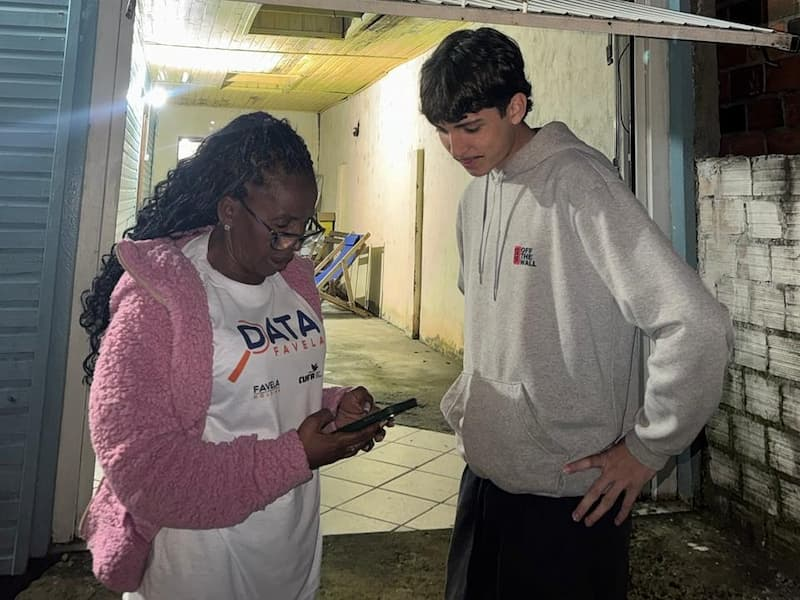
To strengthen income generation and expand local leadership, Data Favela trains residents to apply its research methodologies, always under the supervision of Instituto Locomotiva.
Recently, during Expo Favela Innovation SP (one of the largest entrepreneurship and innovation events in favelas, connecting residents, community leaders, startups, and investors around social impact businesses), the institution presented a survey that heard 16,500 people across 12,300 mapped favelas.
Renato Meirelles, alongside Bruna Hasclepildes, research coordinator, presented data that highlights the scale and relevance of Brazil’s favelas, which are often made invisible in public debate.
“If Brazilian favelas were a state, they would be the fourth largest in the country. There are more favela residents than people living in Paraná, Rio Grande do Sul, or Bahia,” said Renato.
According to him, the favela population (17.2 million) is only smaller than that of the states of São Paulo (45.9 million) and Minas Gerais (21.3 million), and tied with Rio de Janeiro (17.2 million).
“There are more voters in the favelas than in the entire city of São Paulo. We cannot keep treating favelas as territories of exclusion, operating under a logic of scarcity rooted in prejudice. Surprisingly, the state with the highest number of favela residents is São Paulo.”
The states with the largest number of favelas are: São Paulo (3,123), Rio de Janeiro (1,724), Pernambuco (849), and Pará (723). The most populous favelas are Rocinha (RJ, 72,021 residents), Sol Nascente (DF, 70,908), Paraisópolis (SP, 58,527), and Cidade de Deus/Alfredo Nascimento (AM, 55,821).
Renato also emphasized that, although well-known, these communities almost always appear in the media associated with violence, while their economic and cultural potential is overlooked.

Pride and solidarity
Despite the stigmas, 94% of respondents said they are proud to live in a favela, and 87% see it as a space of solidarity. During the pandemic, for instance, favela residents donated 30% more than people from other areas.
Even so, the main demands remain: 19% for improvements in housing conditions, 18% for greater access to healthcare, 18% for security, and 14% for infrastructure such as sanitation and public lighting.
Creativity, entrepreneurship, and consumer power
The entrepreneurial spirit is striking: one-third of favela residents run their own businesses, although most still operate informally. Among these entrepreneurs, 79% plan to expand or open a new business within the next 12 months, and 73% believe entrepreneurship is the most viable path to improving their lives, more so than formal employment.
This entrepreneurial dynamism is reflected in the economy: favelas generate around R$ 300 billion per year, a volume greater than the total consumption of Paraguay and Bolivia combined, and higher than that of 22 Brazilian states.
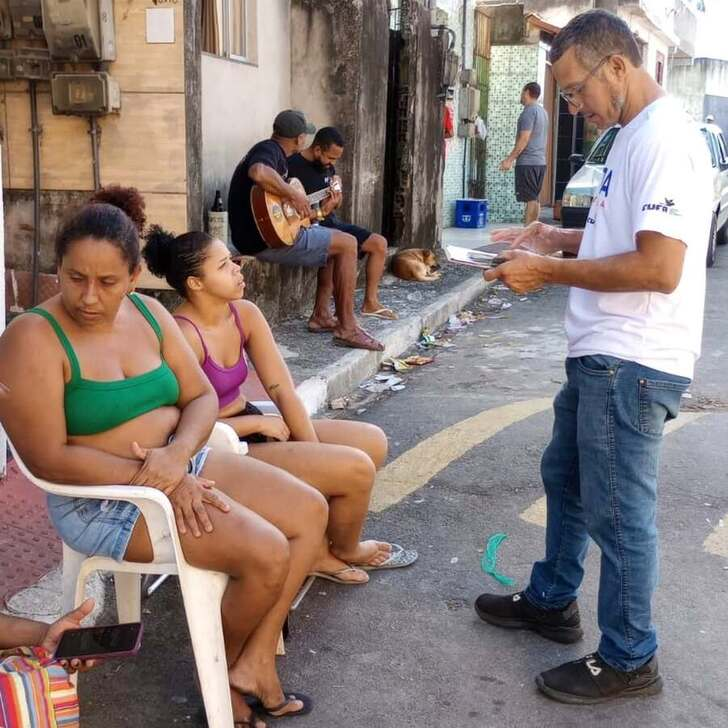
Consumer aspirations in the favelas are also significant: 70% intend to buy clothing (8.6 million people), 60% want perfumes, 51% seek beauty products, 51% construction materials, 43% electronics, 43% various courses, and 29% language courses.
Furthermore, Renato explains that in the favela, clothing often serves as “armor against prejudice.” For many, consumption is not only about meeting a need, but also about affirming identity and earning respect.
The survey shows that 78% of residents have already made an effort to buy something they couldn’t afford in their youth; 85% feel great satisfaction when saving to acquire a good; 62% have felt excluded for not being able to buy a trendy item; and half have been humiliated for not wearing a specific brand.
“Not consuming also carries a burden. In the favela, not consuming carries stigma,” Renato summarized.
Enjoyed the content?
Follow Data Favela’s work on Instagram.