The month of June was filled with cultural events that also highlighted social initiatives
June was marked by events and celebrations that showcased social and cultural initiatives in Rio de Janeiro. Coluna da Neuza was present at some of these moments to record and share the voices that impact communities.
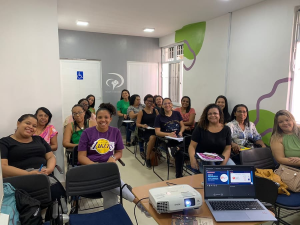
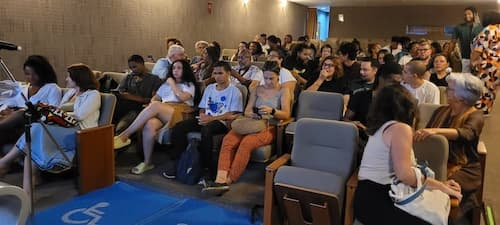
The activities began on July 5th with the 1st Peripheral Media Meeting in Rio de Janeiro, held at the Centro Cultural Banco do Brasil (CCBB). The event kicked off a journey of exchange, listening, and collective construction across the four states where Território Mídias Brasil (Brazil Media Territory) operates: Rio de Janeiro, Bahia, São Paulo, and Rio Grande do Sul.
Among the participants was Claudia Santiago, a teacher, historian, journalist, and coordinator of the Núcleo Piratininga de Comunicação, who is a reference in counter-hegemonic communication. In her speech, she highlighted the importance of the struggles, the role of communicators in their territories, and the challenges ahead.
Tatiana Lima, journalist, PhD in communication, professor at the Núcleo Piratininga de Comunicação (NP), or Piratininga Communication Center, and grassroots communicator with Território Mídias Brasil (RJ), also took part. She spoke about the media ecosystem and the importance of ensuring its sustainability.
Representing the Banco do Brasil Foundation, one of the guests spoke about the Social Technologies certified by the institution and how they help transform various communities.
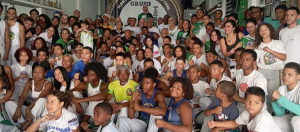
Next, young communicators Paula Latge and Matheus Magalhães presented the Social Technology awarded in 2024 and shared their experiences with the practice that transforms realities through concrete actions developed with teenage communicators in peripheral territories.
Coordinators of Território Mídias Brasil, Ciça Figueira and Dad Matos, emphasized that the initiative aims to strengthen and amplify the voices of peripheral media, creating a welcoming space for inspiration and opening new paths in grassroots communication.
Michael Mota, 35, an audiovisual producer and resident of Capão Redondo, a neighborhood in the outskirts of São Paulo, said it was an honor to be part of the event. For him, being part of Território Mídias Brasil has been an extremely positive and rewarding experience because he feels heard and recognized for who he is, without having to “create characters” — something that, according to him, many Black people are forced to do in certain spaces.
Finally, Silvana Reis, a leader of the Rio Telecommunications Union and resident of Taquara, Jacarepaguá, in Rio’s West Zone, said the meeting was enriching, broadened her view of peripheral media, and provided connections, networks, and ideas that she plans to apply in her own territory.
Education as a tool for social transformation
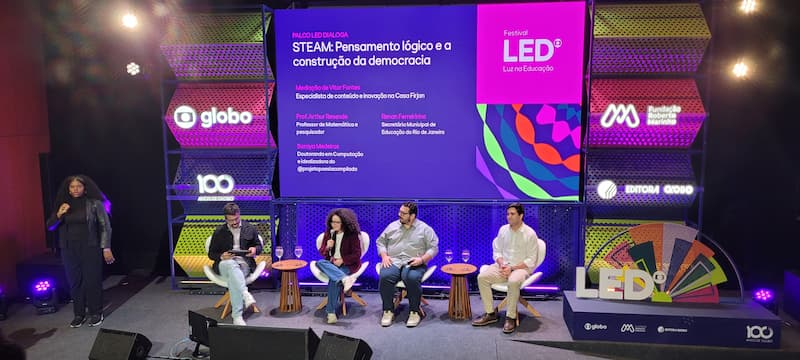
On June 13th and 14th, the LED Festival – Light in Education took place at Museu do Amanhã (Museum of Tomorrow) and at the Rio Art Museum (MAR) in Praça Mauá, Rio de Janeiro. This was the 4th edition of the event, which, according to G1, brought together over 8,000 people to discuss the future of education in Brazil.
The annual event is a social initiative held by TV Globo and the Roberto Marinho Foundation, in partnership with Editora Globo and sponsored by the Bradesco Foundation. Its aim is to promote and recognize transformative practices in the field of education.
However, the LED Festival doesn’t just celebrate the bright side of education — it also seeks to connect the business sector with the demands of civil society, opening space for discussions about the future of education and the impact of new technologies and ideas in the educational field.
Anderson Rodrigues, a professor, psychoanalyst, and professional in education and social projects, resident of Copacabana and originally from Baixada Fluminense, said he attended in search of updates on new educational technologies, especially artificial intelligence and how marginalized communities are dealing with these challenges.
Luma, 16, from São Gonçalo, in Rio’s East Zone, and a high school student, said participating in the LED Festival was an incredible experience and a great opportunity.
This was the second time for Nívia Ribeiro, from Maricá. She attended three talks and two workshops, which brought her a lot of knowledge, she said. A mediator at a public school, she emphasized the value of hearing from great references in education and said she was very happy to be part of the event.
Among the highlights were the Municipal Secretary of Education, Regina Casé, Fafá de Belém, Eliana, Elisa Lucinda, Thalita Carauta, Rita Batista, Sandra Annenberg, and authors Chimamanda Ngozi Adichie (Nigeria) and Conceição Evaristo (Brazil), who discussed education and representation.
There were 150 hours of content across seven stages, five interactive stands, and 230 speakers, all streamed live for free on Globoplay and Canal Futura.
Knowledge, flavors, and traditions that cross borders
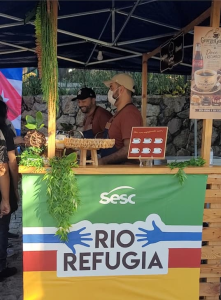
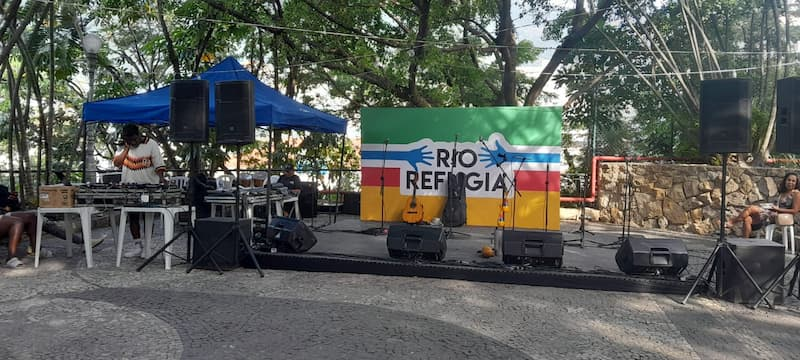
On June 21st and 22nd, SESC Tijuca, in Rio de Janeiro’s North Zone, hosted the 9th edition of Rio Refugia, a festival held in honor of World Refugee Day (June 20th). The event is co-organized by the NGO Abraço Cultural, SESC, and Cáritas RJ.
Roberta, director of Abraço Cultural, explained that the festival is an annual social initiative held around World Refugee Day.
“At this festival, there are various activities such as a food fair, cultural workshops, dance performances, music shows, as well as workshops on Arabic calligraphy, turbans, and African braids. This year, there was a new addition: the Painting the Global South workshop. It’s a special moment to celebrate the strength and culture of refugees, promoting encounters, new flavors, and new knowledge for the community.”
Luciana Queiroz, from Cáritas RJ, added that Rio Refugia is a multicultural event that values the talents of people in refugee situations, providing space for them to share their skills and showcase their work in areas such as gastronomy, handicrafts, and art, highlighting that all products presented are made by refugees.
Anitta, a refugee from Benin, is a French teacher at the NGO and took part in the turban workshop, where she shared cultural aspects related to the use of this accessory.
Priscila Pereira, social worker at SESC Rio, emphasized that Rio Refugia is the result of year-round work, which includes educational actions against xenophobia in schools and support for refugee entrepreneurs. She also highlighted the training and workshops promoted in partnership with PARES Cáritas and Abraço Cultural, aimed at improving participants’ sales skills.
Aline, a resident of Andaraí, attends SESC’s cultural events every year to learn about other cultures. She showed special interest in the turbans, noting that they go beyond hair protection, and praised the diverse culinary offerings presented during the festival.
All these events, and many others that marked the past month, show that, when there is room for listening, exchange, and respect, it is possible to build fairer and more humane paths for everyone.