The initiative connects executives, young women, and companies to address the low female representation in IT in a practical and structured way
In a scenario where technology is expected to generate 78 million new job opportunities worldwide by 2030, according to the World Economic Forum, women’s participation in the field is still progressing at a slow pace. Today, only 20% of professionals working in IT are women, according to a study conducted by Laboratória in partnership with McKinsey & Company. For Elisabete Waller, co-founder and vice president of the NGO Ser Mulher em Tech (Being a Woman in Tech), these figures are more than just statistics: they are the starting point of a mission that began long before the organization was formally established and that now works to change this reality in a structured and strategic way.
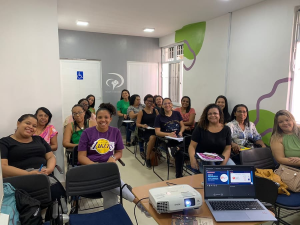
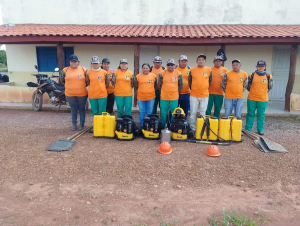
Ser Mulher em Tech was born in practice before becoming an official association. The work with NGOs and public schools began in 2018, initially as a project among friends, long before it gained formal NGO status. The idea was simple, yet powerful: go where the girls are and show them, in practice, that technology is also a place for women. The talks held in NGOs and public schools in São Paulo, and now also in Rio de Janeiro, are, according to Elisabete, the “heart” of the organization and an important step toward inspiring more women to pursue careers in technology.
The decision to start with girls from middle- and lower-middle-class backgrounds was intentional. “When you empower one girl, she transforms at least four other people in her family,” she explains. For her, the social return on investment (ROI social) is clear: by entering the technology field, these young women not only change their own trajectories, but also reshape the reality of their families and future generations.

The mentorship program was launched in 2020 andis now one of the NGO’s most well-known initiatives. The model is one-on-one: an experienced technology executive mentors a woman who is entering, repositioning herself in, or advancing within the field.
More than technical guidance, the program is built on inspiration through example. There are around 200 mentors, all in senior leadership positions, who demonstrate in practice that it is possible to reach the top. “If she did it, I can too” is the mindset that sustains the program.
In 2024, the organization introduced Roda de Conversas (Conversation Circles), a group format that brings together one executive and up to four women to discuss specific career topics, such as landing a first leadership role or navigating the challenges after a promotion. Unlike one-on-one mentoring, the focus here is on collective exchange, active listening, and sharing common insecurities. The meetings take place once or twice a month, depending on the schedule, and have proven to be a powerful space for support and growth.
One of the most interesting aspects is the generational perspective. Elisabete notes that differences between Generation X, Millennials, and Generation Z are present in the mentoring sessions, but not as sources of conflict, rather as opportunities for mutual learning. “We even learn new vocabulary,” she says, referring to a 17-year-old intern who works directly with her on the book project. In her view, women tend to have a strong ability to adapt to these changes, which helps foster dialogue across generations.
Still in 2025, the NGO began sharing internship openings and training programs on its social media channels, responding to a recurring demand from participants: many did not know where to start looking for opportunities. In the same year, the Ser Mulher em Tech Podcast was created, with its launch scheduled for this year. Each episode features a former mentee or women from the job market, connecting theory and practice through real stories of career transitions, challenges, and achievements in technology.
Another recent milestone is the book “Ser Mulher em Tech”, set to be released on February 26 at Livraria da Travessa in Shopping Villa-Lobos. The book brings together around 30 mentors and mentees in a collection designed to inspire more women to enter and remain in the field, while also encouraging society as a whole by showing how a more diverse environment makes a difference for organizations. The project, sponsored by Great People Books, affiliated with Great Place to Work, will be available in both print and digital formats.
All of these initiatives are connected to the organization’s so-called Teoria do Impacto (Impact Theory),” structured around three pillars: inspire, empower, and influence. To inspire means working directly with women and girls through mentorship programs, conversation circles, and engagement in schools. To empower means advising companies on how to attract, retain, and develop women in technology. To influence means engaging the broader ecosystem, governments, schools, families, and society, to dismantle the idea that IT is a “male domain.”
For Elisabete, the low presence of women in STEM reflects the way boys and girls are raised from early childhood. While boys are encouraged to develop logical reasoning skills through games from a young age, girls are often steered toward more playful and social activities. Over time, this creates the false perception that the exact sciences are not for them. “Technology today even involves art, not just programming,” she says, advocating for a new perspective on the field. This concept also gives its name to a new NGO project, “EmpoderArti – Tecnologia é Arte” (EmpowerArt – Technology is Art), which has already been approved to raise funds through Brazil’s Income Tax incentive program. The careful monitoring of mentees is also reflected in the numbers: the NGO conducts surveys at the end of each mentoring cycle and records a 98% rate of top evaluations.
The organization also works closely with companies because, according to Elisabete, it is not enough to attract women to technology if they continue to drop out midway. Studies show that female attrition in the field is significantly higher than male attrition. The NGO’s own president left the technology sector early in her career due to a lack of female role models, only returning years later. For the co-founder, retaining women requires a different approach from the one traditionally applied to men.
At the end of the interview, Elisabete summarizes the main message she would like to share with girls and women who want to enter technology: “Be strong, persist, and study hard.” In her view, the field changes every day, and those who commit to continuous learning will always find opportunities. Writing down goals, revisiting them daily, and not allowing comments or obstacles to shift one’s focus are essential attitudes for building a solid career path in technology.