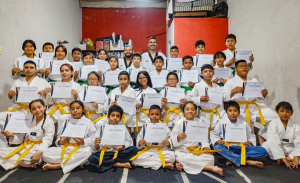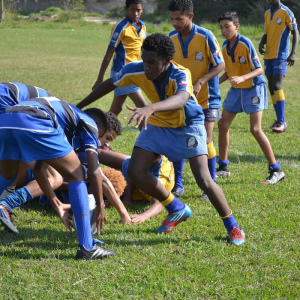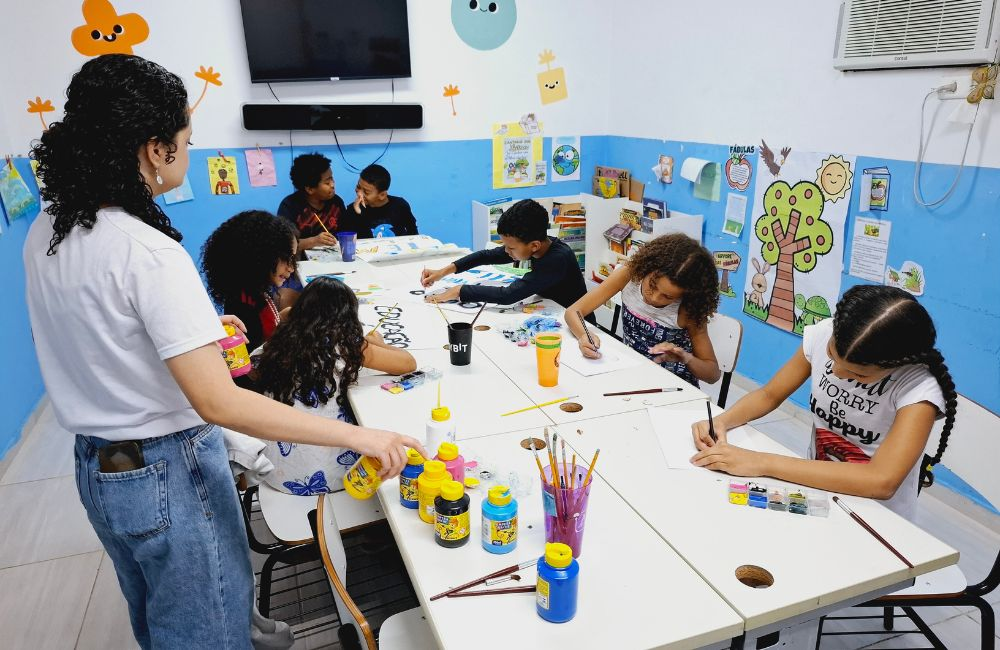
Ana Caroline, director of Instituto Educar+ in Rio de Janeiro, talks about the challenges and achievements of the organization, which for the past eight years has been transforming the lives of children, teenagers, and families
The Instituto Educar+, founded in Rio de Janeiro, has been active for eight years in the Complexo do Chapadão, in the city’s North Zone, offering cultural, educational, and psychosocial support activities for children, teenagers, and families in the community. Leading the organization, the manager Ana Caroline shared her journey, the impact of their work in the area, and the institution’s next steps.
“Educar+ started with the idea of creating a community library and promoting literary gatherings,” recalls Ana Caroline. According to her, literature was the first tool for social transformation: “We believed that books could serve as a gateway to addressing important topics with children. If they could learn to read critically, they could overcome challenges imposed by the realities of the community”.
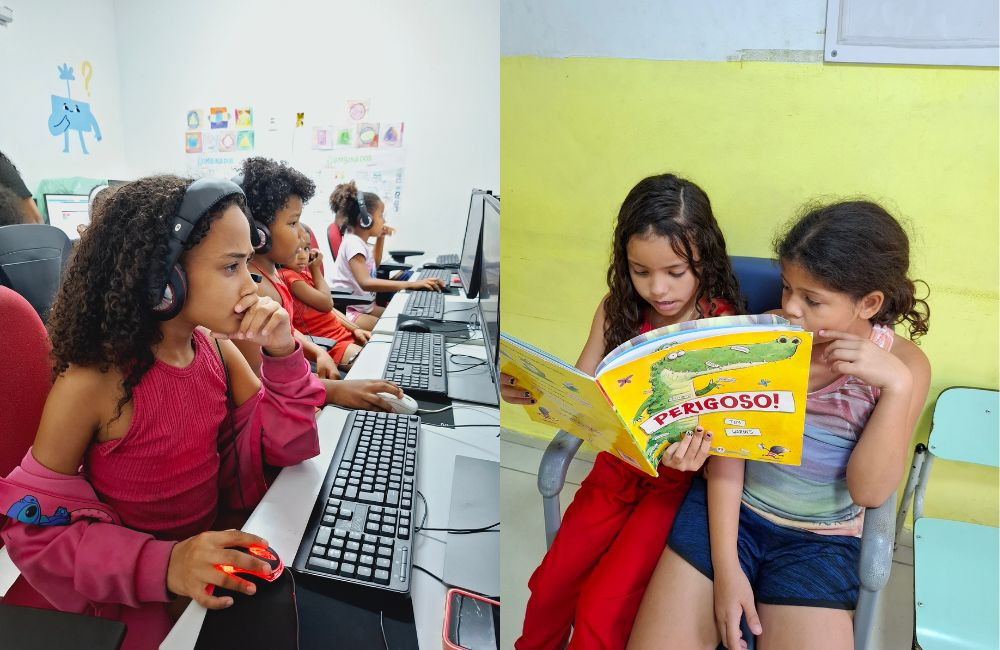
Over time, new projects began to emerge based on the children’s own needs. “We started with reading initiatives but realized many still didn’t know how to read. So, we created a literacy program. During literacy classes, we noticed difficulties with drawing, which led to the creation of an art workshop. When we saw that artistic expression alone wasn’t enough, we introduced audiovisual activities. Next year, we are planning to open space for theater and dance”, she explains.
This expansion brought a central axis that now guides all the programs: valuing children’s identities and strengthening their self-esteem. “Our goal is to enable them to build new perspectives of the world. Literature was the starting point, but today we have gamified reading projects, comic book and poetry production, as well as initiatives in technology and citizenship,” she says.
Innovative methodologies also help maintain engagement. “Cell phones and social media have made the challenge greater, so we look for alternatives different from traditional schooling. In our STEM project (an acronym in English for Science, Technology, Engineering, and Mathematics), for example, they learn geometry using 3D design tools. In the Cria collective, the reward system works like a game and keeps the kids super excited”, explains the manager.
The work, however, is not limited to children. Educar+ also develops initiatives for families, such as the Mães da Comunidade program (Mothers of the Community), launched in the second half of 2023. “We realized that if we didn’t involve families, we wouldn’t move forward. It’s no use working on a child’s self-esteem inside the institution if, at home, they suffer verbal abuse or constant discouragement”, she affirms.
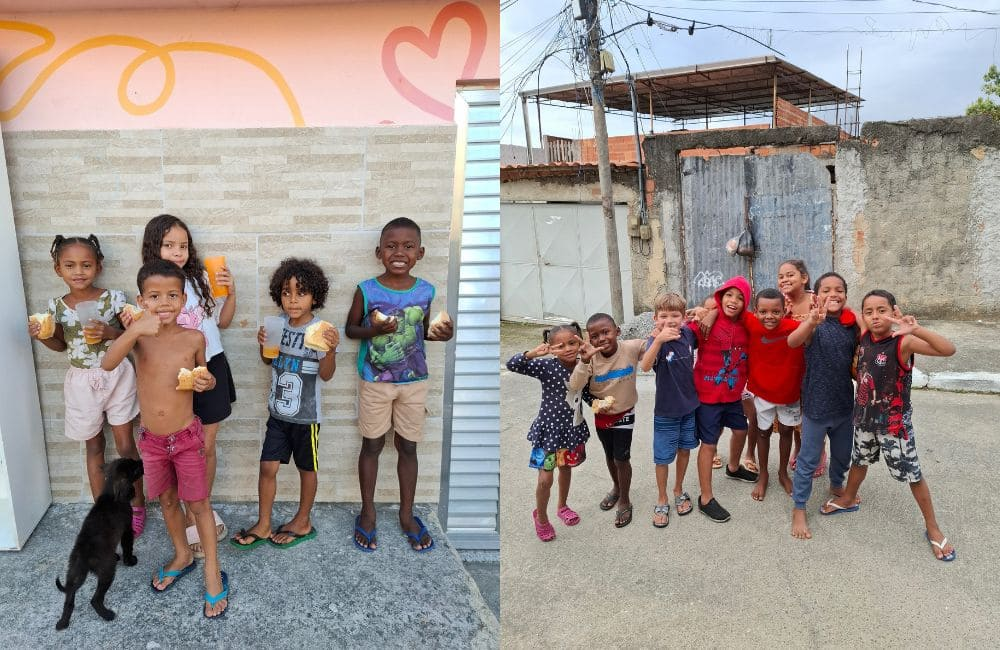
Despite the challenges, Ana Caroline highlights concrete progress. “A teenager who once avoided eye contact, spoke softly, and was bullied now speaks up, engages in conversations, and makes friends. These results show that the process is long, but possible. It’s a lifelong mission”, she emphasizes.
Partnerships have been essential to expanding their reach. In addition to support from companies through incentive laws, the institute counts on sponsors and strategic collaborations. “It’s impossible to sustain the entire structure with volunteers alone. Today we are a team of 16 people, most of them women who live here. That representation is essential for our work to truly make sense”, she explains.
Among the partners are FIRJAN and SENAI, which have opened apprenticeship opportunities for teenagers from the community. “That first chance at a job can change their future. Our idea is to scale the project in the coming years”, she says.
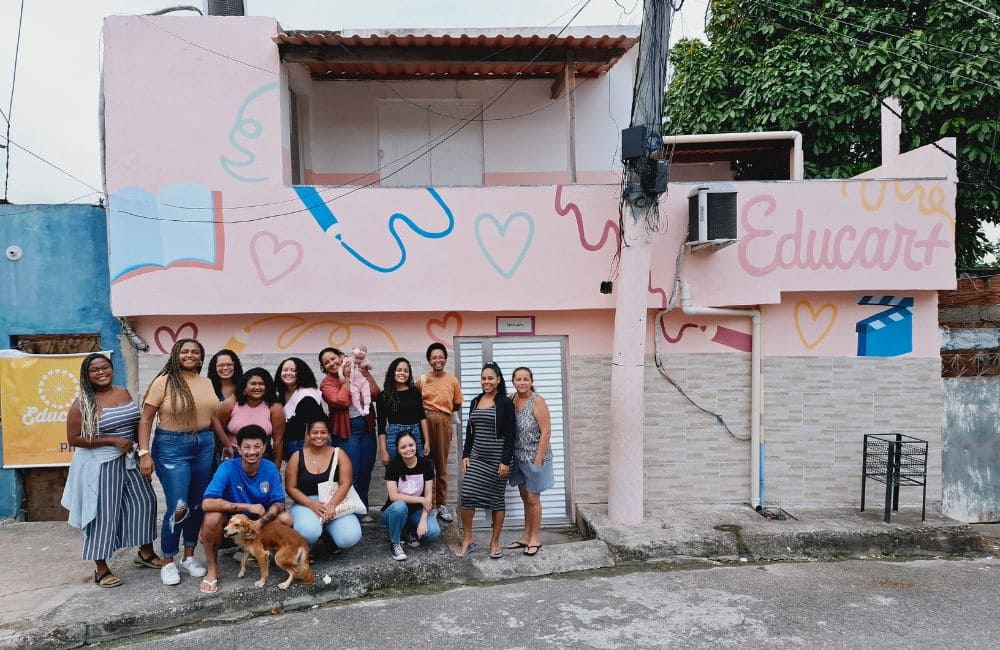
Ana Caroline notes, however, that territorial obstacles still make it difficult for basic services to reach the area. “Many times, institutions don’t want to operate here because of violence. There have even been health projects that never made it to the main street. This reinforces the importance of having a safe, structured space within the community”, she comments.
For the coming years, Instituto Educar+ has ambitious plans. “We are beginning construction of a 500-square-meter annex, with rooms for dance, theater, individualized support, and a cafeteria. Currently, the children have their snacks in the hallway. This new space will provide more dignity and safety”, she celebrates.
Throughout the conversation, Ana Caroline reinforced the project’s impact: “Our greatest achievement is ensuring that inside Educar+, every child and teenager can be whoever they want to be. In a community where, so often, people only tell you what you can’t do, we open space for the opposite: here, you can”.
How to help the project
You can contribute to the Educar+ Institute in several ways. Donations can be made directly through the website, where you can also sign up for the volunteer program that best suits you.
If you prefer, donations can also be made by bank deposit:
Business Name: Rita de Cássia Cultural Center
Business Name: Educar+ (Instituto Educar Mais)
Bank: Itaú (341)
Branch: 8309
Checking Account: 46318-3
CNPJ: 38.658.273/0001-09
Or, if you prefer, send your contribution via PIX (Pix is Brazil’s instant payment system — a free and fast way to send or receive money anytime, directly from one bank account to another) to contato@educarmais.net