In a country where racism persists, this organization trains local city councilors, activists, and young people who demand a place in spaces of power, being proud of their history and heritage
If we look back at history, Ashanti is the name of a people in Ghana who courageously resisted more than 80 years of British colonization. That demonstration of self-love and dignity inspired a group of young Afro-Peruvians who today, from another part of the world, seek to vindicate their African roots.
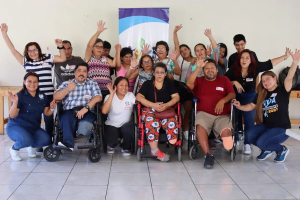
Currently, Ashanti Perú is a civil non-profit organization that, since 2004, has worked to empower young Afro-Peruvians in situations of vulnerability and exclusion. Their work focuses on defending human rights and promoting the political participation of these youth from an intercultural perspective, seeking a voice in decision-making spaces.
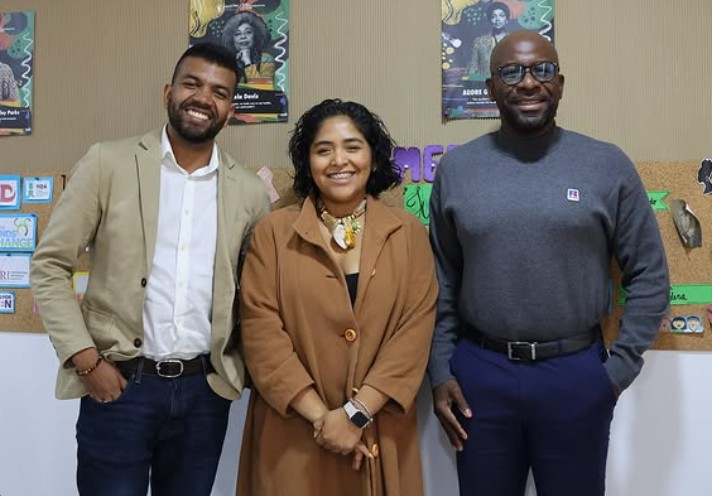
Marco Antonio Ramírez, current president of the organization’s Board of Directors, remembers that when he was 15, he was an adolescent with many doubts and pain. He suffered discrimination and mockery for his skin color both at school and in his neighborhood, spaces where any person should feel safe. “They made me feel different. From that pain, I began to investigate, to look for young people like me, and that’s how I found Ashanti.”
In the organization, he discovered that being of African descent is not just a racial category, but a cultural identity that speaks of history, art, music, and memory. “I understood that there are more elements that constitute me as part of the Afro-Peruvian people. And that transcends skin color,” he says.

A Political Leadership School with Outstanding Results
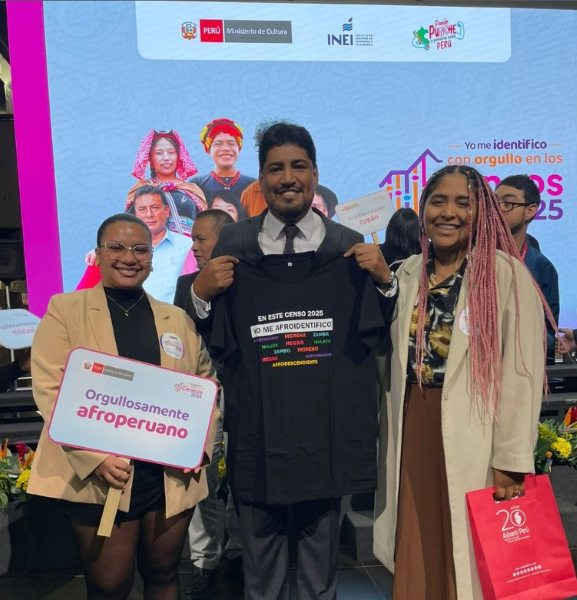
In a country where more than 828,000 people identify as Afro-Peruvian — according to the 2017 National Census, that represents 3.6% of the population over 12 years old — Ashanti Perú has become a key space for the political and cultural formation of Afro-descendant youth. One of their most outstanding projects is the ‘School for Training Afro-descendant Leaders’, which offers three modules in Lima: Identity; Leadership; and Human Rights and Political Participation.
While it’s true that in-person classes are taught in the capital, the benefited youth come from different regions such Lambayeque, Piura, and Arequipa. “At the national level, we have 8 regional coordinators and each one is in charge of a group that in total adds up to 180 people, from Tumbes to Tacna, along the entire coast,” affirms Ramírez.
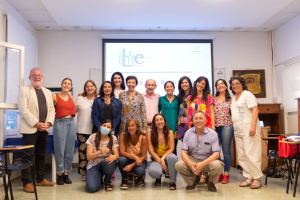
These workshops take place over eight months on Fridays, Saturdays, and Sundays. Each of the young people must replicate these projects in their communities and schools. In this way, they build a network to advocate with local and municipal authorities on ordinances, initiatives, and recognition of the Afro-Peruvian population in their districts.
In recent years, among Ashanti training school alumni, there were a mayor in Mala, young councilors—mostly women—in Chincha, Arequipa, and even in the city of Lima, where they also had Afro-descendant councilors. “From their positions they promote initiatives with identity that connect with other struggles that can be feminist, LGBTI, disability that have an intercultural focus, of equality and non-discrimination,” adds Marco Antonio.
A great example of this is Rossmary Palma, current councilor of the district of El Carmen, in the province of Chincha (Ica), and a former student of Ashanti Perú‘s training school.
Rossmary specifies that, even from her public position, the fight against structural racism continues to be a daily battle. “It’s still difficult. I’ve had to raise my voice and be respected. Afro people still face slurs and stereotypes. This struggle is not only external, it’s also internal: we must empower ourselves and recognize ourselves for what we are,” she emphasizes.
One of the most significant learnings from her time at Ashanti Perú was the focus on political formation with an Afro-descendant perspective. “I learned about leadership and political advocacy. Thanks to that, I was able to participate in different congresses and dialogue spaces. I understood that doing politics is not just running for office: it’s deciding, acting, and transforming from any space,” she reflects.
Finally, she asked the youngest not to hide who they are. “We have history, culture, resistance. We are part of the construction of this nation, and we cannot hide ourselves. Let’s play politics in all spaces, from every decision we make. That’s why it’s so important to inform ourselves, participate, and learn to choose.”
Transforming projects
Throughout the last two decades, this Afro-descendant organization has developed various projects. In addition to the school, one of their most symbolic spaces is the Afro-Peruvian Library, located in their community center in Lima, which houses books, archives, and pedagogical content about Afro-Peruvian history, available for researchers, teachers, and young people interested in recovering their cultural memory. From that same center, content is produced for AfroTV.PE, a digital platform where young people communicate, debate, and make their identity visible through audiovisual formats that usually don’t have space in traditional media.
Through Afro-descendant Voices of Power, a school for young women, political advocacy tools with an Afro and feminist perspective are promoted, addressing key themes as sexual and reproductive rights, bodily autonomy, community leadership, and public policies. In parallel, the Legal Assistance and Psychological Support Area (ASLAP) provides support to Afro-descendant people who have been victims of racial discrimination. The proposal is integral: to sustain, care for, and take action against racist violence.
However, activism is also built on economic activities. Perú Afroemprendedor promotes the training of young people in business management, brand identity, and marketing with a cultural focus. Each edition features fairs and sales spaces that showcase the work of Afro-Peruvian entrepreneurs, many of whom come from regions such as Ica, Arequipa, and Piura.
In the various zones where Ashanti Perú has established a presence, the NGO works with adolescents and young people through ‘AfroActiva,’ a program that has installed youth centers in emblematic districts such as El Carmen, Mala, or Acarí, where community leadership is promoted with a focus on gender, rights, and citizenship. From these spaces, local replicas of the learnings are also promoted, fostering direct dialogue with authorities and decision makers.
Additionally, the the Afro-descendant Citizen Observatory (OCAFRO), which monitors and documents cases of racial discrimination in the country, proposing reforms, awareness campaigns, and inclusive policies.
The legacy of the Ashanti people didn’t remain in Africa or history books. It’s in Lima, in El Carmen, in Villa El Salvador, in the young faces that resist, that govern, that dream of a more just and balanced country. In this struggle, any support to help this Afro-Peruvian community grow will always be welcome.
How to support?
Learn more about Ashanti and how to become a volunteer through their profiles on Facebook, Instagram and TikTok .