Spaces like this in Buenos Aires, Argentina, provide a new opportunity for women and LGBT+ people experiencing problematic consumption of illegal substances
By Lupita Rolón
On a sunny afternoon in 2021, Mary walks through her neighborhood, Parque Patricios, in the south of the capital city, one of the most neglected by the city hall. Mary, red-haired, almost 70, crosses tree-lined streets of low houses, dotted with local businesses; she clears her mind as she walks along sidewalks where a dog is always taking a nap.
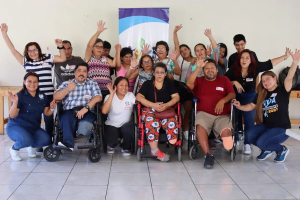
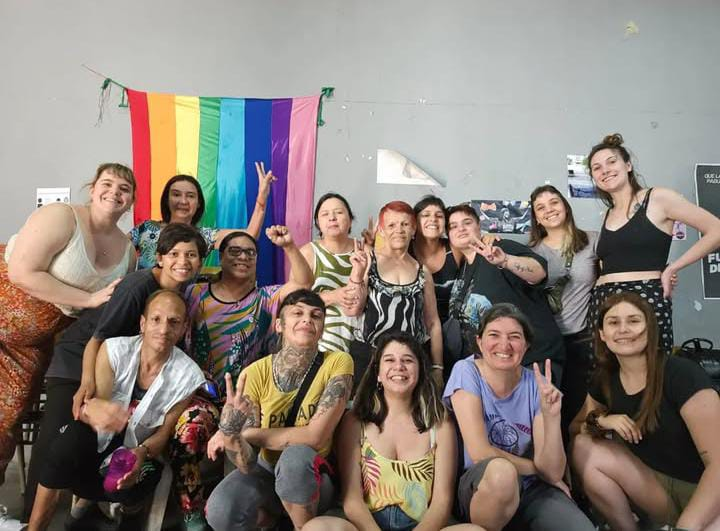
She arrives at a plaza and passes by a small group of women distributing flyers to introduce Casa Iaku to the entire region. With the lingering atmosphere of the pandemic, this small group of friends and professionals set out to offer the neighborhood residents the chance of meeting in a space designed for people, especially women in vulnerable situations, facing substance use issues and members of the LGBTQ+ community.
“The objective was to rebuild what was broken, to reconnect with oneself. To recognize the other and build a network of mutual and cooperative help among themselves to generate solutions and to give themselves a better quality of life”, says María Ferreira Mendoza about those first days of “the house” that she founded together with Marcela Almirón, Alien Santucho, Ariana Moyano, Paola Apellaniz, Carla Capuano Sansoni, and Daniela Rodríguez.
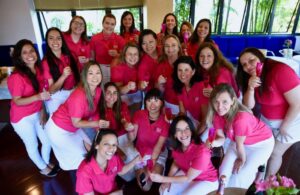
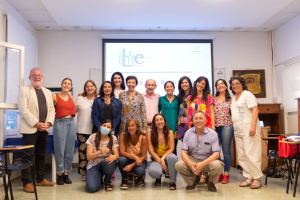
Together they formed this interdisciplinary facility, including social pedagogues, psychologists, a philosophy teacher, sociologists, social workers with a gender perspective. They had all worked on government projects that were dismantled by the current national government, and noticed during that journey that women and other identities didn’t feel comfortable sharing their experiences with men.
There was something different for them: abandonment, gender violence or motherhood, beyond problematic consumption. That demand also led to Casa Iaku’s opening four years ago. More than 150 people have passed through there, around 40 per month; dozens of them with flyers in hand like Mary. Many others from more affluent neighborhoods.
In the last decade, Argentina registered a sustained increase in the consumption of illicit drugs. According to the Secretariat of Integral Drug Policies of the Argentine Nation (Sedronar), with whom Casa Iaku coordinates, the annual prevalence of illegal substance consumption almost doubled among men (from 5.6% in 2010 to 11.5% in 2017) and tripled among women (from 1.8% to 5.4%) in the same period.
At the same time, the UN reported that Argentina is the South American country where cocaine use has grown the most in the last ten years, which raised alerts about the expansion of the market and the decrease in risk perceptions. In each territory, problematic consumption takes on its own forms. And each person brings their own story.
Around here now it’s spring. Vivi must be over 30 years old but, sitting at the table with her group, her eyes shine as if she were a child or an angel. “Very painful situations were affecting me at the moment I arrived here. The support I had from everyone made me understand that some sad moments didn’t only happen to me. Before, I struggled with what happened to me so as not to feel that loneliness so tremendous, like death”. Vivi is a mother of eight children, four are still minors. She is the one who cares for and supports her family.
Casa Iaku welcomes women living in shelters, as well as those who have a house or manage to afford rent. There are also those who still remain on the street and at risk of being so due to lack of resources and scarce public policy in this regard.
Marocho arrived four years ago and stayed. The group cheers as if celebrating a goal when he tells it. A trans man who, about to turn 33, says that on top of that he found the love of his life here. “I fell in love with Linuel, maybe we’ll get married! I’m a dad because I adopted his son! Now I have a family”. He says he came from being in ruins. His partner at the time had left him alone on a trip through Brazil: he was raped when he managed to return; his father had died relatively recently and his mother kicked him out of her house: “She probably didn’t love me”. Little by little he was re-emerging:
“I started to talk, to participate in workshops. I didn’t want them to hug me, I didn’t even allow a gesture of kindness. But little by little I started to let go. Here I feel safe”. Marocho writes poetry and some song lyrics. It’s his way of channeling what he feels. Here no one treats them as if they were inferior beings.
Yana, 38 years old, is sitting on the side of the table from where she can see them both: Marocho and Linuel reviewing their story with love and grace. “They complement each other beautifully! Marocho is all expeditious, ultra hyperactive, everything now, everything practical. Line is more reflective, more introverted”, she says and smiles.
A long braid falls over her right shoulder. On her left shoulder rests the head of Habibi, her baby just three weeks old who sleeps in peace. “I came to Casa Iaku because of a problem with my other little boy who’s almost eight years old. This is a happy place”.
Happy, from its beginnings, they say, this community was taking shape: women arrived with their grandchildren, sons and daughters and the ‘travas,’ with their friends. All welcome because unwanted loneliness contributes to the individualization of life, to the destruction of social bonds and to the displacement of community.
The day Mary crossed the doors of Casa Iaku, her family also grew. She immediately became buddies with Svetlana, a travesti woman (a term used in Latin America for trans women) who completed her transition in the house, whom she accompanied unconditionally.
Mary, the first woman to arrive, went there because she felt lonely. She had no substance consumption whatsoever. Her daughter had died in an accident and she was very sad around the neighborhood. She never ever went away. “Mary says we are all her daughters,” Vivi recalls. “One always returns to where they were happy”. Marocho adds: “It’s true”, he reinforces, “here we can be.”
How to help?
Casa Iaku receives a minimal subsidy with which it covers few expenses through an alliance with Sedronar. They hold their weekly meetings in a borrowed space that they appreciate. They wish to have their own place again that also has a kitchen, showers, bedrooms and a space for children as they have managed to maintain in previous years. They periodically carry out activities and raffles to raise funds. All the professionals are volunteers.
- Learn more about Casa Iaku on Instagram.
- If you’re looking for a listening team, reach out at +54 9 11 3406-6169.