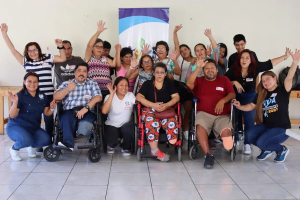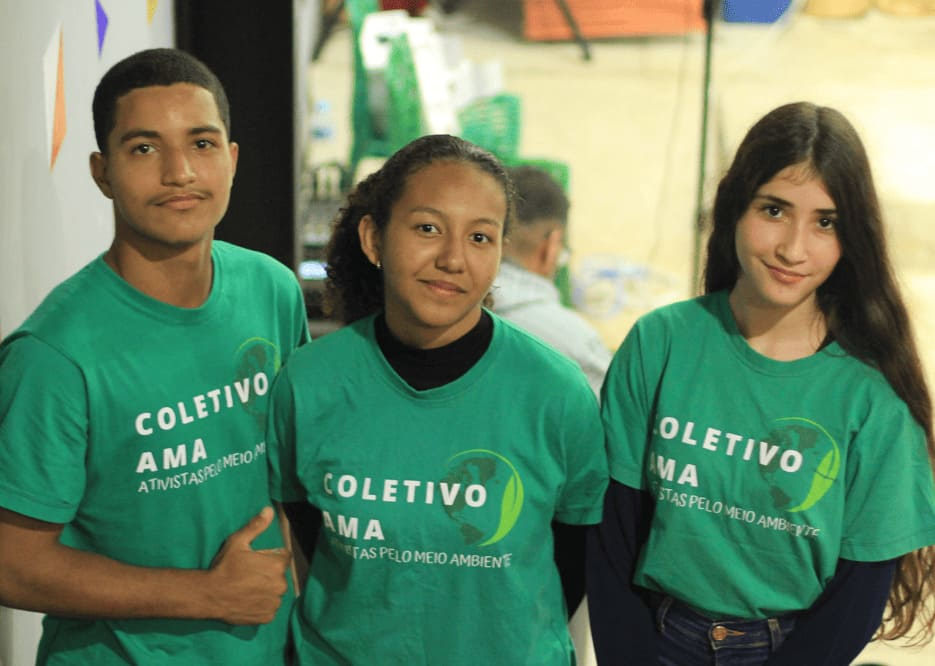
At 22, Samyr leads the AMA collective, a group of young people who promote environmental education and block projects that threaten Paraty’s biodiversity and traditional communities.
Paraty is known for its historical and cultural heritage, but it also faces environmental challenges that affect both residents and visitors. In response, a group of young people decided to mobilize and take action.
One of the leading voices in this movement is 22-year-old Samyr, founder of the collective AMA – Ativista pelo Meio Ambiente (Activists for the Environment). “We returned from a conference in 2018 with the certainty that we needed to create a space for Paraty’s youth to unite in defense of nature,” he recalls.
The AMA collective was born inside a school, inspired by the experience of Samyr and his colleague Rafaella Bispo during an environmental immersion on Ilha Grande. The impact of that experience was transformative. “We had never had anything about the environment in our school curriculum. It was a reality check, and we thought: we need to bring this to our city,” he says.
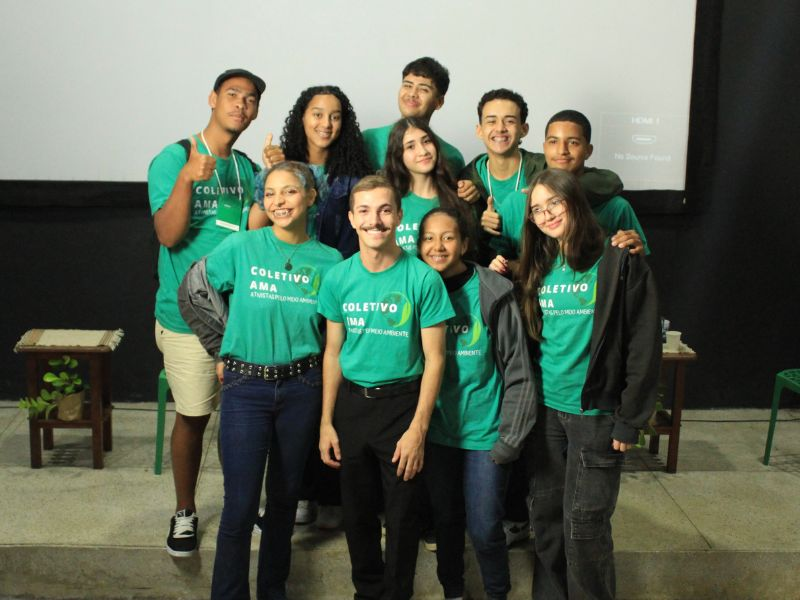
Today, the initiative brings together 50 active young members and maintains a network of more than 300 students who take part in occasional activities. Among the projects carried out are school gardens, training sessions, recycling workshops, and conferences. “When we go into a school, our goal isn’t to give a lecture but to put young people at the center. They participate, interact, and propose solutions,” explains Samyr.
Environmental education, however, is only part of the work. The group also acts as a watchdog, reporting cases of deforestation, fires, and situations of government neglect.
“Students come to us to report problems that get no response from the authorities. There is a lack of oversight, and often the community is not heard.”
This firm stance has already led the collective to achieve important victories. One of them was the mobilization against the construction of a luxury resort in Paraty Mirim, a protected area of cultural significance for indigenous and quilombola communities.
“The project was authorized without consulting local residents. We filed complaints, appealed to the Ministério Público (Public Prosecutor’s Office), and managed to block the license. The fight continues, but we showed that the youth have a voice.”
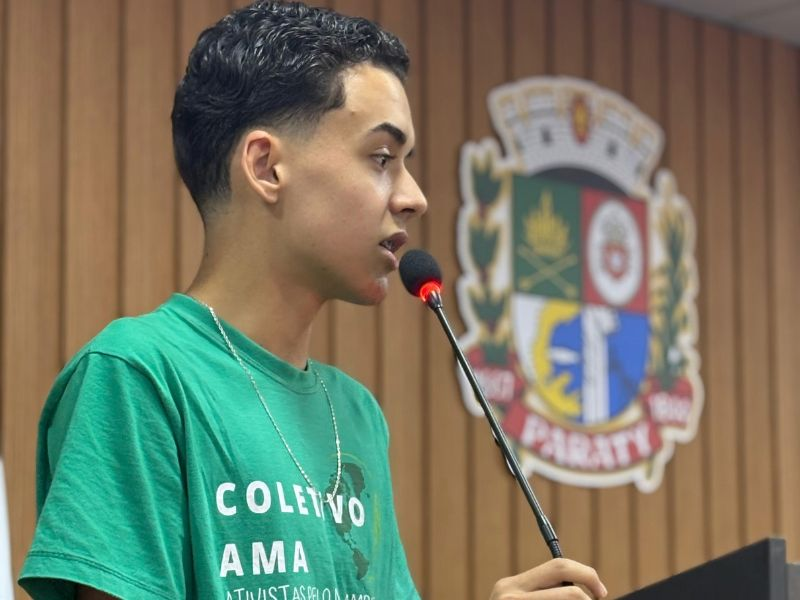
Another defining episode involved land auctions on Ilha do Araújo, which threatened to expel traditional communities. AMA organized demonstrations, produced a documentary, and managed to draw attention to the case.
“Out of nowhere, a Portuguese man appeared claiming he owned the island and that families had 90 days to leave. We couldn’t let that happen. We mobilized everyone and managed to stop the process,” recalls Samyr.
The collective’s actions also find space in major cultural events in the city, such as Flip – Festa Literária Internacional de Paraty (Paraty International Literary Festival). In recent editions, the young activists worked to reduce the use of plastics and encourage recycling. Despite gaining recognition at the state and national levels, their relationship with the city hall is still marked by clashes.
“Many people arrive in Paraty thinking it’s a perfect city without environmental problems. We use these events to show the reality, give visibility to our struggles, and also encourage solutions. Unfortunately, municipal administrations do not value the strength of this collective. Many times, we have to confront them to demand what is a right of the population, such as basic sanitation. Today, Paraty welcomes thousands of tourists but still dumps sewage into its rivers and the sea,” he criticizes.
Inspired by Chico Mendes, Samyr sees the environmental struggle as a long-term commitment. “As hard as it is to confront public authorities and economic interests, giving up is not an option. Our work is to ensure that Paraty remains both a natural and cultural heritage,” he argues.
For him, the message that needs to resonate is clear: youth must take the lead in defending the territory. “What I leave as a reflection is: what future do you want for your backyard? Our backyard cannot become a commodity. We need to care for it so that future generations can still hear the birds sing and live in balance with nature,” he concludes.
Interested in the project?
Follow the collective’s work on Instagram and stay connected.