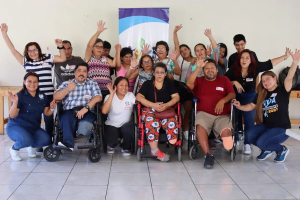
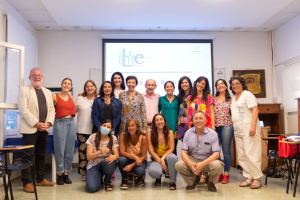
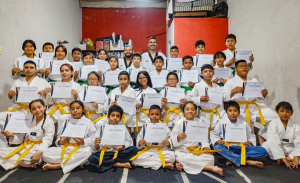
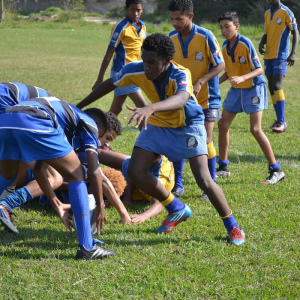
The foundation has held 260 workshops and educational activities aimed at schoolchildren, young people, families and park rangers, promoting ocean protection from an early age
By Sandra Barrueto
Photo credits: Pablo Lloncón and Daniel Saa
“As a child, I loved visiting the beach and the cove. I was extremely curious and wanted to learn about the sea creatures I observed, but I couldn’t find any books about marine life in Chile. When I was seven, my Aunt Pip gave me my first book about marine animals, Fish of the World. It became my favourite book and motivated me to continue learning. Fresh out of school, I took an intensive course in marine ecology at Stanford University and became a certified scientific diver. I studied marine biology at the Universidad Austral de Chile because I knew there was so much to learn, discover, and share in my country,” says Carolina Zagal, president of the Oceanósfera Foundation.
This concern led Carolina to create Oceanósfera in 2019 in southern Chile, in Valdivia, Los Ríos Region. The aim is to contribute to the development of people who are aware of the importance of protecting the oceans and the challenges associated with marine conservation, with the skills and attitudes to understand and care for the sea.
The foundation has conducted 260 workshops and educational activities aimed at schoolchildren, young people, families, and park rangers. It has developed 24 materials, including books, field guides, posters, and booklets, which have been downloaded 185,000 times for free from its website in 72 countries over six years. In addition, it has distributed 57,000 printed educational resources in Chile’s 16 regions.
‘At Oceanósfera, we work on environmental education and communication for marine conservation, especially among children, through three priority areas: marine educational activities, marine educational resources, and communication and collaboration with other organisations. Through experiential activities that encourage contact with nature, we contribute to the care and protection of the ocean and its biodiversity,’ she says.
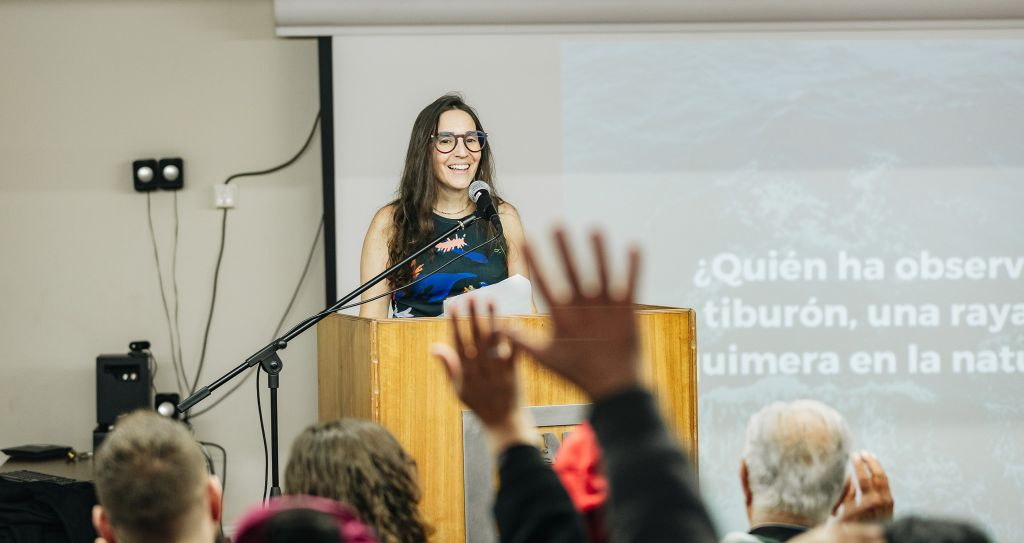
The foundation’s most recent project is ‘Tiburones a la Vista’ (Sharks in Sight), a book that combines science, art, and education to raise awareness about Chile’s cartilaginous fish. This educational text presents the country’s 99 species of sharks, rays, and chimeras, and is distributed to the community to raise awareness about the importance of this threatened natural heritage.
“As a marine biologist and teacher, I have witnessed the lack of knowledge about our marine life and the limited reach of scientific information to communities. I am determined that today’s children and students can learn about Chile’s sea and develop environmentally friendly skills and attitudes. I want them to learn about our natural marine heritage, its importance, and the threats it faces, and to take action to protect it.”
Preservation of marine ecosystems
The protection of coastlines and oceans is essential for the existence and survival of all living beings. Despite its importance, there is a high level of ignorance about Chile’s sea, its diversity, its ecological value and the problems it faces.
‘Promoting marine environmental education, ocean culture, environmental communication and collaboration is vital to ensuring a sustainable future for the country. With more than 80,000 km of coastline, including islands and fjords, Chile has a unique opportunity to position itself as a leader in marine conservation,’ explains Carolina.
The country has a valuable marine natural heritage with ecosystems that are home to a great biodiversity: more than 7,200 species of marine invertebrates, 1,500 species of marine vertebrates and some 900 species of macroalgae.
‘This marine wealth includes endemic species such as octopus, tipi tipi, pure and Rapa Nui lobster, trumulco snail, Chilean hake, seven species of sharks and rays, the Chilean dolphin, the Juan Fernández sea lion and cochayuyo, among others. And there are still many more to be discovered, especially in deep waters.’
How to support
For more information on Chile’s endangered and protected marine species, guides and books to learn about its biodiversity and strengthen ocean protection, download for free from their website: www.oceanosfera.cl.
You can also follow the foundation on Instagram: @oceanosfera.
To support them financially and enable them to continue their work, visit: www.oceanosfera.cl/apoyanos.