The national survey Next Generation Brazil 2025 reveals that young people want to be heard, trust their teachers, and are calling for more opportunities, education, and retention policies
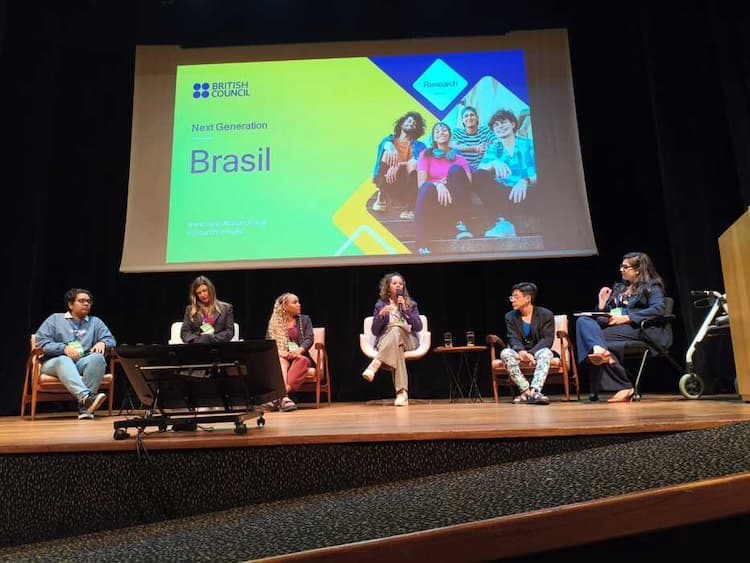
Coluna da Neuza attended the launch of the Next Generation Brazil 2025 Research Report, held in São Paulo by the British Council, the United Kingdom’s international organization for cultural relations and educational opportunities. This groundbreaking study surveyed more than three thousand young people aged 16 to 35 from all regions of Brazil.
The event took place on October 20 and presented the most comprehensive survey ever conducted by the institution in the country. The goal was to understand how Brazilian youth envision the future, addressing topics such as education, income, inequality, and life prospects.
“The incredible diversity makes Brazil a complex country. To truly understand what young people think and feel, we need more than numbers — we need to talk to them and listen carefully,” said Tom Birtwistle, Director of the British Council in Brazil.
And that is precisely what Next Generation Brazil set out to do: to understand youth through their own voices. This listening process is essential for building policies and projects that reflect the real dreams and challenges of young Brazilians.
Check out below an overview of the findings and testimonials from people involved in the research.
Inequality and identity
The study revealed stark disparities in income and race among Brazilian youth. White young people earn, on average, 19% more than the national average, while Black youth earn 31% less.
More than half of black respondents reported living on less than one and a half minimum wages per month, and although 56% are the main providers in their households, four in ten said they are unable to cover basic expenses.
Inequality is also reflected in education. Half of young people aged 19 to 24 neither have a university degree nor are currently studying and among those who did not finish high school, nearly two-thirds are black or brown.
Geography is another determining factor: 55% of youth in large urban centers have higher education, compared to only 14% in favelas and 10% in rural areas.
Surprisingly, teachers emerged as the most trusted source of information for 69% of respondents, ranking ahead of newspapers, news websites, social media, and even family.
The multiple realities of youth
Among the main challenges highlighted by young people are low wages that fall short of expectations (66%) and long working hours. Many see entrepreneurship as an alternative path to achieving financial independence and personal fulfillment, even while acknowledging the obstacles and uncertainties that come with it.
For Indigenous youth, barriers to accessing education and decent living conditions remain deeply shaped by structural inequalities and historical processes of exclusion.
Even so, many young Indigenous people have taken on leadership roles within their communities, advocating for their territories, the environment, and the right to quality education.
Gender and diversity
Gender inequality also emerges strongly: 78% of young people believe that Brazil still has a deeply sexist culture, and 73% acknowledge that women face discrimination in the workplace.
Among LGBTQIAPN+ youth, 64% reported having been treated differently because of their sexual orientation.
“Brazil continues to reinforce racial and gender stereotypes that are rarely addressed by the State”, said Larissa Fontana from the National Youth Council (CONJUVE).
“This sustains narratives that label black youth as ‘suspects’ and black women as hypersexualized and dehumanized”, she added.
Looking to the future
Despite the challenges, the prevailing feeling among young people is one of pride and belonging. Brazilian culture (48%), cuisine (46%), and family (45%) stand out as the main sources of national pride.
When asked what they expect from governments to build a better future, their answers were clear and practical:
- 29% want more job and internship opportunities;
- 28% call for policies to reduce inequality and discrimination;
- 26% seek education more aligned with the job market;
- 23% advocate for mental health programs in schools.
Voices shaping tomorrow
During the report launch, young people from different regions shared their experiences and reflections on the study. Here are some of their statements:
Paula Moraes, from Belém (PA), coordinator of the Amazônia Digital project, said she attended the event to “talk about education and youth. I found it very important that the research highlights the challenges and what young people think about the future. It’s a necessary kind of listening”.
Mariana Nadaleto, social media coordinator at Sherlock Communications, explained how her team contributed to the report: “Our team helped with translation and the creation of infographics. It was a valuable learning experience to understand what young people expect from the country and to see this data come to life through concrete actions”.
Valeska Queiroz, from the outskirts of Terra Firme (Belém), said she took part “in the discussion panel, and it was very special. We brought in perspectives on race, gender, and territory, showing how youth view the present and the future”.
Milan, 17, a public school student from Santo André (SP), said she felt represented by the research: “It shows the reality of young people from different backgrounds, not just those from the outskirts. It was inspiring to realize that we all want to be heard in shaping public policies”.
Amanda Soares, better known as PCD Perigosa, said it was a pleasure to contribute to the research. “I’m here at the British Council event, which marks the conclusion and presentation of the Next Generation survey results”.
“Being present was very important to me, both because of my contribution to the research as part of the advisory team, and for the opportunity to meet others involved in youth movements, spaces I also belong to as a person with a disability and as an activist.”
Sarah O’Sullivan, Director of SOS Education, the independent organization that conducted the study in Brazil, emphasized the importance of listening to youth in a broad and diverse way:
“It was fascinating to hear so many different experiences from young people across all regions of the country. The most striking aspect was realizing how educational and income inequality remain deeply shaped by race and geography. Quota policies have had an impact, but the results are not yet fully visible there’s still a long road ahead”.
According to her, conversations with specific groups revealed consistent demands: “Young people were very clear in asking not only for access to higher education and the formal job market, but also for policies that ensure they can remain in those spaces. This was particularly evident among youth with disabilities and trans youth, who face extra barriers to staying in school or in the workforce”.
Sarah also drew attention to the profile of informal young workers: “Many reported long working hours and low incomes, but also a strong desire for autonomy. This balance between survival and independence says a lot about the entrepreneurial spirit of this generation”.
Despite the challenges, she expressed optimism:
“The project filled me with hope. Brazilian youth are not passive spectators they are proactive, engaged, and want to be heard. Based on the data, we developed recommendations so that public and civil institutions can better respond to youth demands. There is enormous potential to be strengthened”.
Finally, Bárbara Cagliari, Head of Government Relations at the British Council in Brazil, said: “Next Generation is a global research series, and it was exciting to see the Brazilian version take shape. We aimed to map the aspirations, challenges, and future visions of young people. The process was long, but incredibly transformative”.
“It was enriching to understand both the difficulties and the opportunities each journey presents, so that I can contribute more effectively. This opening of doors was also crucial, allowing me to exchange experiences and learn from people who have already navigated paths ahead of mine. It strengthens my work in the fields of education, health, and communication”.
“Moreover, the research is hugely important because it addresses the issue of disability across the board, not just from the perspective of accessibility, but also considering the presence of people with disabilities in all areas of life: educational, professional, and cultural”.
A portrait of urgency and hope
The results of Next Generation Brasil revealed a country of contrasts, full of challenges, but also brimming with transformative energy.
Within the lines of the report, a clear message emerges: brazilian youth are not spectators; they are protagonists. They want to participate in decision-making, propose paths forward, and see their voices genuinely considered in building the future they envision.
Coluna da Neuza is part of Lupa do Bem, the corporate social responsibility portal of the communication agency Sherlock Communications.