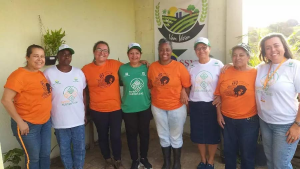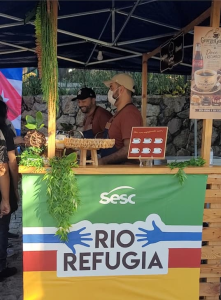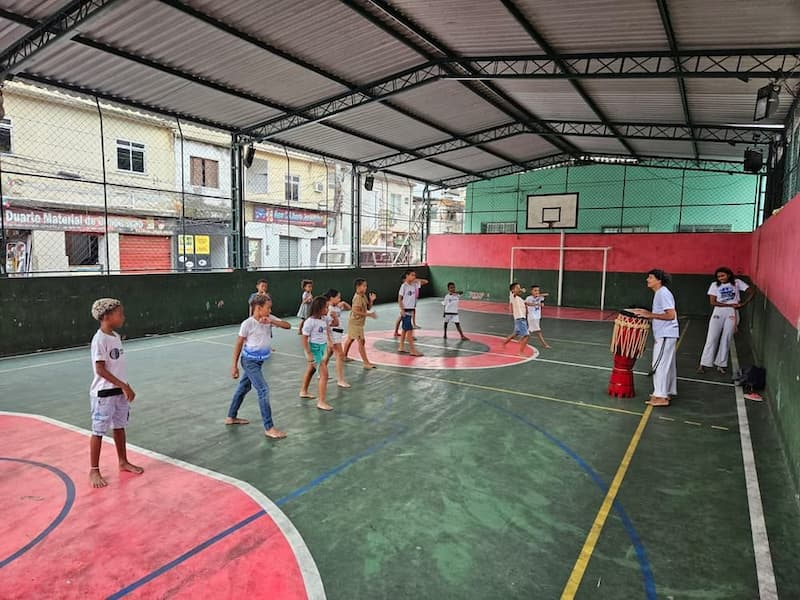
Under the leadership of Jefferson Alves, the institution, born from culture, continues to unite education, solidarity, and sustainability to transform the lives of those living in Morro do Telégrafo
There are places in Rio de Janeiro that breathe history, culture and resistance, and Mangueira is one of them. Located in the city’s North Zone, the community is known worldwide for its samba school, but it is also a territory of struggle and dreams, with a powerful legacy of social and cultural organizations.
Among them is NGO África, which has been active for nearly four decades in Morro do Telégrafo, one of the highest and most hard-to-reach points in Mangueira. Yet it is from there that the seeds of transformation are sown and spread throughout the community.
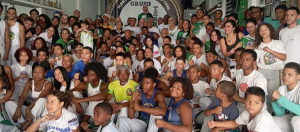
The institution has become a hub of opportunity by offering education, sports, culture, and solidarity to hundreds of residents, impacting more than three thousand people directly and indirectly.
For this story, I spoke with Jefferson Alves, the current president of the NGO, about the past, challenges, and future of this initiative that has been transforming lives in Mangueira for decades. Check it out!
Coluna da Neuza: Jefferson, how did your connection with NGO África begin?
Jefferson Alves: I’ve been president of this initiative for about ten years. Before that, I was a young person who benefited from a social project here in Mangueira, and that experience completely changed my life. NGO África has been active for nearly 40 years.
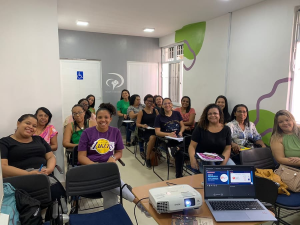
It began with cultural activities and is now present in several areas: education, sports, capoeira, graffiti, and dance. We strive to be wherever the community needs us. Currently, we serve around 400 people in the heart of Mangueira. Our mission is to create opportunities, strengthen bonds, and offer hope.
Coluna da Neuza: During the pandemic, many NGOs played a crucial role. How was that period for you?
Jefferson Alves: It was a very difficult time, but also one full of learning. The community was lacking jobs, income and food, so we didn’t stop. We went after donations and partnerships and managed to collect and distribute more than three thousand food baskets.
The pandemic brought the NGO and the community even closer together. That was when the institution grew stronger and became truly recognized and embraced by the residents.
Coluna da Neuza: I imagine maintaining this kind of work isn’t easy. What are the biggest challenges today?
Jefferson Alves: The challenges are daily. Every time we open the NGO’s doors, a new need arises. There’s a lack of public support, financial resources, and consistent policies for the territory.
Mangueira is still a place that receives very little assistance, despite the fame brought by its samba school, and that’s our ongoing struggle: we want greater government presence, whether in health, culture, sanitation, or education. Many times, we end up taking on roles that should be fulfilled by public authorities.
Coluna da Neuza: And what about the partnerships with universities? How do they work?
Jefferson Alves: We have a very important partnership with the Universidade Estadual do Rio de Janeiro – UERJ (State University of Rio de Janeiro), which is located very close to the community. They provide us with academic, technical, and human support for the activities we carry out. We also have a partnership with the Universidade Federal do Rio de Janeiro – UFRJ (Federal University of Rio de Janeiro), but UERJ is more present in our day-to-day work.
These partnerships are essential. They broaden our perspective, help us think of practical solutions, and strengthen the dialogue between the university and the favela.
Coluna da Neuza: And what about the future of the NGO? Is there already a plan in place?
Jefferson Alves: Yes. We work with annual and biannual plans. Our goal is to expand our activities by bringing in new partners and increasing the range of services we offer in the areas of health, education, and sports. In partnership with UERJ, we’re proposing a Horta Comunitária (Community Garden), since we already have a community kitchen.
The idea is to offer composting workshops, donate the garden’s produce to the community, and generate supplies for the kitchen, while also encouraging residents to create their own gardens in their backyards or on their windowsills, as we plan to develop hanging gardens as well.
Our goal is to keep growing, but without losing our community-based and collaborative essence.
Coluna da Neuza: What are the main areas of activity of NGO África today?
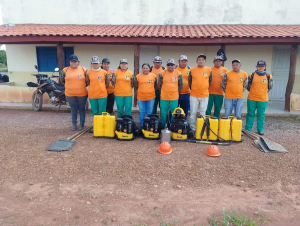
Jefferson Alves: Our work is quite broad. We focus on education, rights advocacy, professional training, sports, leisure, recreation, environmental education, income generation, culture, health, and food assistance.
Coluna da Neuza: To wrap up, Jefferson, is there anything else you’d like to say?
Jefferson Alves: Our work is done by many hands. Every day brings new challenges, but we move forward with faith and collaboration. Our dream is to see Mangueira grow with dignity, opportunity, and respect. That’s what drives us.
Learn how to support NGO África
Listening to Jefferson was inspiring. I left the interview certain that social work is the true bridge between need and hope.
NGO África is living proof that transformation happens when someone decides to take action and Jefferson is proof that those who were once helped can become the ones who help many others.
To support this initiative, contact Jefferson at +55 (21) 9 8829-8223 or make a Pix donation to 08.748.655/0001-54.
Follow the initiative on Instagram.
Visit the organization’s site for more information.
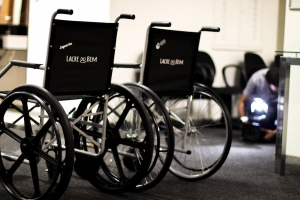
Neuza’s Column is part of Lupa do Bem, the Corporate Social Responsibility project by the communications agency Sherlock Communications.