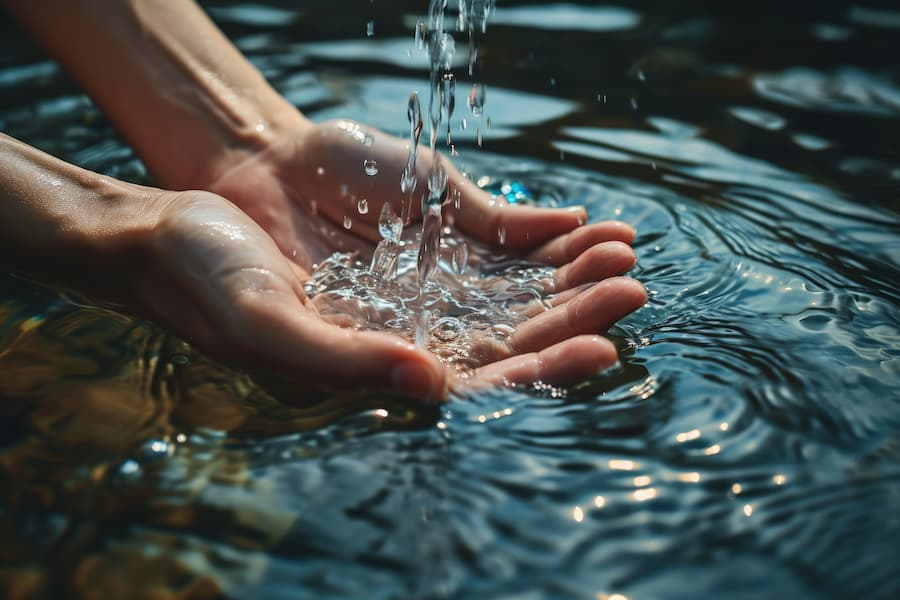
Celebrated on March 22, World Water Day highlights the importance of preserving a resource that is essential for health, environmental balance, and the future of coming generations
On March 22, World Water Day is celebrated. The date was created to remind us that, although it may seem abundant, freshwater is a limited resource that is increasingly threatened by climate change, population growth, and excessive consumption.
The initiative was officially established by the United Nations (UN) in 1992, during the Conference on Environment and Development held in Rio de Janeiro. The General Assembly adopted the resolution, and the first observance took place in 1993. The goal is to raise global awareness about the importance of freshwater and to encourage actions aimed at its sustainable management.
Since then, World Water Day has become an international mobilization. Governments, organizations, schools, and communities promote events, discussions, and awareness campaigns. Every year, the UN releases reports and defines a central theme to guide discussions on the use and preservation of water.
The importance of water for our lives
Water is the fundamental element of life on the planet. It is present in the functioning of the human body, food production, energy generation, and the maintenance of ecosystems. Without clean and accessible water, there is no public health, food security, or sustainable development.
About a quarter of the world’s population faces difficulties accessing safe water or lives under water scarcity, according to reports from the United Nations and international institutions.
The lack of clean water is directly linked to health problems. The World Health Organization (WHO) warns that contaminated water, lack of sanitation, and poor hygiene contribute to millions of deaths every year, as well as facilitating the spread of diseases such as diarrhea, cholera, and dysentery.
These conditions, especially intestinal infections, remain among the leading causes of child mortality in many regions of the world.
In addition to the health issue, the water crisis has economic and social impacts. Agriculture, for example, depends heavily on the availability of this resource. It is estimated that about 70% of the world’s freshwater use is allocated to agricultural production, which is responsible for a large portion of the food consumed globally.
When water becomes scarce or polluted, the entire production chain is affected—from food production to the supply of cities.
World Water Day: an essential, limited, and under pressure resource
Despite covering a large portion of the Earth’s surface, only a small fraction of the planet’s water is suitable for human consumption, as most of it is found in the oceans. Of the total freshwater available, according to UNESCO, around 70% is stored in glaciers and ice sheets, highlighting how climate change and the melting of these natural reservoirs can compromise the planet’s water balance.
Urban growth, industrial pollution, deforestation, and waste also contribute to the degradation of water resources. Rivers and lakes in different regions of the world face critical levels of pollution and reduced volume. In some areas, conflicts related to access to and management of water are already emerging.
For this reason, World Water Day is not just a symbolic date, but an invitation to reflect on how we use this essential resource for life on the planet.
Access to drinking water and basic sanitation is directly linked to the United Nations Sustainable Development Goals (SDGs), especially SDG 6, which aims to ensure clean water and sanitation for all by 2030.
This resource also directly impacts education, social equality, and poverty reduction. In many parts of the world, especially in rural areas, women and children travel long distances every day to fetch water, limiting opportunities for education and work.
Everyday tips
Although many solutions depend on public policies and infrastructure investments, small individual changes can make a difference, such as:
- Avoid wasting water at home and at work;
- Turn off the tap while brushing your teeth, shorten shower time, and fix leaks;
- Reuse water whenever possible;
- Avoid polluting rivers and springs;
- Dispose of waste and chemicals properly;
- Value natural areas and local vegetation;
- Consume responsibly.
Celebrating World Water Day means recognizing that caring for this resource is caring for the future. In the end, water is not just a natural resource , it is the foundation of life.
Taking care of water is not a symbolic gesture, but a matter of survival. Above all, every choice, every avoided waste, and every conscious action counts.
Ultimately, preserving water means preserving our own existence. Think about it.
Did you like the content?
Follow Lupa do Bem on Instagram, Facebook and LinkedIn.
Neuza’s column is part of Lupa do Bem, a Corporate Social Responsibility project by the communications agency Sherlock Communications.