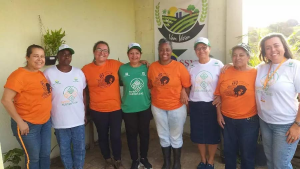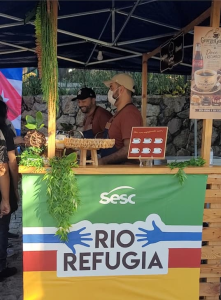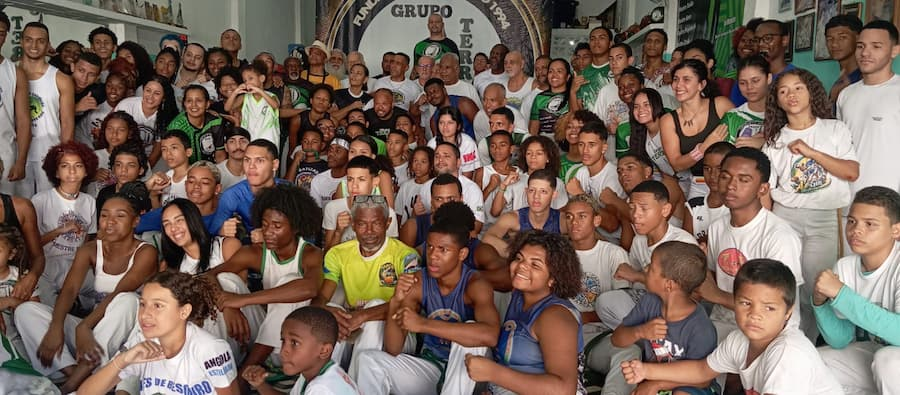
Created in 2015, the collective works in the Complexo da Penha, a cluster of favelas in Rio de Janeiro, through education, sports, culture and community-strengthening initiatives
At the hillside community of Morro da Caixa d’Água, in the Complexo da Penha, in Rio de Janeiro’s North Zone, a space that was once associated with fear and violence now welcomes children for after-school tutoring, young people for sports activities, and women and older adults for care and community activities.
This is where the headquarters of O Parque é Nosso (The Park is Ours) is located, a collective created in 2015 that spent ten years carrying out its activities across the territory. About a year ago, the project secured a permanent space and moved into a property that once housed a small police unit responsible for patrolling the area.
According to the collective’s directors, Rene Júnio and Suellen Martins, the site carries painful memories for local residents, who report episodes of violence when the space operated as a police unit. The idea now is to give new meaning to this past and transform the space into a hub for community education, culture, sports, environmental initiatives and interaction among local residents.
This transformation is taking place in a territory also marked by armed violence. On October 28, 2025, the Penha and Alemão complexes were the site of Operação Contenção (Containment Operation), considered the deadliest police operation in the history of the state of Rio de Janeiro.
For those who live in the area, however, the story does not end when an operation is over. Children, families, schools, workers and social projects remain, continuing to open their doors and create new possibilities amid the challenges.
In a conversation with the project’s leaders, Coluna da Neuza (Neuza’s Column) learned more about the work being carried out, the results achieved over the years, and the challenges of maintaining and expanding its activities.
Coluna da Neuza: Suellen, who is currently served by O Parque é Nosso, and what activities are offered?
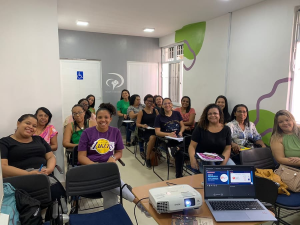
Suellen: We work with children and young people aged 5 to 16 and women up to 70 years old. We seek to strengthen their connection to the community and broaden opportunities for education and citizenship through capoeira, soccer, playful and affective activities, dance, functional training and yoga for women, after-school tutoring, psychological support and reading circles. We also organize gatherings, talks, and cultural, leisure and environmental outings.
One of our goals is to prevent children from normalizing the illegal drug trade. We want them to develop their skills, recognize their talents, make positive choices, and the results can already be seen among the participants. Some children who took part in sports activities developed their soccer skills and now play for other clubs. Others have improved their performance at school, while women have reported health benefits from physical activities.
Coluna da Neuza: Rene, what is the collective’s main need today?
Rene: Our biggest need this year is in education. We have 13- and 14-year-old children who have a lot of difficulty reading and writing, so we decided to focus our efforts on this need, especially after the latest police operation that took place here, which had a major impact on young people and their families.
We want these teenagers to keep dreaming and thinking about the future. Today, we directly support 20 children through after-school tutoring and want to reach 100, but we need resources to hire teachers, provide stipends and ensure access to food. A child learns better when they have adequate nutrition and the conditions to focus on their studies.
Our goal is to prevent young people who lack opportunities and struggle with learning from making harmful choices.
Coluna da Neuza: Even after securing a headquarters, what difficulties does the collective still face in maintaining its activities?
Rene: We still face financial difficulties. We need resources for school, sports and cleaning supplies, maintenance of the space, document regularization, and support for professionals and volunteers.
Coluna da Neuza: What are the initiative’s most urgent needs?
Rene: One of our biggest needs is to retain the volunteers who lead the workshops. We would like to be able to offer them at least a small stipend. We also need to improve the space so that children have more comfort during the activities.
We already offer functional training for older adults and yoga for women, as well as conversation circles that help strengthen these groups. Having more professionals would allow us to expand this work and better meet the community’s needs.
Another priority is to expand access to psychologists and professionals who work with older adults. After the last police operation, we realized how deeply the episode affected children, mothers, fathers and grandparents. These families need support and care.
Coluna da Neuza: How many people are currently served?
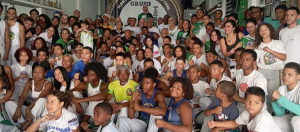
Rene: Today, we serve 197 people, but throughout the collective’s existence, we have reached around 890 families from three communities in the Complexo da Penha: the Caixa d’Água, Sereno and Da Paz hills. The impact of a social initiative does not always appear immediately; often, it only becomes visible much later.
Coluna da Neuza: What positive results have you noticed among the beneficiaries over time?
Rene: We see children who arrived here at 5 or 6 years old and are now in college or following new paths. Some of these young people have even returned as volunteers. We see changes in their habits and in the way children, young people, women and older adults begin to see the future.
I think the greatest impact is precisely this: helping people dream again and develop new perspectives for their lives. We also see this change among the families we serve.
Coluna da Neuza: What has having its own headquarters meant for O Parque é Nosso?
Suellen: Amid the financial difficulties, the search for professionals and the desire to expand our services, one achievement changed the collective’s trajectory: having a permanent space to develop our activities. The property is rented, and we are able to cover the rent with the help of donations. Having this space is very important because it gives us a point of reference within the community and allows us to continue the activities we offer to local residents.
What makes it even more symbolic is that the space is located in a property associated with difficult memories for the community.
Coluna da Neuza: Even after securing this space, what are the main challenges to keeping the project running today?
Suellen: We need resources to keep this work going, purchase cleaning, school and sports supplies, and regularize our documents, including our CNPJ, which we still do not have. Our biggest challenge is maintaining our services given the large number of people who seek our support.
A space to build new stories
Where there was once fear, children now walk in carrying balls, toys, books and notebooks. Women meet to take care of their bodies and exchange ideas; older adults regain movement and reconnect with others; and young people who arrived here as children return as adults to help those who are just starting out.
In a territory constantly associated with news of violence, initiatives such as O Parque é Nosso help show a side of the Complexo da Penha that does not always make the news. It is a story built every day by those who remain in the community, care for others, educate, share knowledge and create paths that allow children and young people to imagine different possibilities for the future.
Arthur, 11, a sixth-grade student, practices soccer and capoeira at the project and says the activities have had an impact on his routine. “Being here helps me have other activities and not spend all my time on my phone. I’ve also made more friends and started using my time better. Since I joined the project, I’ve become more agile, sharper and learned to be more disciplined.”
Ítalo Miguel, also 11 and a sixth-grade student, has been part of the project for four years and says the tutoring sessions have helped him at school. “I practice capoeira, play soccer, have tutoring sessions and write poetry. I’ve noticed that I’ve become more agile and disciplined. My reflexes have also improved, and the tutoring has helped me a lot at school, especially with writing.”
For Bruna, 24, the mother of one of the children who participates in the soccer activities, the project also plays an important role in families’ routines. “The project is very important because it keeps children busy after school and prevents them from having nothing to do. It also helps keep them away from situations and negative influences that are part of the reality of where we live.”
For more information, follow and contact the collective on Instagram.
Follow Lupa do Bem on Instagram, Facebook and LinkedIn.
Coluna da Neuza is part of Lupa do Bem, a Corporate Social Responsibility project by the communications agency Sherlock Communications