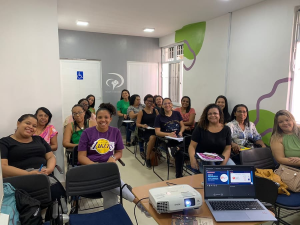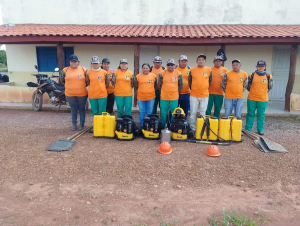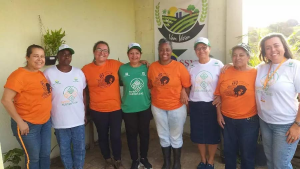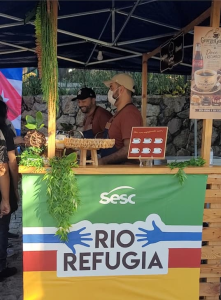
The Amor em Ação Association, a social project based in Quitandinha, in southern Paraná, supports hundreds of families and promotes cultural, educational and social initiatives across municipalities in the region
At the southernmost tip of Paraná lies Quitandinha, a municipality with around 19,000 inhabitants. Like other cities in the region, including Fazenda Rio Grande, Agudos do Sul, Mandirituba, Piên, Lapa and Campo do Tenente, the city faces social challenges typical of smaller towns located near major urban centers, such as income inequality, limited access to cultural opportunities and the lack of consistent public policies in certain social areas.
In this context, the Amor em Ação (Love in Action) Beneficent and Cultural Association has been operating for years. The social project in Quitandinha offers social support, cultural activities and training opportunities for families living in vulnerable situations.
To understand how the initiative works, I spoke with the organization’s cultural, artistic and technological projects manager, Caio Fábio, 39. Trained in dance, he says that volunteering has been part of his life since childhood, inspired by his mother, who was also involved in social organizations and community associations.
For about five years, he has worked as a volunteer at the institution, supporting cultural initiatives as well as structural activities within Amor em Ação. The association’s team also includes founder and director Gracilene Borges, president Rafael, and volunteer teachers and collaborators. Below are the main excerpts from the interview.
Coluna da Neuza: What kind of work does the association carry out?
Caio Fábio: We work along two main lines: social support within communities and cultural and technological development. We run activities in areas such as dance, theater, music, capoeira and other artistic expressions. Within the social area, we work directly with families through donation programs and fundraising initiatives.
We also promote cultural development through workshops, courses, lectures and performances.
Coluna da Neuza: Who does the association serve?
Caio Fábio: Among the people we assist, around 60% are children and 40% are women. This initiative has a particular focus, so we do not serve adult men.
Coluna da Neuza: What is currently the institution’s flagship activity?
Caio Fábio: Our main activity is clothing donations. We take clothing to communities farther from the city center, where people experiencing financial hardship and individuals facing homelessness live.
In addition, we organize charity bazaars during events to raise funds. At these bazaars, we sell part of the donated clothing at affordable prices, and the funds raised help maintain the association and support our activities.
Coluna da Neuza: How many clothes are collected?
Caio Fábio: We handle nearly two tons of clothing every two months. We also produce and donate baby kits and diapers. We even participate in prenatal events where several pregnant women gather, and we carry out these specific donations. In many of these initiatives we work in partnership with the local governments of the municipalities where we operate.
Coluna da Neuza: Are there other important activities developed by the institution?
Caio Fábio: Yes. We have a large social initiative in the area of psychological support. A psychopedagogue and a psychologist provide services to the community served by the association. We also offer vocational training courses and cultural workshops such as theater, dance and music. In addition, participants have access to a library.
In this space we organize guided reading activities, storytelling sessions, reading mediation and academic support for children. These activities usually begin in April, when students have already had their first contact with school content and teachers are better able to identify each child’s learning difficulties.
Coluna da Neuza: What is the goal of Amor em Ação and how did it begin?
Caio Fábio: The association’s story has a very personal origin. When she was a child, the founder went through a period of significant social and family vulnerability and received support from an NGO. She founded the institution in 2000 because she wanted to give back to society everything she received during that difficult time.
Coluna da Neuza: What are the association’s main achievements and challenges today?
Caio Fábio: One of our greatest achievements is seeing people leave situations of social vulnerability. Many of them qualify through our vocational training courses and eventually enter the job market, improving their financial and social conditions.
Our biggest challenge, however, is the lack of financial resources to expand our activities. Some companies support us as sponsors, but this help only comes when they are able to contribute. That is why we organize events and bazaars to keep our projects running.
Coluna da Neuza: Are there any future projects being developed?
Caio Fábio: Yes. One project we want to implement is Marmita Solidária, which will provide meals for people in vulnerable situations. For this, we need to adapt a kitchen according to sanitary regulations. It is a project that still depends on funding, but we are confident we will be able to make it happen.
New volunteers strengthen the project
According to Caio Fábio, one of the association’s most recent achievements has been the mobilization of volunteers interested in supporting the organization’s growth. In less than a week, 54 volunteers were brought together, willing to contribute in areas such as pedagogical review, communication, design, video editing and data analysis.
According to the project manager, this support strengthens the organization’s internal structure and helps increase the visibility and social impact of the initiatives developed by Amor em Ação.
The work carried out by the association has also generated significant impact in the communities it serves. Over the past year, the organization provided direct assistance to around 320 families.
When considering indirect impact, more than 5,000 people have been reached through the social, cultural and educational activities developed by the organization. He also explains that the association maintains partnerships with city halls, social assistance departments and cultural departments in the municipalities where it operates.
Find out how to help!
Anyone who would like to support the association’s work can contribute by donating materials used in the vocational training courses.
Among the main needs are:
- Sewing machines for vocational training courses;
- Maintenance for equipment already used in classes;
- Needles and thread for practical activities;
- Fabric for student practice and production;
- Oil for sewing machines;
- Pattern rulers;
- Fabric cutters;
- Professional scissors;
These items are considered essential to maintain and expand the sewing course, one of the institution’s main professional training initiatives. The NGO also accepts financial donations to support its activities.
To learn more about the Amor em Ação Beneficent and Cultural Association, visit the organization’s website and follow it on Instagram, LinkedIn and Facebook.
Coluna da Neuza is part of Lupa do Bem, a Corporate Social Responsibility project by the communications agency Sherlock Communications.