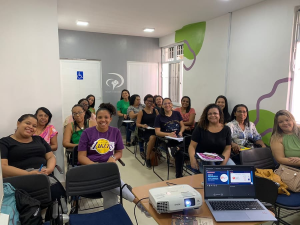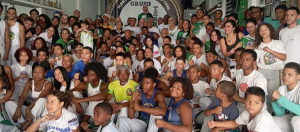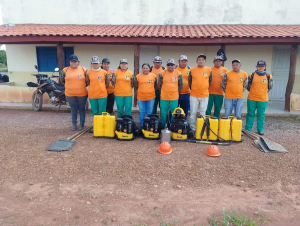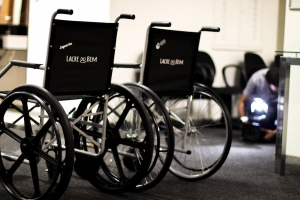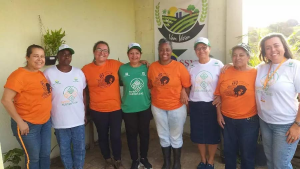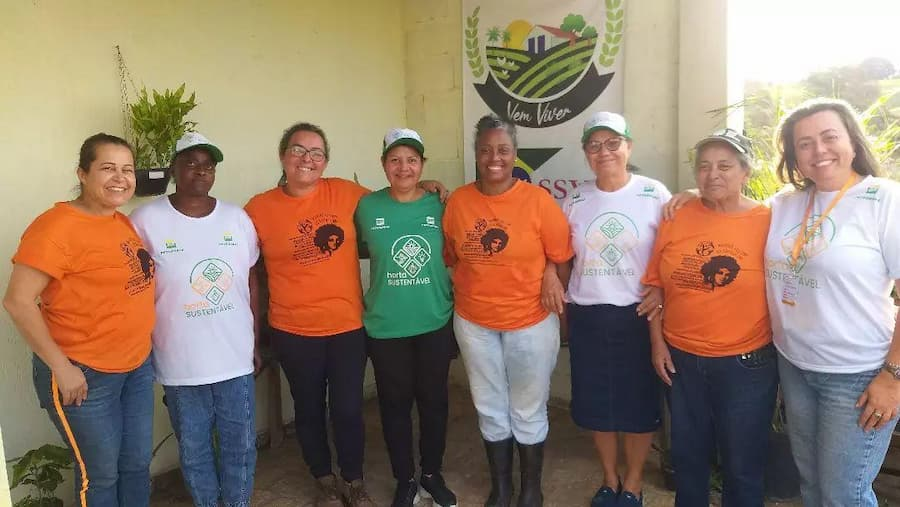
In Sarzedo, Minas Gerais, women are transforming vulnerability into independence through agroecology, creative sewing, and sustainable crafts
Located in the Metropolitan Region of Belo Horizonte, the capital of the state of Minas Gerais, Sarzedo is a municipality of around 40,000 residents, known for its agricultural production and mining activities.
There, the Associação Marias Vão Com as Outras Sim! (Marias do Go with the Others Association) turns support into female empowerment by combining sustainability, income generation, and community engagement to improve the lives of women in vulnerable situations. The initiative demonstrates that innovative social projects can thrive beyond Brazil’s major urban centers.
The idea for the association emerged in 2019 and began taking shape in January 2020. As the COVID-19 pandemic deepened the hardships faced by thousands of families, what started as an effort to collect and distribute food baskets evolved into a broader initiative focused on income generation, sustainability, care, and women’s empowerment.
In an interview with Neuza’s Column, Nilce Nicácio, the initiative’s financial coordinator and community mobilizer, looks back on the origins of the collective, the challenges it has faced, the stories of transformation it has witnessed, and the aspirations that continue to drive its work.
Neuza’s Column: How was the Marias Vão Com as Outras Sim! initiative founded?
Nilce: The idea for the association emerged in 2019, and in January 2020, as the COVID-19 pandemic began, we started putting it into practice. We brought together women involved in social causes in Sarzedo and the Metropolitan Region of Belo Horizonte with the goal of supporting one another.
We realized that we needed to join forces to change our lives, especially since many of us had lost our jobs, were facing financial hardship, and dealing with significant emotional challenges. That’s when we decided to come together, starting a movement of women committed to supporting their community and transforming the reality of the region.
Neuza’s Column: What is the story behind the name Marias Vão Com as Outras Sim!?
Nilce: The name was chosen collectively during our strategic planning process, which helped shape the association’s identity. We wanted a name that would spark curiosity and encourage reflection. One of the founders suggested reclaiming the expression “Maria vai com as outras”, a common Portuguese saying often used in a negative way to describe someone who blindly follows others, and turning it into a symbol of unity and empowerment.
That is how the Marias Vão Com as Outras Sim! was born, representing women who choose to stand together to transform their own lives, confront violence, and promote a better quality of life for all.
Neuza’s Column: What was life like for the women supported by the association when it was founded?
Nilce: During the pandemic, many of them were living in highly vulnerable circumstances. Most worked as self-employed professionals and lost their only source of income. Since then, many of their lives have changed dramatically.
Today, they take part in agroecology, creative sewing, and sustainable crafts initiatives. They have gained greater independence, found new opportunities through women-led entrepreneurship, and strengthened their role as active agents in their own lives, overcoming difficult circumstances.
Neuza’s Column: Which stories of resilience have had the greatest impact on the association’s journey and best illustrate the results of its work?
Nilce: One of the most inspiring stories is that of our president and general coordinator, Deucilene da Silva. After experiencing severe flooding in the community where she lives, she received support from the association and realized that she could also help other women.
That experience inspired her to become even more involved in our collective work. She went on to pursue a degree in Cooperative Management and today serves as an example of leadership and transformation.
Other remarkable stories are those of the artisans who joined the project and became entrepreneurs. Today, they have established customer bases, sell their own products, and have achieved financial independence, greater autonomy, and a sustainable source of income. Their journeys reflect the impact of the work we do.
Neuza’s Column: How does transforming discarded tarps, banners, and other materials into new products contribute to both income generation and environmental awareness?
Nilce: These materials are repurposed into tote bags, aprons, pencil cases, handbags, patchwork quilts, and other handmade products, which are sold by the women participating in the project. In addition to generating income, this work helps reduce waste and encourages more sustainable practices by showing that materials that would otherwise take years to decompose can be given a new purpose.
Our commitment to environmental responsibility also extends to other initiatives, such as reusing packaging to grow seedlings and produce handicrafts, reinforcing our work in environmental education and conservation.
Neuza’s Column: What are the biggest challenges the association faces in expanding its work and supporting more women in the community?
Nilce: Our biggest challenges are the lack of public policies and government support to strengthen initiatives related to family farming, urban agriculture, and women’s entrepreneurship. The limited investment in our municipality, even though it is home to significant mining activity, also restricts the work of social organizations.
We also face challenges in building new partnerships and gaining greater recognition within our own municipality. Interestingly, our work is often better known outside Sarzedo than within it.
Neuza’s Column: How do agroecology, creative sewing, and sustainable crafts come together within the association’s mission?
Nilce: These three areas are connected by a shared purpose, protecting the environment while promoting women’s empowerment. Agroecology encourages the responsible care of the land, water, and people, while creative sewing and sustainable crafts transform reused materials into products that generate income.
Together, these initiatives also support environmental education, research, and training activities carried out in partnership with schools, universities, and other institutions.
Neuza’s Column: What still needs to change in society and in public policy to strengthen initiatives led by women in underserved urban and rural communities?
Nilce: Women need greater visibility, and structural sexism must be addressed through more effective public policies that guarantee representation, opportunities, and spaces for leadership. It is essential for more women to hold decision-making positions within the executive, legislative, and judicial branches of government, while also strengthening their presence in civil society organizations and within their own communities.
We also need stronger policies to prevent and combat violence against women, as well as broader collaboration among organizations and institutions to promote women’s autonomy and drive lasting social change.
Neuza’s Column: Looking ahead, what is the association’s dream, and where do you hope to be in the coming years?
Nilce: Our dream is to expand the reach of our work by bringing our initiatives to national and international spaces dedicated to sustainability and women’s rights. We also plan to establish a foundation focused on environmental education, agroecology, agroforestry, and preventing violence against women.
Over the coming years, we hope to strengthen partnerships, expand environmental education programs in schools, engage more people in our initiatives, and improve our communication efforts so that our work reaches a wider audience and inspires similar projects elsewhere.
Neuza’s Column: On behalf of the Marias Vão Com as Outras Sim!, what message would you like to share with women who are facing hardships and thinking about giving up on their dreams?
Nilce: Our message is simple: don’t give up on your dreams. Just as nature has the ability to regenerate, we also have the strength to overcome adversity, start over, and bloom again, even after experiencing profound hardship. I say this inspired by our patron, Ana Primavera, whose journey of resilience and perseverance reminds us that determination has the power to transform lives and open new paths.
When one woman blooms, many bloom together
The story of the Marias Vão Com as Outras Sim! shows that social change begins when people choose to move forward together. What started as an act of mutual support during a time of uncertainty has grown into a network that empowers women, creates opportunities, promotes sustainability, and strengthens women’s independence.
At a time when so many challenges remain, initiatives like this remind us that lasting change happens when solidarity, commitment, and collective action go hand in hand. More than transforming discarded materials into new products, the association helps women rebuild their lives, regain their confidence, and believe in their future once again.
To learn more about the association, follow its Instagram page.
You can also follow Lupa do Bem on Instagram, Facebook and LinkedIn.
Neuza’s Column is part of Lupa do Bem, the corporate social responsibility initiative of Sherlock Communications.