In the former isolation area of Curupaiti, education, sports, and arts initiatives are fostering inclusion, strengthening youth leadership, and creating new pathways for children and young people in Rio de Janeiro’s West Zone
When you pass through the gates of the former Hospital Colônia Curupaiti, in Jacarepaguá, in Rio de Janeiro’s West Zone, it becomes clear that past and future coexist in the same space. The site that, in 1928, received 53 patients with leprosy, now known as Hansen’s disease, and became a national reference in the treatment of the condition, is currently home to the State Institute of Sanitary Dermatology (IEDS) and to a vibrant force for social transformation: Instituto Cultura Urbana.
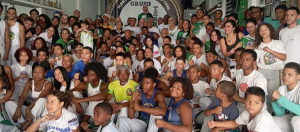
Located within the community established on land belonging to the hospital, Cultura Urbana is a civil society organization (OSCIP) that works with children, adolescents, and young people, promoting education, sports, culture, leisure, and citizenship while strengthening youth leadership in the territories where it operates.
Coluna da Neuza visited the site to learn more about the initiative and shares, in this article, part of the project’s story.
From isolation to youth leadership
At the head of the Institute is Anderson Motta, 51, a cultural producer and actor, and co-founder of the initiative alongside Guida Martins and Fabrício Silvestre. He has served as the institution’s president since 2023.
Anderson explains that the project originated from a theater group he was part of. “We used to rehearse with children in the Jordão community when we were invited to occupy an abandoned movie theater in Curupaiti. From there, we expanded into theater, audiovisual, and sports workshops. When we sought legal formalization, we realized we were already operating as a social organization.”
“When I received the invitation to become president of Cultura Urbana, it was the memory of my father, Adalberto Motta, that led me to accept. He carried out social initiatives in the Jordão community, helping children with tutoring and recreational activities. When we formally established the Institute, our first address was our home. That’s when I realized it was a life mission.”
The Institute’s work focuses on after-school programs, sports, arts, civic education, and community strengthening. Anderson explains that the organization serves children and adolescents between the ages of 7 and 19. “Among them, we also have participants with diagnosed cognitive disabilities. In smaller numbers, we also support young adults and adults.”
Leadership rooted in the community
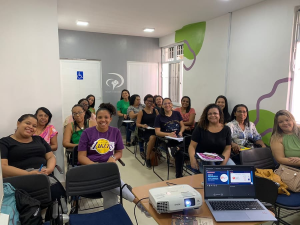
Among the Institute’s main initiatives is Jovem Visando o Futuro (Youth Aiming for the Future), which offers tutoring in Portuguese and mathematics, as well as workshops in computer skills, entrepreneurship, women’s health, and arts and culture.
Another project, Pra Ellas, uses women’s football as a tool for empowerment. The initiative goes beyond sports, addressing women’s health and economic autonomy.
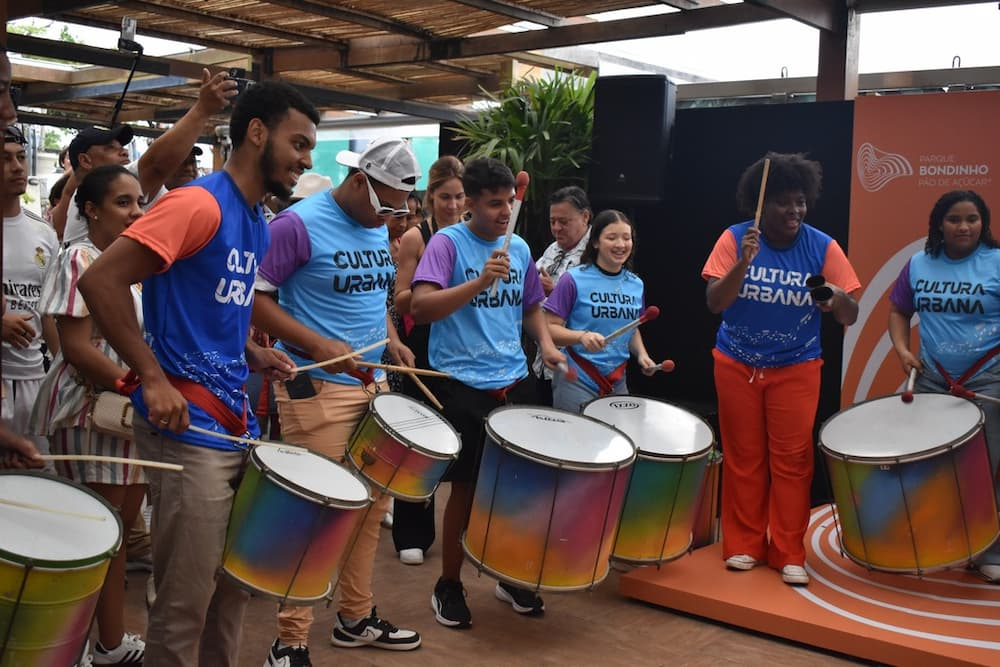
In the cultural sphere, Bora Batucar promotes percussion, Afro dance, and urban culture workshops in Jacarepaguá and in Morro da Babilônia, in Leme, in Rio de Janeiro’s South Zone.
“Our greatest achievements are reflected in the transformation of life paths. We have girls who started playing football with us and are now professional athletes. One of them plays in Greece, and others have pursued careers in different Brazilian states,” says Anderson.
Aline Motta, Anderson’s sister, experiences this impact firsthand. She began as a volunteer, later worked as a community mobilizer, and is now also a percussionist in the Bora Batucar project, in addition to coordinating all of the Institute’s units.
She explains that the organization’s reach extends “from direct beneficiaries to their families and the broader community.”
“Even with internal and external challenges, it is incredibly rewarding to be part of this cycle of positive change,” she says.
Anderson explains that testimonials from residents and community mobilizers help measure the project’s tangible impact on the lives of those it serves.
Eleonora da Silva, 66, the daughter of a former patient of the old hospital, raised in an orphanage and now a volunteer, helps illustrate this impact: “Cultura Urbana means a lot to me. It’s an institution that provides support and opportunities. I’m very grateful.”
Marli Silva, a resident of the area for 40 years and a member of the advisory council, adds: “When Cultura Urbana arrived here, it took many children off the streets. Today, it represents joy.”
Among young participants, the perception is similar, as described by Nalanda, 22, a community mobilizer: “My role here is to engage children, support teachers, and assist with administrative activities. Cultura Urbana transforms lives.”
Social mobilizer and future jiu-jitsu instructor Marco Vinícius, 30, concludes: “I lead workshops to build confidence and a sense of security. The idea is to prepare children to grow both on and off the mat. Here, I don’t just teach, I learn as well. It’s an exchange. And for me, the institution represents a life-changing opportunity.”
Projects such as Favela Ativa expand this presence through recreational activities, including football, volleyball, dodgeball, and jiu-jitsu, adapted to the interests of local residents.
The Institute also promotes occasional initiatives such as the Sarau Cultural, Boteco Cultural, and Cine Clube Urbano, strengthening community engagement and artistic expression.
Formally established in 2011, the Institute currently operates in Tanque (Curupaiti), Praça Seca (Bateau Mouche), and Morro da Babilônia, in Leme, always in partnership with local community leaders.
In addition, the organization provides psychological support, with referrals to the public healthcare system whenever necessary.
But how does Cultura Urbana sustain its activities? The answer lies in creativity and resilience. One of its key sustainability pillars is the Bazar Social, based on the principles of the circular economy. The initiative sells clothing and household items both online and in person at affordable prices, promoting reuse, environmental awareness, and generating resources for activities not covered by public or private funding rounds.
Challenges, however, remain constant. “We face difficulties related to conflict mediation in the territories where we operate, as well as financial sustainability,” Anderson explains.
“Funding rounds have deadlines, but the community’s needs are permanent. This requires constant reinvention. And when risk situations arise, activities are temporarily suspended, which affects the continuity of the projects. Even so, the work goes on,” says Anderson.
Ultimately, what sustains the Institute is not only financial resources, but purpose. “The essence of the organization is part of our family, and our family is part of it,” Anderson concludes.
Cultura Urbana has become a bridge between the history of isolation that once defined Curupaiti and a new narrative built on opportunity, dignity, and youth leadership.
Want to get involved? Here’s how you can help!
You can volunteer in administrative and financial activities, communications, legal advisory, social services, marketing, or by supporting the organization of donations collected through the Social Bazaar.
Volunteer hours are flexible, and participation can be either in person or online, according to your availability.
Follow the Institute on Instagram and Facebook and help spread the word.
Visit the Bazar Cultura Urbana portal and Instagram page.
Click here to make a donation, and for more information, visit the official website.
Coluna da Neuza is part of Lupa do Bem, the Corporate Social Responsibility project of the communications agency Sherlock Communications.