F.A.R.O provides citizenship, income, and support to hundreds of people in the region, on the shores of Guanabara Bay, in the North Zone of Rio de Janeiro
Located in the North Zone of Rio de Janeiro, Complexo da Maré is one of the city’s largest groups of favelas, bringing together 16 communities and an estimated population of around 140,000 residents, according to the Censo Maré by Redes da Maré.
Situated along Avenida Brasil and Linha Vermelha, two of the main expressways in Rio, the area occupies a strategic position, but has historically faced deep social inequalities. Indicators such as income, access to public services, and education levels place the region below the city’s average, reflecting a context of vulnerability as well as strong community mobilization.
Despite the challenges, Maré is recognized for the active role of local organizations and solidarity networks that promote culture, education, and rights. It is within this context, and from within the territory itself, that Coluna da Neuza interviewed Fabiana Ferrinha, who leads a social project in Maré that has been transforming the lives of local residents.
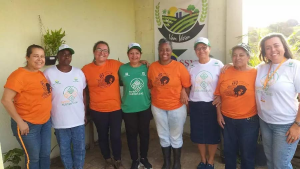
A resident of Morro do Timbau, in Complexo da Maré, Fabiana is 49 years old, a social worker, and the founder of Força Assistencial do Rio Organizado (F.A.R.O Maré), created in 2007. The conversation highlights the power of initiatives that emerge from within the favelas.
Coluna da Neuza: How did the idea to create F.A.R.O come about?
Fabiana: It all started with art and culture, through film screenings in the community. The initiative began with an NGO that operated in Maré, which I was part of, but when it shut down, I felt that it couldn’t just end there.
Since I was the only one in the group who lived in the area, I called a few friends and we continued the work, holding traveling screenings once a month. Over time, the project grew as we better understood the needs of the people around us.
It was a way to bring leisure and culture, and to get children off the streets, even if just for a while. Everyone contributed however they could, and the project moved forward driven by the hope that everything would work out.
Coluna da Neuza: When did the project start to change direction?
Fabiana: It was when parents began to get involved. They would come with their children and start bringing up other issues, such as children without documents, clothing, shoes, and other basic needs.
We realized that we could no longer focus only on culture. That’s when we created the social thrift shop, both to support these families and to generate some income to sustain the project.
Coluna da Neuza: How do you approach education?
Fabiana: We started to notice that many adults could neither read nor write. We partnered with the Rotary Club and brought literacy programs into the project.
Parents began to take part in it, and during this process, another even more challenging reality emerged: many adults also lacked basic documentation.
Coluna da Neuza: Was that when the citizenship support initiative began?
Fabiana: Exactly. We started to find people without birth certificates, without ID, who didn’t even know where they had been registered. From that point on, we began offering guidance and referrals.
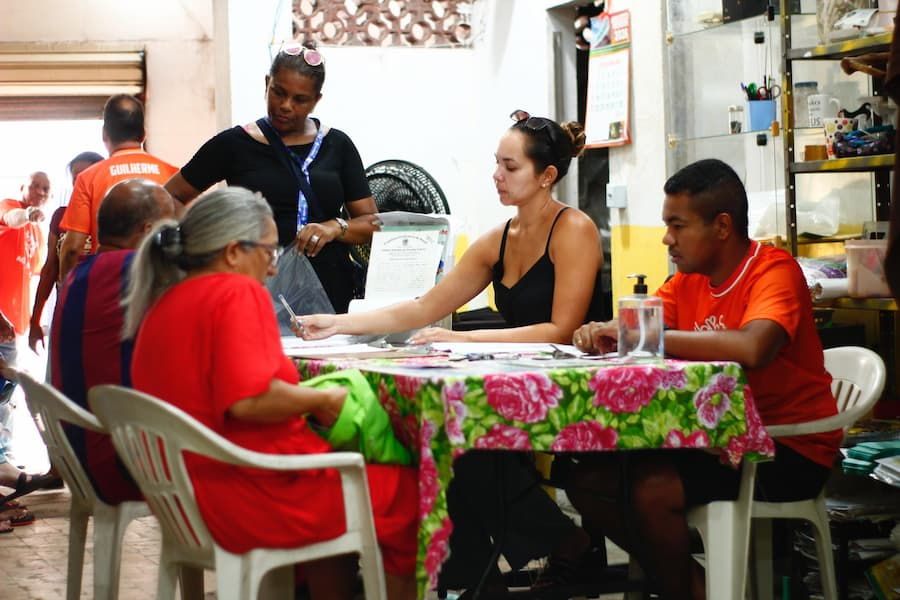
In 2018, we structured this service more effectively, providing fee waivers, appointment scheduling, and legal guidance, especially for access to the Defensoria Pública (Public Defender’s Office). During the pandemic, this made a huge difference, as many people were unable to access benefits due to lack of documentation.
Coluna da Neuza: Who are F.A.R.O’s beneficiaries?
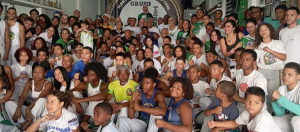
Fabiana: At first, when we operated inside a church, we only served those who attended it. After we moved out, our audience grew and became much more diverse. Today, we serve children, young people, adults, and the elderly.
Coluna da Neuza: Where do you operate?
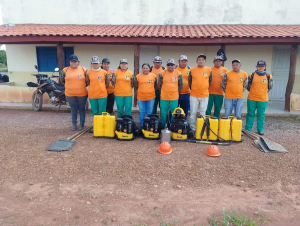
Fabiana: Mainly in Maré, but we have also carried out activities in Benfica, Morro do Alemão, and other communities in the North Zone, always in partnership with residents’ associations and local NGOs. We go wherever there is demand and partnership.
Coluna da Neuza: Do you have a sense of the impact of this work?
Fabiana: On average, around 250 people were assisted per month. But since the pandemic, there have been more than 5,000 services provided, mainly related to documentation and guidance.
Coluna da Neuza: What other activities do you carry out?
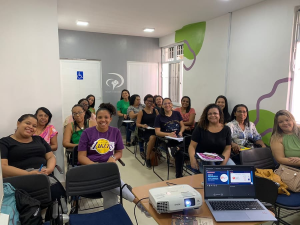
Fabiana: Today, the NGO brings together several fronts: education, health, culture, and income generation. We offer adult literacy programs, craft workshops, outreach activities, and talks on tuberculosis, HIV/AIDS, and violence against women.
We also run a social thrift shop, which helps both through donations and by generating resources. Workshops, such as crochet, emerged from the idle time many mothers and elderly people had.
Many people came here feeling discouraged, even dealing with depression, and today they are producing, selling, and feeling useful again.
Coluna da Neuza: How does the thrift shop work?
Fabiana: In 2023, we created a permanent thrift shop, and that changed a lot. People started donating more instead of throwing things away, and today we also receive customers from other municipalities.
We sort the items, organize them, and sell them at affordable prices, including for people who want to resell them. We also have an online thrift shop.
All the revenue raised is reinvested in the NGO’s activities, and we set aside a small allowance to cover transportation for those who work with us.
Coluna da Neuza: What are the biggest challenges today?
Fabiana: The biggest challenge is still sustaining the project. We rely heavily on collective support, so we constantly need to mobilize people. There’s also the issue of visibility. Many people know about F.A.R.O, but don’t follow it closely. In the past, the challenge was proving we existed; today, we still need to show the strength of our work.
Coluna da Neuza: Have there been any achievements during the NGO’s journey?
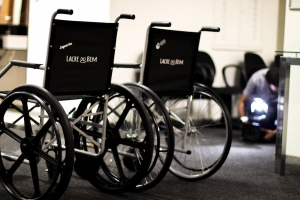
Fabiana: One of the biggest achievements right now is the project’s new space, which is already under construction. It’s a more accessible place and will allow us to expand everything we do.
But for me, the greatest victories are people’s stories: individuals who managed to get married, returned to school, overcame depression, and rebuilt their lives. That is priceless.
Coluna da Neuza: Do the communities involved actively participate in the activities?
Fabiana: Yes. We always work in partnership and support social initiatives in other areas. We provide clothing, shoes, toys, books, and even plant seedlings. Many of these items come from our own stock, which helps keep the cycle going.
Coluna da Neuza: How does your tuberculosis prevention work?
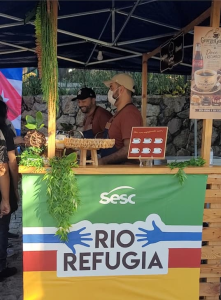
Fabiana: The training we received at the Tuberculosis Forum was very important. Today, we bring information directly into the communities and are expanding this to public squares. The idea is to reach more people, because there is still a lot of prejudice and misinformation about the issue.
Appreciate the project? Check out how to help
More than just an NGO, F.A.R.O is a support hub built within the community itself. Its trajectory shows that when listening turns into action, small initiatives can transform many lives.
To learn more, follow F.A.R.O Maré on Instagram and Facebook.
Coluna da Neuza is part of Lupa do Bem, a Corporate Social Responsibility project by the communications agency Sherlock Communications.