The project emerged before the pandemic and today is part of community networks, bringing together health, education, and public policies across local territories
Favela Terapia was born from a deep concern shared by three young psychologists who graduated from Universidade Estadual do Rio de Janeiro – UERJ (State University of Rio de Janeiro): Gabriella Pacífico, Grazielle Nogueira, and Leandro Mendonça. Residents of Baixada Fluminense and the Complexo da Penha, communities located in the city of Rio de Janeiro, they realized, still during their undergraduate studies, the stark gap between psychology and working-class communities.
Mental health continues to be treated as an elitist issue, inaccessible, distant, and often stigmatized in favelas and peripheral neighborhoods. It was from this discomfort, described as a “student’s unease,” that the seed of the project emerged in 2019, even before the pandemic made the issue more urgent.
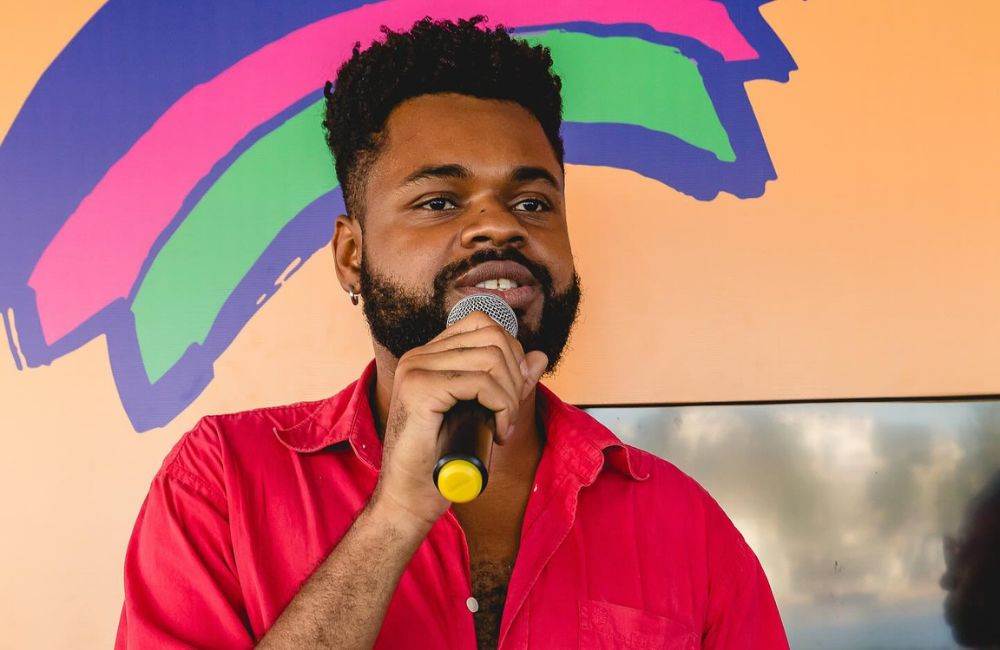
The initiative began in an unassuming way, as a conversation among friends at Parque Madureira (Madureira Park), when Grazielle challenged her colleagues to think about how they could bring their academic knowledge closer to the realities they came from. The question that drove them was simple, yet powerful: how to talk about mental health with those who have never had access to this kind of care? “Psychology needs to get closer to the masses, closer to the people, closer to the favela,” she emphasizes.
In their very first engagements in territories such as Jacarezinho and later Maré, they encountered a landscape marked by state violence, a lack of public policies, and the absence of mental health services. The residents’ reception, however, was warm from the outset. The discussion circles always began with a simple question: “What does mental health mean to you?”.
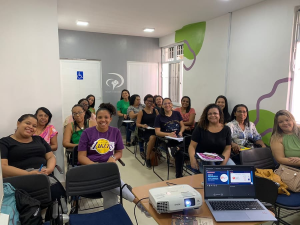
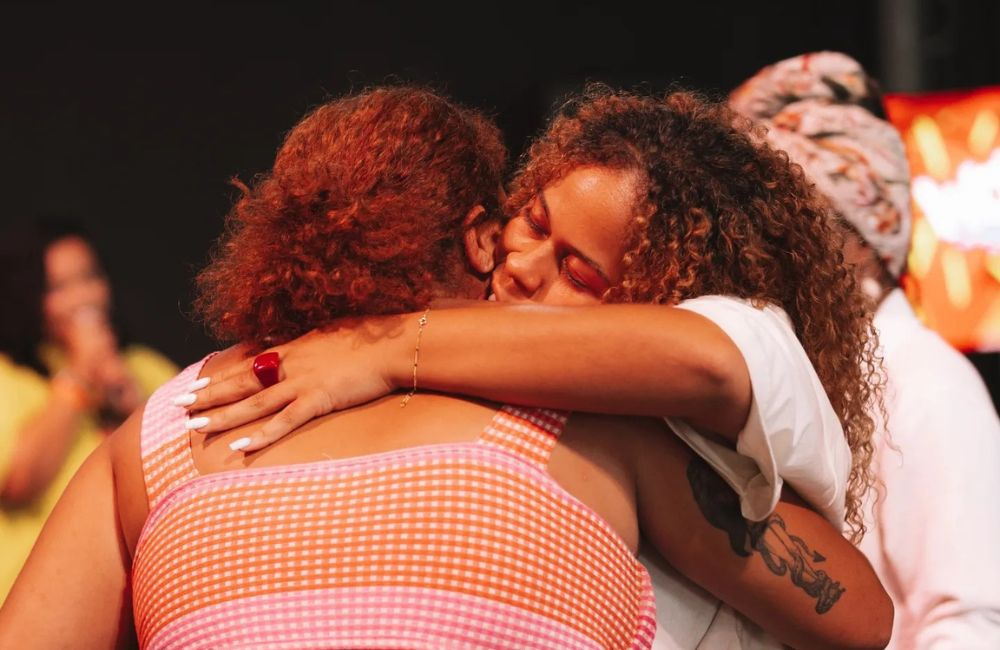
From there, powerful conversations unfolded, revealing both the stigma surrounding the topic and the community’s own existing care strategies. The meetings functioned as spaces for active listening, exchange, and support, free from academic jargon and striving to avoid hierarchies between those who provide care and those who receive it.
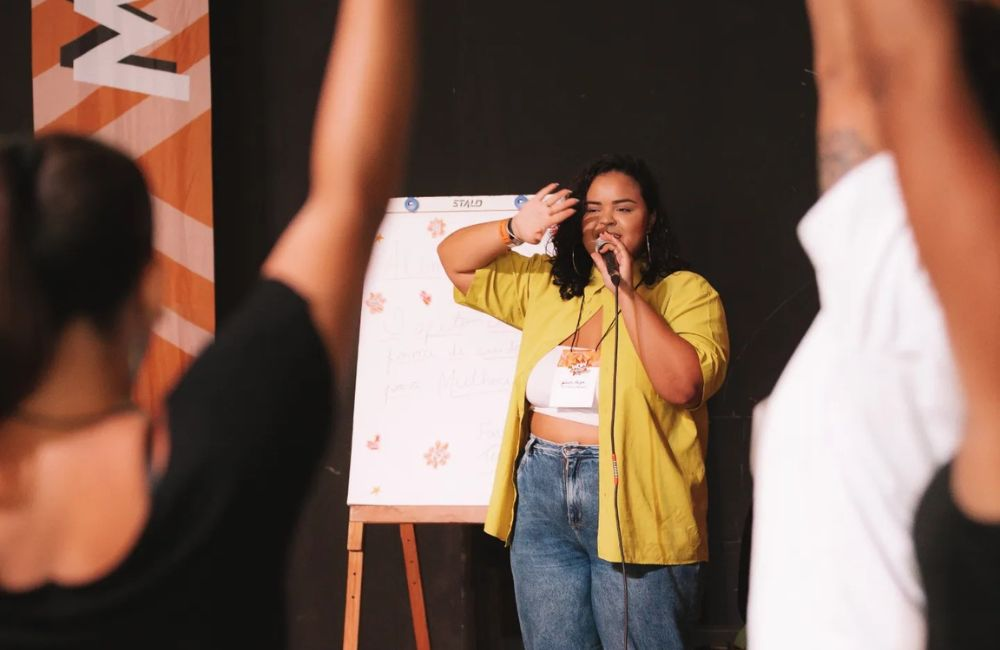
Over time, the team realized that, for many participants, Favela Terapia represented their first-ever contact with a mental health service. This finding reinforced both the urgency of their work and the need to demystify the subject.
The group established itself not as a clinical service, but as a community-based initiative committed to presenting mental health as a constitutional right. And beyond addressing suffering, they also highlight the vitality of life in these territories. Each favela has its own stories, families, forms of leisure, and social bonds. Entering these spaces, they emphasize, requires respect, attentive listening, and a refusal to reduce them to places defined solely by violence or deprivation.
According to them, the barriers to accessing mental health care are multiple. They include the deterioration of public services, the physical difficulty of reaching health facilities located outside the favela, structural racism, LGBTI+phobia, and traditional models of psychology that fail to engage with peripheral realities.
Many residents report having experienced violence during care, which creates trauma and discourages them from seeking help again. “Some people seek care and end up facing prejudice from the professionals themselves. That creates trauma and pushes them away from mental health services,” Leandro points out.
Another barrier is daily life itself, marked by police operations and constant insecurity. “How can a grandmother not feel anxious when she sees her grandson going to school, knowing that just days earlier a young person the same age was killed during an operation?” Grazielle asks. This kind of everyday intrusion, they say, is an inseparable part of mental health in the favelas.
Despite this, their work has never been seen solely as an intervention. It is also rooted in exchange. Gabi, Grazi, and Leandro are careful to stress that they do not occupy the traditional role of the “professional immune to suffering.” They are residents of territories shaped by the same violence that affects their groups, and caring for others affects them as well. For them, Favela Terapia is a network of mutual care.
Over the years, the collective has also been called upon to act in crisis situations and has been invited to take part in events such as Líderes em Educação – LED, organized by TV Globo. These invitations reinforce the recognition earned by a project that, from the very beginning, has been deeply committed to legitimacy and attentive listening.
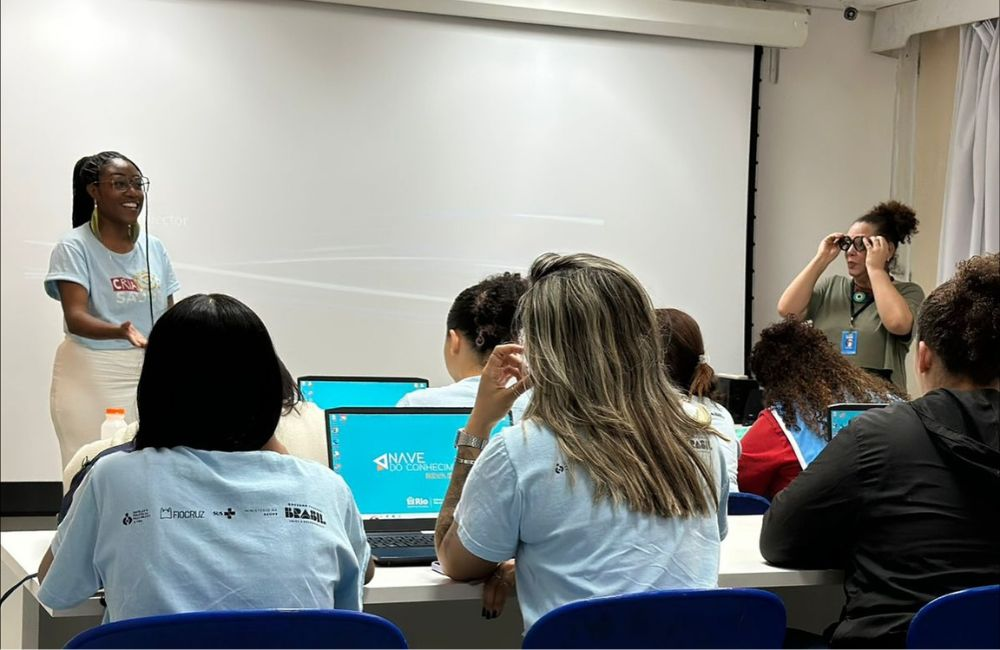
More recently, Favela Terapia contributed to Fiocruz’s Cria Saúde project, which trains community coordinators to think about health surveillance and data production in favelas. Fiocruz, they note, has always been an institution that supported the collective.
Through this collaboration, they brought forward urgent issues raised by community health workers themselves, such as the daily fear related to violence and the illness caused by the absence of structural public policies in these territories. “It’s impossible not to become ill when you live with the possibility of a police operation at any moment,” Grazielle sums up.
Today, Favela Terapia operates with three members and faces the operational limitations typical of independent projects. Without a formal legal entity (CNPJ), they work mainly through public grant calls or direct invitations from institutions within the territories themselves.
All three pursue their own parallel careers and academic paths, which makes the pace of activities more organic, yet continuous, especially in places where they have already built strong ties, such as Jacarezinho and Maré. “We keep going because we know this work makes a difference,” Gabi comments.
Finally, the three acknowledge that having a website would be essential to expand Favela Terapia’s reach and make their work more accessible to the public. The idea, once distant, now appears as a possible next step, particularly given the importance of documenting, systematizing, and giving visibility to an initiative that for five years has brought care, information, and dignity to territories where the state often falls short. “Visibility is also a form of care,” Leandro concludes.