An initiative led by Jerci Cardoso has already supported around 150 people from the LGBTQIA+ community and is seeking donations to establish Casa Casulo, the first shelter of its kind in the region
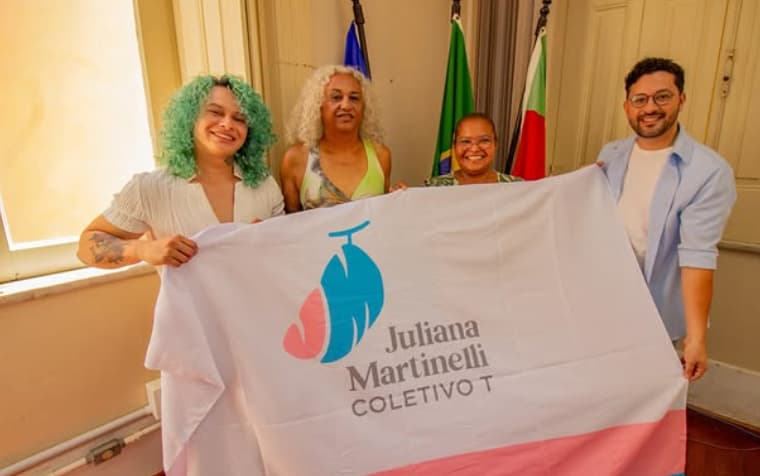
In a scenario where social exclusion, school dropout rates, and vulnerability are still part of the reality for many trans people in Brazil, grassroots initiatives continue to play an essential role in rebuilding lives. It is within this context that, in the city of Pelotas, state of Rio Grande do Sul, the Coletivo T Juliana Martinelli (T Juliana Martinelli Colective) emerged, a support network born out of urgency and strengthened through action.
The name is a tribute to Juliana Martinelli, a transvestite and historic activist from Pelotas who fought for the rights of the LGBTQIAPN community. In her memory, the city government enacted the Juliana Martinelli Educator Law, which reserves job positions for trans people in companies that provide services to the municipality.
Founded in 2019, the collective primarily works to promote access to education for transvestites and trans people, while also addressing basic needs such as food assistance, emotional support, and guidance. Leading the initiative is Jerci Cardoso, 61, who transformed her own life story into a tool for connection and social mobilization.
Today, the group is expanding its reach and focusing its efforts on creating Casa Casulo, a space that offers shelter, support, and new opportunities for those who need it most. Below, discover this inspiring story, shared by Jerci with Neuza’s Column.
Neuza’s Column: How was Coletivo Juliana Martinelli founded, and what was its initial goal?
Jerci Cardoso: The collective was founded in 2019 out of the need to help trans people with the legal process of changing their names and updating their documents. We started with a small group of eight people, all deeply committed. It was something very straightforward, helping those who were unable to access basic rights.
Neuza’s Column: At what point did the collective expand its work?
Jerci Cardoso: During the COVID-19 pandemic. The situation became extremely difficult in many ways for many people, so we also began distributing food baskets, hygiene products, and offering psychological support.
We created WhatsApp groups and organized online meetings with volunteer psychologists. That was when we truly realized how necessary the collective was, and that, because of that, it needed to go further.
Neuza’s Column: What is the collective’s main mission today?
Jerci Cardoso: Our main focus is education. We want to encourage travestis (transvestites), a Latin American gender identity embraced by many transgender women, and other trans people to return to school, whether through Brazil’s EJA (a public education program designed for people who did not complete basic schooling at the traditional age), high school, or even college. We truly believe education changes lives.
Neuza’s Column: How does that encouragement happen in practice?
Jerci Cardoso: We go wherever these people are, talk to them, understand their reality, and offer guidance. We work in partnership with local schools and universities here in the region. It’s about building trust and showing that going back to school is possible, even after years of interruption.
Neuza’s Column: Does the collective work exclusively with trans people?
Jerci Cardoso: At first, yes. But today we support the entire LGBTQIA+ community, as well as families and people facing social and economic vulnerability. The need is enormous, and we can’t close our doors.
Neuza’s Column: What are the collective’s main ongoing initiatives?
Jerci Cardoso: We run Meninas Estudando (Girls Studying), an education-focused project, and Mesa LGBT (LGBT Table), which focuses on food distribution and food security. And right now, much of our energy is dedicated to Casa Casulo (Cocoon House).
Neuza’s Column: What is Casa Casulo, and why is it such an important initiative?
Jerci Cardoso: Casa Casulo will be the first LGBTQIA+ shelter and support home in the far south of Rio Grande do Sul, Brazil’s southernmost state. The idea is to provide a safe place for people who have been forced out of their homes or are living in vulnerable situations, while also helping them reconnect with education and enter the workforce.
Neuza’s Column: What stage is the project currently in?
Jerci Cardoso: The house already exists, but it’s currently being renovated. We still need many essential items, bunk beds, mattresses, bedding, basic furniture. The demand is urgent. We already have a waiting list of people needing support.
Neuza’s Column: In total, how many people have been impacted by the collective so far?
Jerci Cardoso: Around 150 people have been supported by the collective in different ways. We’ve also helped about eight trans people return to school, which for us is a huge victory.
Neuza’s Column: What has been the most memorable moment of this journey?
Jerci Cardoso: Being invited to the graduation ceremonies of two trans people we supported. One earned a degree in public policy, and the other in culinary arts. That’s priceless. It shows us that all the effort has been worth it.
Neuza’s Column: What are the biggest challenges you face today?
Jerci Cardoso: Funding, without a doubt. We don’t have institutional support, and we rely entirely on donations from the community. Everything we do is made possible by our support network.
Neuza’s Column: How does your personal story influence this work?
Jerci Cardoso: I spent 35 years in sex work. That allows me to speak from lived experience and build genuine connections. When I talk to a travesti or a trans woman on the street, she knows I understand where she is at that moment, because I’ve been there myself. That makes all the difference.
Education for Trans People: Dignity, Opportunity, and Inclusion
In a country where access to education, safety, and dignity is still deeply unequal, initiatives like Coletivo T Juliana Martinelli show that social transformation does not begin only through large-scale public policies. Often, it begins with listening, providing shelter, building trust, and taking meaningful action.
More than offering emergency support, the collective creates real pathways toward a better future, connecting people with educational opportunities, professional development, and support systems that once seemed out of reach. But for this work to continue growing, support from society is essential.
People can contribute to the collective through donations, volunteer work, or simply by helping spread awareness. Every contribution strengthens this living network and helps ensure that more stories can be rewritten with dignity, respect, and new possibilities.
When asked about the future of the collective, Jerci Cardoso’s answer is clear: “My dream is to see Casa Casulo fully operational and to help even more people rebuild their lives with dignity.”
Follow Coletivo T Juliana Martinelli on Instagram.
Support the renovation of Casa Casulo by purchasing a ticket for the Rifa Solidária Coletivo T Juliana Martinelli.
Neuza’s Column is part of Lupa do Bem, the corporate social responsibility initiative created by Sherlock Communications.