Founded in 2016 in the Esqueleto community in the city of Duque de Caxias, the Institute currently serves around 85 people and is seeking support to expand its activities and educational opportunities
Arriving in the Jardim Gramacho neighborhood means entering a territory marked by many stories, challenges and people who keep creating opportunities where they do not always exist. It was with this perspective that I visited Instituto Atletas de Ouro (Golden Athletes Institute), in the Esqueleto community, in the city of Duque de Caxias.
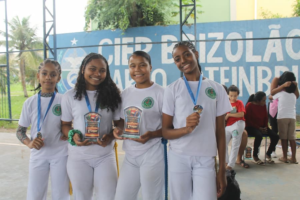
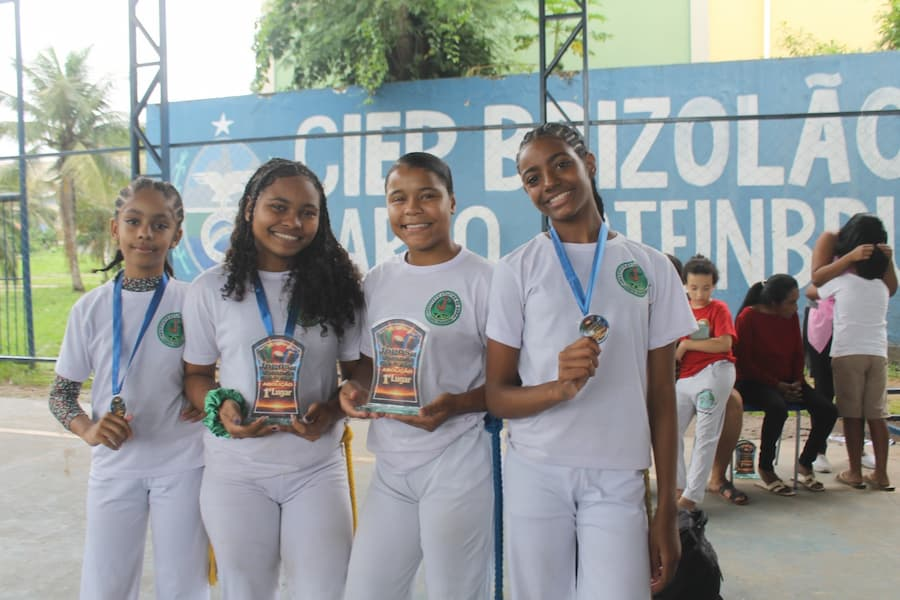
There, I met children, teenagers, adults and older people sharing the same space and learning much more than sports. Among capoeira, judo, karate, gymnastics, and tae bo classes, a discipline that combines martial arts movements, such as karate, taekwondo and boxing, with aerobic exercises set to music, and other activities, I heard stories of discipline, belonging, self esteem and transformation.
By listening to the people who experience the Institute’s work every day, I gained a better understanding of its importance to the Jardim Gramacho community.
Instituto Atletas de Ouro was founded in 2016 by Leandro Feliciano da Silva, known as Professor Léo. Today, Ita Rodrigues, the Institute’s vice president and a capoeira instructor, is also part of its management team and spoke to Coluna da Neuza. Read the interview below.
Coluna da Neuza: How was Instituto Atletas de Ouro created, and what motivated its foundation in Jardim Gramacho?
Ita Rodrigues: The Institute was born from the desire of its founder, Leandro Feliciano da Silva, Professor Léo, to give back to society what he had once received. His life was marked by loss from an early age. When he was five years old, he witnessed his parents being killed and only survived because he managed to run away.
After this tragedy, he went to live with one of his brothers, but faced physical abuse. At the age of 12, he left home and went to live with another brother in Jardim Gramacho.
It was there that he discovered karate after joining an institution that offered the sport. The discipline he learned through karate changed the course of his life and, years later, he fulfilled his desire to offer other children and young people opportunities similar to those he had received himself.
Coluna da Neuza: So, was sport decisive in the creation of the Institute?
Ita Rodrigues: Yes. Karate shaped his life, and he wanted to give something back. Leandro spent 19 years at the institution where he started as a student and later became an instructor. When he left, more than 60 children who trained with him decided to follow him. Without a space of their own, the group arrived in the Esqueleto community.
One of the students, Anderson Silva, who is now an instructor and co-founder, suggested that we approach the Church of the Nazarene because they had a sports court. After hearing our story, the pastor allowed the activities to begin immediately. That partnership still exists today.
That is how Instituto Atletas de Ouro was born in Jardim Gramacho in 2016. At one point, we served more than 100 students in that space. I like to emphasize that I brought capoeira into an evangelical church and never experienced prejudice from the pastor. I was always warmly welcomed.
Coluna da Neuza: What are the main challenges currently faced by the children, young people and families served in the area?
Ita Rodrigues: They face structural challenges within the community, such as housing, sanitation, a lack of public policies and limited access to local medical care. We only have small health clinics, which do not provide emergency care. For this type of treatment, we have to go to hospitals farther away. Healthcare, education and transportation are also very precarious.
Coluna da Neuza: How many people are currently served by the Institute?
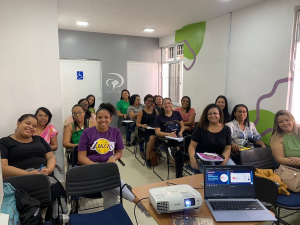
Ita Rodrigues: Today, we serve around 85 people. They include children from the age of six, young people, adults and older people up to 76 years old. We offer racial literacy, an entrepreneurship course in partnership with Baixada Lab, capoeira, judo, karate, gymnastics and tae bo.
We also receive support from Pastor Luiz, from the Church of the Nazarene, and Anderson Oliveira, our co-founder.
Coluna da Neuza: How does sport contribute to transforming participants’ lives?
Ita Rodrigues: It contributes to discipline, education, self control, social interaction and self esteem. They feel good when they are here taking part in activities. They feel valued.
Coluna da Neuza: How is racial literacy addressed?
Ita Rodrigues: It takes place once a week. In addition to playful and affective activities, we introduce the children to Black people who have made an impact and built important narratives. It is essential for children to see themselves represented and to better understand racism and prejudice in Brazil.
Coluna da Neuza: How does the Institute measure the results of its work?
Ita Rodrigues: We keep attendance records and hold meetings with parents and guardians to understand the impact the activities are having at school, at home and in other environments. We try to monitor the children’s behavior and how they interact with others.
Coluna da Neuza: What changed after the Institute was formally established and obtained its CNPJ, Brazil’s national registration number for legal entities?
Ita Rodrigues: We began to better understand what it means to be a social organization from a legal perspective as well. Before, we carried out the activities, but we had no idea how much bureaucracy was involved. Today, we document the services we provide, keep records and attendance lists, and have greater participation from parents and guardians. We have also gained more visibility and credibility.
After becoming a formal organization, the Institute began seeking stronger connections with other organizations. It is currently part of the Rede Baixada que se Importa, a collaborative network of 19 social organizations working across five municipalities in Baixada Fluminense. The network connects organizations and community leaders to promote mutual support, exchange experiences, mobilize resources and strengthen local initiatives. The Institute also has a partnership with Baixada Lab
Coluna da Neuza: How did the idea for the Youth Council come about?:
Ita Rodrigues: I had the idea after completing a course in sports social education and project management at Luta pela Paz. That’s where I learned about the Youth Council and thought, “I need to bring this to Jardim Gramacho.” Today, the young people have become our arm within the organization.
Coluna da Neuza: What are your dreams for the future?
Ita Rodrigues: Our biggest dream is to buy the space where we operate and expand our services. We also want to connect young people with training opportunities and help them believe in themselves. We want to be the bridge that connects young people to new paths, so they can transform their own lives and the community where they live.
Our role is to promote civic and sports education, creating opportunities for participants to develop autonomy, discipline and new perspectives.
A second home
Davi, 12, talks about the impact of the project on his life. “At Instituto Atletas de Ouro, I do karate, judo and racial literacy. I learned more about discipline and, through racial literacy, about not bullying people, not judging people by their appearance and treating everyone equally.”
For Teresa Cristina, 59, who has been part of the organization for almost five years and practices gymnastics, “the space represents family and social interaction. We also talk about our problems, and it is almost like therapy. Besides that, I see how important Atletas de Ouro is because it offers activities to children in the community.”
Yasmin, 16, explains that the organization feels like a second home. “I have practiced judo and karate, and today I do capoeira, take part in the Youth Council and have completed the entrepreneurship course. The Institute provides opportunities and activities for children and young people in the community.”
For Tainara, 14, taking part in the project had a direct impact on her physical and mental health. “Capoeira, karate and racial literacy have changed my physical and mental health and the way I think. Racial literacy makes me stronger. Today I know who I am, what I deserve and what I can become. I should not lower my head because someone says ‘you are Black.’ I am who I am.”
Finally, Luiz Carlos, 15, says Atletas de Ouro helped him develop discipline. “For me, the Institute represents family and education. When I came here, I was a boy who barely respected anyone on the street. After I started taking part, I learned more about discipline. For the community, this represents an opportunity for children to train and change their lives.”
Interested in this initiative? Want to volunteer?
Instituto Atletas de Ouro is looking for volunteers to work in areas such as psychology, social work, fundraising, project development, academic support, entrepreneurship, professional training for young people, capoeira instruction and other workshops that can strengthen participants’ skills and expand their employment opportunities.
The organization also welcomes support from people who can contribute remotely.
Want to support Instituto Atletas de Ouro?
In addition to the activities and workshops it offers, the Institute needs support to provide essential items for participants, including snacks for children and young people, shirts for girls, capoeira uniforms, and karate and judo uniforms.
The organization is also seeking donations of equipment, food baskets, snacks and recurring financial contributions to help maintain its activities.
Companies or supporters who contribute to the production of shirts may have their name or brand included on the garments as a form of recognition.
To learn how you can help, follow Instituto Atletas de Ouro on Instagram.
You can also follow Lupa do Bem on Instagram, Facebook and LinkedIn.
Coluna da Neuza is part of Lupa do Bem, the Corporate Social Responsibility project of communications agency Sherlock Communications.