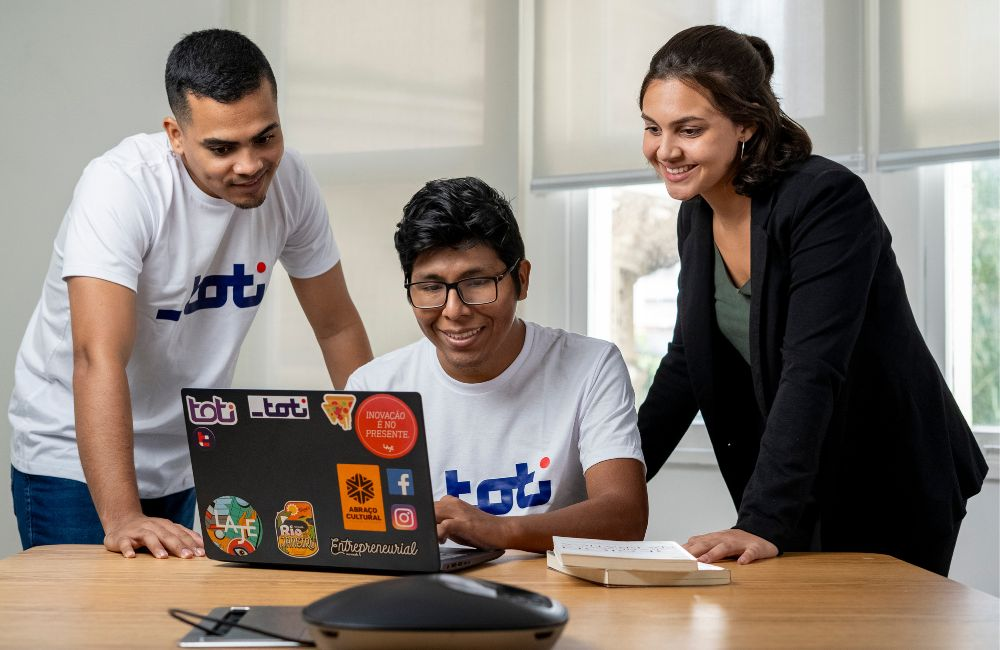
Executive Director Bruna Amaral explains how the organization turns free education into productive inclusion and social impact
Productive inclusion of refugees and immigrants in Brazil still faces structural challenges, but civil society initiatives have shown that it is possible to turn welcoming efforts into financial autonomy. This is the case of Toti Diversidade (Diversity), an organization that provides free professional training and connects migrants with the job market, especially in the technology sector.
Founded in 2017 as a university project, Toti was created within the global Enactus program and began as a volunteer initiative. “I am one of the founders and the executive director. There are three co-founders,” explains Bruna Amaral. According to her, the organization emerged from a combination of studies in international relations, research on migrant employability, and the growing arrival in Brazil of people from the Democratic Republic of the Congo, Angola, and Venezuela.
According to data from the Instituto Brasileiro de Geografia e Estatística – IBGE (Brazilian Institute of Geography and Statistics) Census, between 2010 and 2022 there was a significant increase in the number of foreign immigrants in Brazil, rising from 592,000 to 1 million people. During the same period, the share of Latin American immigrants increased from 183,000 in 2010 to 646,000 in 2022, strongly influenced by migrants born in Venezuela (272,000).
In its early years, the project functioned as a social laboratory. The first cohort, focused on the comunidade congolesa (Congolese community) in Rio de Janeiro, had eight participants and offered nearly ten months of training in technology fundamentals and web development. Some of the students were hired after completing the program. By the second cohort, which included participants of different nationalities, all participants secured jobs in less than 45 days.
The choice to focus on technology was strategic. “It was a field with high hiring demand in the Brazilian market and one that did not require a university degree,” says Bruna. Many migrants already held higher education degrees but faced barriers such as the lack of diploma recognition. The emphasis on technical knowledge and soft skills helped open doors.
As the organization matured from 2020 onward, Toti began structuring its work around two main profiles: migrants who had recently arrived, with up to 12 months in Brazil, and those who had been in the country longer.
“The employment needs of these profiles are completely different,” Bruna explains. While newcomers require basic guidance on labor rights and their first job in Brazil, the second group seeks career growth and higher income.
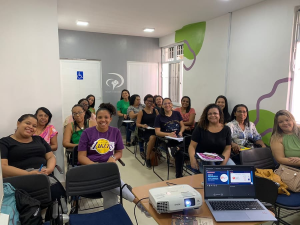
Today, in addition to technology — with training in web development, UX, data analysis, and programming languages such as Python — the organization also operates in areas such as marketing, sales, customer service, and administration. The educational track is combined with career mentoring, interview preparation, résumé review, and even psychological support, depending on the expertise of partner companies.
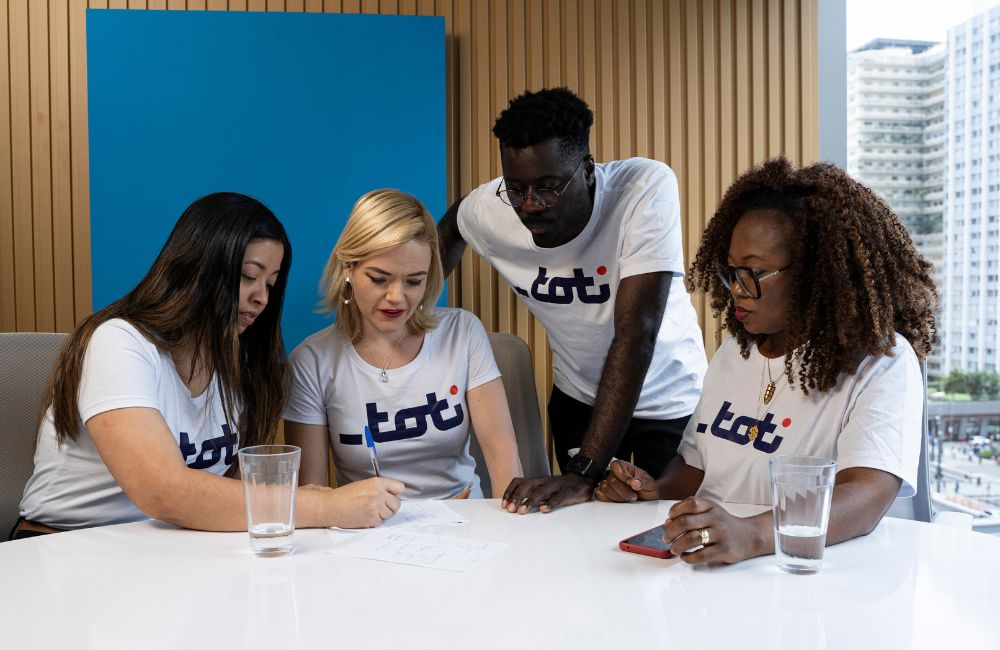
Toti’s financial sustainability model is based on creating products aimed at companies. “The programs are 100% free for refugees and immigrants. For this to be sustainable, we need to charge in some way,” says the director. As a result, the NGO has developed solutions that contribute to corporate sustainability reports and ESG goals, while also generating measurable social impact.
Among these initiatives is corporate volunteering, in which company employees act as mentors. “We train employees to become technical and career mentors, as well as résumé evaluators,” Bruna explains. The impact is measured both in the performance of the students and in the development of the volunteer employees themselves.
Despite the progress, prejudice still persists. One of the main myths concerns documentation. “Many people believe someone cannot be hired because they lack documents. But with a CPF it is already possible to obtain a work permit,” she clarifies. According to her, Brazilian migration policy allows access to public services and formal employment even while the refugee application process is ongoing.
Another common barrier is language. However, the organization’s internal data shows the opposite of what many people assume: “73% of the community is trilingual and more than 50% speak English in addition to their native language,” Bruna highlights. For many companies undergoing internationalization, this linguistic diversity even becomes a competitive advantage.
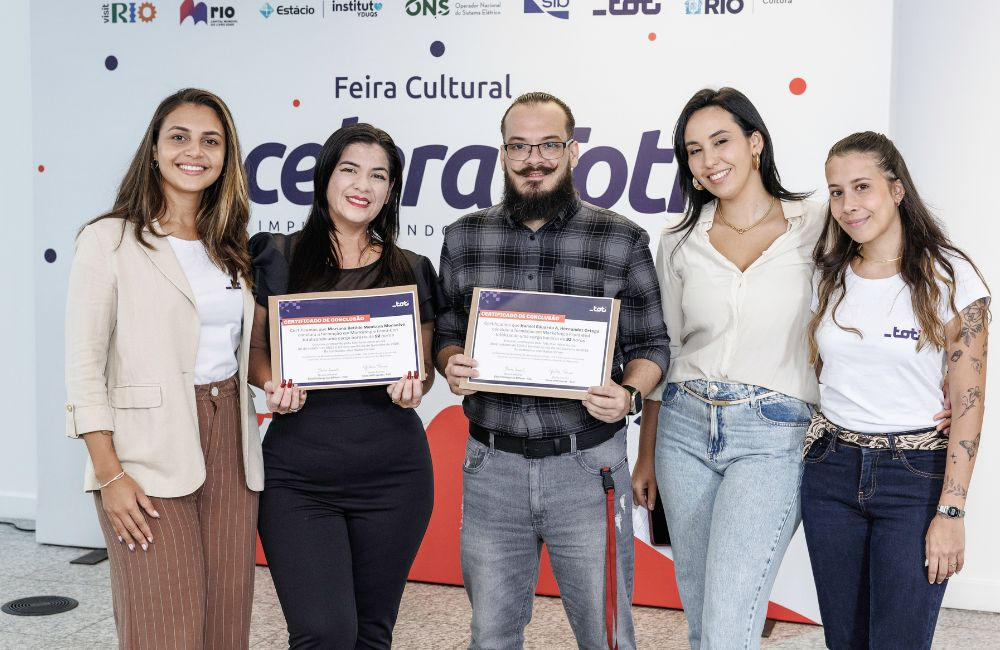
In addition to professional training, Toti has also begun investing in cultural projects through incentive laws. The Acelera Toti program promotes talent fairs, workshops, and cultural events in different cities, connecting employability with the appreciation of diverse identities. The initiative has already held editions in Salvador and Rio de Janeiro.
Looking ahead, the goal is ambitious: to impact 10,000 people by 2028. After securing its first international fundraising round with a fund from the United States, the organization plans to expand its technological infrastructure and its impact measurement processes.
For Bruna, Brazil already shows potential as a welcoming country, but there are still gaps to address, such as combating racism, xenophobia, and informal employment among migrant communities. “There is room for improvement, and I’m glad that Toti can help move this progress forward,” she concludes.